 listicle
7 Factors Affecting Heavy Equipment Resale Value
Table of Contents
- Operating Hours and Usage Intensity
- Physical Condition and Maintenance History
- Make, Model, and Manufacturer Reputation
- Year of Manufacture and Heavy Equipment Depreciation Schedule
- Market Demand and Heavy Equipment Auctions
- Availability of Spare Parts and Service Support
- Technological Advancements and Environmental Compliance
- Impact of Attachments and Customization
- Frequently Asked Questions
Last Updated: September 28, 2026
Understanding what drives heavy equipment resale value is essential for anyone looking to sell machinery or make smart purchasing decisions. The heavy equipment resale value of your assets depends on far more than just age or basic condition. Understanding these dynamics helps you maximize proceeds when you're ready to sell. Below, we'll show you exactly how seven key factors shape the secondary market for construction equipment, trucks, and industrial machinery.
Operating Hours and Usage Intensity
The number of operating hours a machine has accumulated is one of the first metrics buyers examine. Unlike vehicles measured in miles, heavy equipment is valued by engine hours, which directly correlate to wear on internal components. A 2,000-hour excavator will command significantly higher resale price than a 10,000-hour machine of the same model year, assuming comparable condition.
Usage intensity matters as much as total hours. Equipment that ran 40 hours per week in a climate-controlled warehouse environment shows less stress than machinery pushed 60 hours per week in harsh outdoor conditions. Seasonal use patterns also affect resale value. A concrete pump that operated intensively during construction season but sat idle during winter typically retains more value than year-round continuous operation.
The relationship between operating hours and heavy equipment resale value isn't linear. The first 5,000 hours of wear typically reduce value more sharply than hours 15,000 to 20,000, because critical components have already proven their durability. Buyers factor in remaining useful life, so machines approaching typical rebuild intervals face steeper depreciation. Fleet managers who track telematics data, real-time engine diagnostics transmitted to cloud systems, can demonstrate precise usage patterns to potential buyers, which often justifies premium pricing.
| Usage Pattern | Operating Hours | Typical Resale Impact |
|---|---|---|
| Light seasonal use | Under 5,000 hours | Minimal depreciation |
| Moderate commercial use | 5,000-15,000 hours | Standard market rate |
| Heavy continuous operation | 15,000-25,000 hours | Significant discount |
| Intensive fleet service | Over 25,000 hours | Substantial depreciation |
Physical Condition and Maintenance History
The tangible state of your equipment, paint, rust, hydraulic leaks, and structural integrity, directly influences what buyers will bid. But condition alone doesn't drive heavy equipment resale value. Buyers want proof that condition will hold up under their own operation.
Preventive maintenance history is the single strongest predictor of resale price after age and hours. Equipment with documented oil changes, filter replacements, and scheduled inspections sells faster and commands premiums over identical machines with spotty records. A machine that shows years of consistent service logs signals lower risk to the next owner, who won't face surprise breakdowns during their first month of operation.
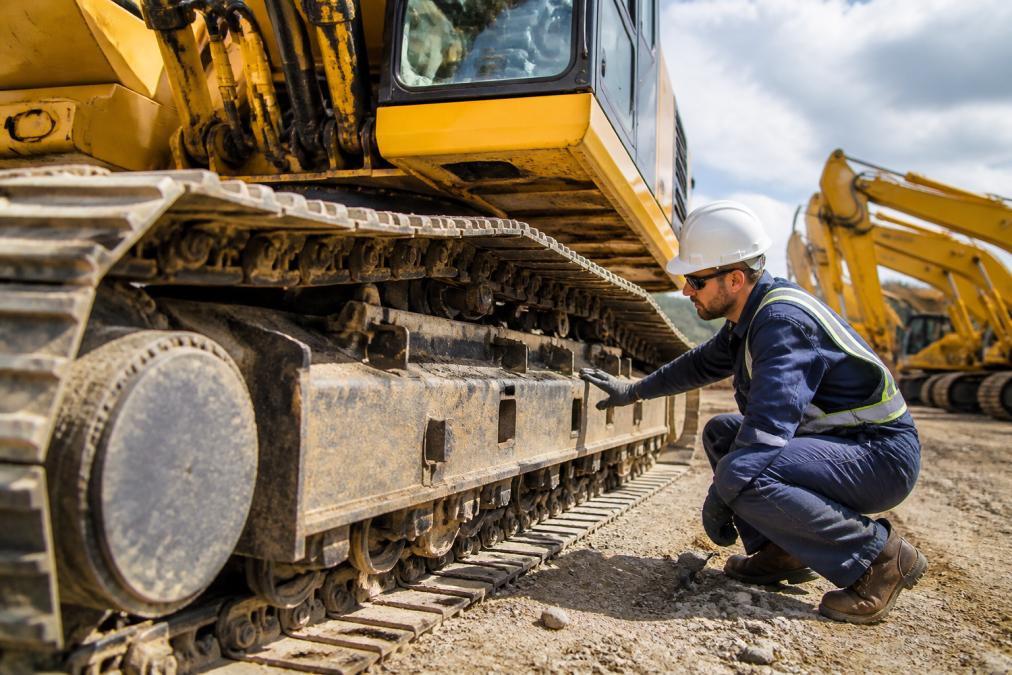
The condition of the undercarriage, the frame, pins, bushings, and hydraulic cylinders, determines whether a machine is roadworthy or destined for the scrap yard. Rust on structural components, bent frames from impact, or leaking cylinders can cut resale value in half, even if the engine runs perfectly. Cosmetic damage like dented panels or faded paint matters far less than functional integrity.
Modern inspection platforms like Boom & Bucket provide standardized 100-point condition reports that buyers trust immediately. When you list equipment with third-party certification of condition, you eliminate buyer skepticism and accelerate sales. The inspection cost typically pays for itself through faster sales or higher final prices.
Make, Model, and Manufacturer Reputation
Not all equipment brands hold value equally. Caterpillar, John Deere, and Komatsu machines typically command 10-20% premiums over lesser-known manufacturers, because buyers perceive lower risk and higher resale liquidity. Established brands have global dealer networks, abundant spare parts availability, and proven track records of reliability.
The specific model within a brand matters enormously. Certain models become industry standards, the Caterpillar 320 excavator, for instance, is so ubiquitous that buyers instantly understand its capabilities and can compare pricing across dozens of listings. Niche or discontinued models face longer selling timelines because fewer potential buyers need that exact specification.
Original equipment manufacturer (OEM) reputation influences heavy equipment resale value through buyer perception of total cost of ownership. A premium brand may cost more upfront but signals lower maintenance costs and higher residual value to the next owner. This perception becomes a self-fulfilling prophecy: machines from trusted manufacturers sell faster, which means more comparable sales data, which supports higher asking prices.
Certified Used programs amplify brand value. Caterpillar's Cat Used marketplace, for example, certifies pre-owned equipment through authorized dealers and provides extended protection plans. Equipment listed through such programs commands measurable premiums because buyers accept the certified condition without requiring independent inspection.
Year of Manufacture and Heavy Equipment Depreciation Schedule
Depreciation follows predictable patterns in heavy equipment markets, though the curve is gentler than automotive depreciation. Most equipment loses 15-25% of value in the first year, then depreciates 8-12% annually for the next 5-7 years. After that, depreciation slows significantly as machines reach a stable secondary market value.
The model year affects heavy equipment resale value through technological advancement and emission compliance. Equipment manufactured before 2010 increasingly faces restrictions in states with strict Tier 4 emission standards. A 2008 excavator may be perfectly functional but worthless in regulated markets due to its inability to meet current Environmental Protection Agency (EPA) standards.
Newer models incorporate telematics, improved fuel efficiency, and ergonomic operator cabins, features that buyers value and are willing to pay for. A 2023 model with 3,000 hours will outprice a 2015 model with 5,000 hours by 25-40%, because the newer machine offers longer remaining useful life and lower expected maintenance costs.
Market volatility affects depreciation rates. During economic downturns, heavy equipment depreciates faster because demand drops and buyers have more negotiating power. During construction booms, machines hold value better because competition for equipment pushes prices upward. Timing your sale to coincide with peak seasonal demand or economic strength can add 5-15% to resale proceeds.
Market Demand and Heavy Equipment Auctions
Regional economic conditions directly shape what your equipment will sell for. A bulldozer worth $180,000 in Texas during a commercial construction surge might fetch only $140,000 in a market where new projects have slowed. Heavy equipment auctions, both online platforms and traditional live events, reveal real-time market demand through actual bids.
Auction dynamics matter because they establish transparent pricing. Ritchie Bros. Asset Solutions, one of the world's largest equipment auctioneers, processes millions of transactions annually and publishes aggregated data showing what specific models sold for in each region. This data directly influences heavy equipment resale value across the secondary market.
Private sales typically yield 5-10% higher prices than auctions because you avoid commission fees and can negotiate directly with buyers. However, private sales require more effort, take longer, and carry higher risk of buyer financing falling through. Auctions guarantee payment but charge commissions ranging from 8-15% of sale price.
Seasonal demand swings are pronounced. Spring and summer see peak construction activity, driving up equipment prices. Winter typically brings lower demand and softer pricing.
Availability of Spare Parts and Service Support
Equipment becomes worthless if spare parts vanish from the market. A machine manufactured by a defunct company or one where dealer networks have shrunk faces severe resale challenges. Buyers calculate total cost of ownership partly by estimating maintenance expenses, and parts scarcity drives those estimates upward.
Technological Advancements and Environmental Compliance
Emission standards have become a major driver of heavy equipment resale value. The EPA's Tier 4 Final standards, which took effect in 2015 for most equipment categories, eliminated older machines from regulated markets. Equipment manufactured before these standards face geographic restrictions and lower resale value in states with strict air quality regulations.
Impact of Attachments and Customization
A backhoe with specialized attachments, quick couplers, hydraulic thumbs, augers, often sells for more than the base machine alone, provided the attachments are in good condition and suit common applications. Versatile, popular attachments add value because they expand the machine's utility for the next owner.
Frequently Asked Questions
How do operating hours affect heavy equipment resale value?
Operating hours are one of the strongest predictors of remaining useful life and asset depreciation. Equipment with lower total operating hours typically commands higher resale prices because buyers perceive less wear on critical components like engines, hydraulic systems, and transmissions. A machine with 5,000 hours generally retains more value than an identical model with 15,000 hours. Tracking and documenting actual operating hours through maintenance logs strengthens your resale position.
Does a heavy equipment depreciation schedule affect when I should sell?
Yes. Heavy equipment typically depreciates fastest in the first 3-5 years of ownership, then stabilizes. Understanding your equipment's position on its depreciation curve helps you time the sale for maximum residual value. Market conditions also matter, selling during periods of strong demand can offset typical depreciation patterns. Consulting current market data before listing ensures you capture the best window for your specific model year and condition.
Is it better to sell at heavy equipment auctions or privately?
Heavy equipment auctions offer broad exposure and quick sales, but typically result in lower final prices due to commission fees and competitive bidding dynamics. Private sales often yield higher per-unit proceeds but require more time, marketing effort, and negotiation. Your choice depends on cash flow urgency, equipment condition, and market demand for your specific model.
How does manufacturer reputation impact resale value?
Brand reputation significantly influences buyer confidence and willingness to pay. Equipment from manufacturers known for durability, parts availability, and dealer support (such as Caterpillar) typically commands premium resale prices compared to lesser-known brands. Strong manufacturer reputation reduces buyer perceived risk and creates stronger secondary market liquidity, meaning your equipment sells faster and at higher prices than comparable equipment from brands with weaker market positioning.