 listicle
8 Signs Your Heavy Machinery Needs Appraisal
Table of Contents
- Sign 1: Visible Wear and Corrosion on Critical Components
- Sign 2: Declining Engine Performance and Increased Fuel Consumption
- Sign 3: Rising Maintenance Costs and Frequent Breakdowns
- Sign 4: Heavy Equipment Valuation Methods Show Significant Depreciation
- Sign 5: How to Prepare Heavy Machinery for Appraisal Before Financing or Sale
- Sign 6: You Need Equipment Appraisal for Tax Purposes or Insurance Claims
- Sign 7: Obsolescence and Technology Gaps Affecting Market Competitiveness
- Sign 8: Major System Upgrades or Capital Expenditure Decisions Require Professional Assessment
- Frequently Asked Questions
Last Updated: September 30, 2026
When heavy machinery sits at the core of your operation, its value isn't just financial, it's operational. The question is whether you'll recognize the 8 signs your heavy machinery needs appraisal before a breakdown costs you thousands in downtime or lost revenue.
This guide covers eight critical signs that indicate your heavy machinery needs appraisal. Understanding these signals helps you make informed decisions about equipment financing, insurance claims, tax reporting, and asset liquidation.
Sign 1: Visible Wear and Corrosion on Critical Components
Surface rust and corrosion signal failing protective barriers. Critical components like engine blocks, hydraulic cylinders, and frame welds show accelerated deterioration when corrosion advances beyond surface oxidation. An appraiser evaluates whether corrosion has penetrated load-bearing structures or merely affected cosmetics, a distinction that dramatically impacts residual value.
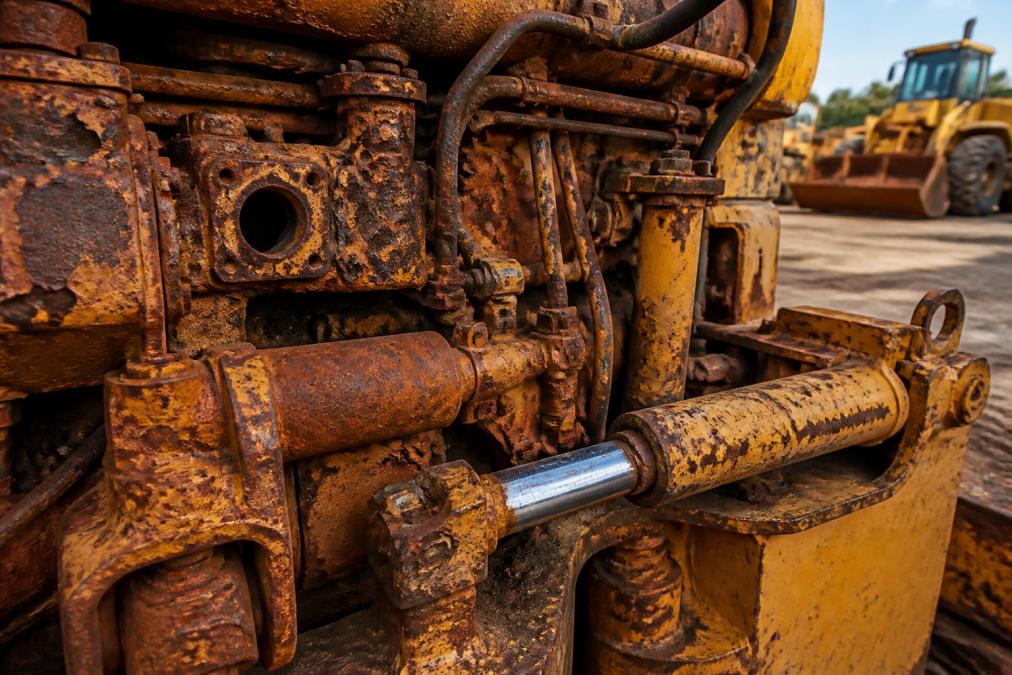
Rust on exterior panels might reduce value by 5-10%. Corrosion in hydraulic lines or engine internals can reduce value by 30-50% or trigger rejection for financing altogether.
Sign 2: Declining Engine Performance and Increased Fuel Consumption
Rising fuel costs per operating hour signal wear in piston rings, valve seals, or fuel injectors. Fuel consumption creeping upward, sometimes by 15-25%, indicates internal wear that cosmetic maintenance won't fix.
An appraiser examines engine performance data to determine whether decline stems from normal wear or indicates imminent major repair. Lenders want to know whether the machinery will reliably service a loan term or require expensive overhauls mid-financing.
Sign 3: Rising Maintenance Costs and Frequent Breakdowns
Maintenance costs that climb steadily signal declining equipment reliability. Frequent breakdowns disrupt operations and create hidden costs: idle equipment, labor delays, emergency repair premiums, and lost productivity.
Rising maintenance costs directly correlate with declining residual value. If annual maintenance costs exceed 20-30% of the equipment's current market value, replacement becomes more economical than continued operation. Professional appraisal clarifies whether you're at that inflection point.
Sign 4: Heavy Equipment Valuation Methods Show Significant Depreciation
Understanding how specific wear signs translate into financial loss is essential for appraisal decisions.
Heavy equipment appraisers use three valuation approaches, each revealing different depreciation drivers:
Cost Approach (Replacement Cost Method): Appraisers calculate replacement cost, then subtract accumulated depreciation to isolate condition-based loss. An appraiser breaks down how much loss stems from age versus condition, clarifying whether to repair, upgrade, or replace.
Sales Comparison Approach: Appraisers examine recent market transactions for comparable equipment to reveal whether depreciation is market-driven or condition-driven.
Income Approach: For revenue-generating equipment, appraisers calculate value based on projected cash flow. If maintenance costs climb and downtime increases, projected cash flow drops, and so does valuation.
How Wear Signs Directly Impact Depreciation:
Visible corrosion on hydraulic cylinders typically reduces value 8-15% beyond normal age depreciation. Engine blow-by signals worn piston rings and can reduce value 20-35%. Transmission slippage reduces value 25-40%. A professional appraiser quantifies which wear signs are present, estimates repair costs, and subtracts those costs from market value.
Sign 5: How to Prepare Heavy Machinery for Appraisal Before Financing or Sale
Before an appraiser arrives, preparation directly influences valuation. Compile complete maintenance history, clean the equipment, top off fluids, have it running and ready to demonstrate, document upgrades with receipts, and have clear title available. Present your machinery honestly and in its best condition; appraisers are trained to see through cosmetic improvements.
Sign 6: You Need Equipment Appraisal for Tax Purposes or Insurance Claims
Tax law and insurance coverage both hinge on accurate equipment valuation, but they require different types of professional assessment. Understanding the distinction between inspection and appraisal is critical to avoiding audit risk and claim disputes.
Appraisal vs. Inspection: Why the Difference Matters
An inspection is a mechanical evaluation: Does the equipment run? Are there leaks, unusual sounds, or safety hazards? An insurance adjuster performs an inspection to determine whether equipment is operational and safe. This informs whether a claim is covered and whether the equipment can be repaired or must be replaced.
An appraisal is a financial valuation: What is this equipment worth in today's market? An appraiser examines condition, age, hours, maintenance history, and comparable market sales to establish fair market value. This is what tax authorities and lenders require.
They're not interchangeable. An insurance adjuster's inspection report won't satisfy IRS documentation requirements for depreciation schedules. Conversely, a financial appraisal doesn't address whether equipment is mechanically safe to operate.
Tax Purposes: Why Professional Appraisal Protects You
The IRS requires documented asset values for depreciation deductions and cost-basis calculations. If you claim $500,000 in equipment depreciation over five years, the IRS expects supporting documentation that establishes the equipment's fair market value at acquisition and its depreciable basis.
For used equipment purchases, this is where appraisal becomes essential. If you buy a used excavator for $150,000 but comparable market analysis shows identical machines selling for $200,000, you may have negotiated well, or the equipment may have hidden condition issues. A professional appraisal documents fair market value at the time of purchase. This becomes your cost basis for tax purposes.
Without credible appraisal documentation, the IRS can challenge your depreciation deductions. If audited, you'll need to defend the valuation you claimed. A certified machinery and equipment appraisal (CMEA) follows standardized methodologies and is defensible in audit. An appraiser's written report explains the valuation approach, comparable sales data, and condition assessment, exactly what tax authorities expect.
The cost of a professional appraisal typically ranges from $500 to $2,500 depending on equipment complexity and value. That's far cheaper than losing a depreciation deduction or facing audit penalties.
Insurance Claims: Fair Market Value vs. Replacement Cost
Insurance coverage hinges on accurate pre-loss valuation. When equipment is damaged or destroyed, your insurer needs to know: What was this equipment worth before the loss? What will it cost to replace?
These are different questions. Fair market value is what the equipment would sell for on the open market. Replacement cost is what it would cost to buy new equivalent equipment. For older machinery, these can differ significantly.
When to Obtain Appraisal for Tax and Insurance:
- At acquisition: If you purchase used equipment for significant capital investment, obtain appraisal immediately to establish cost basis and fair market value for tax records.
- For insurance renewal: Every 3-5 years, have major equipment re-appraised to ensure your coverage limits reflect current value. Equipment depreciates; your insurance should reflect that.
- Before major capital expenditure: If you're considering a $50,000+ upgrade or repair, appraisal clarifies whether the investment is justified by the equipment's remaining value.
- For asset-heavy businesses: If equipment represents more than 30% of your total assets, annual appraisal for tax and insurance purposes is standard practice.
Sign 7: Obsolescence and Technology Gaps Affecting Market Competitiveness
Older machinery often becomes uncompetitive not because it's broken, but because newer equipment delivers superior efficiency, precision, or safety. A 15-year-old excavator may run fine but lack the fuel efficiency, emission controls, or operator ergonomics of current models.
Sign 8: Major System Upgrades or Capital Expenditure Decisions Require Professional Assessment
When you're contemplating a major system upgrade, replacing the engine, overhauling the transmission, installing new hydraulic systems, the 8 signs your heavy machinery needs appraisal guide whether appraisal provides essential financial clarity.
Frequently Asked Questions
How often should heavy machinery be appraised?
Appraisals should occur when significant changes affect asset value: after major repairs, when equipment approaches end of useful life, before securing financing, or annually for tax and insurance purposes. Equipment experiencing high duty-cycle usage may warrant more frequent assessment. For equipment financed through equipment loans or equipment leasing arrangements, lenders often require periodic reappraisals to verify collateral value.
What factors influence the market value of heavy machinery?
Key factors include age, operating hours, maintenance history, mechanical condition, brand reputation, regional demand, technological obsolescence, and market trends. Equipment with documented service history and lower duty-cycle data commands higher residual value. Catastrophic failure history, component wear patterns, and recent system upgrades also significantly impact valuation. Current market supply and seasonal demand fluctuations affect pricing.
What is the difference between an appraisal and an inspection for heavy machinery?
An inspection evaluates mechanical integrity and identifies equipment failure signs or needed repairs. An appraisal determines fair market value based on condition, comparable sales, and depreciation factors. Appraisals provide certified documentation suitable for financing, tax reporting, and legal transactions. Inspections focus on functionality; appraisals focus on financial worth. Both are often needed: inspection findings inform appraisal conclusions.
How does equipment appraisal for tax purposes differ from market valuation?
Tax appraisals determine depreciated book value for financial reporting and tax deductions, following specific accounting standards. Market appraisals establish fair market value for buying, selling, or collateral purposes. Tax appraisals may use different depreciation schedules and useful-life assumptions than market valuations. Consult a tax professional to ensure your appraisal meets IRS requirements for capital expenditure deductions and asset depreciation schedules.
Do I need a professional appraisal before applying for equipment financing?
Most lenders require a professional appraisal to assess collateral value before approving equipment loans or equipment leasing arrangements. A certified appraisal reduces lender risk and often secures better financing terms. Professional appraisals provide objective third-party verification that protects both buyer and seller in high-value transactions. Without one, lenders may apply conservative estimates that reduce approved loan amounts.