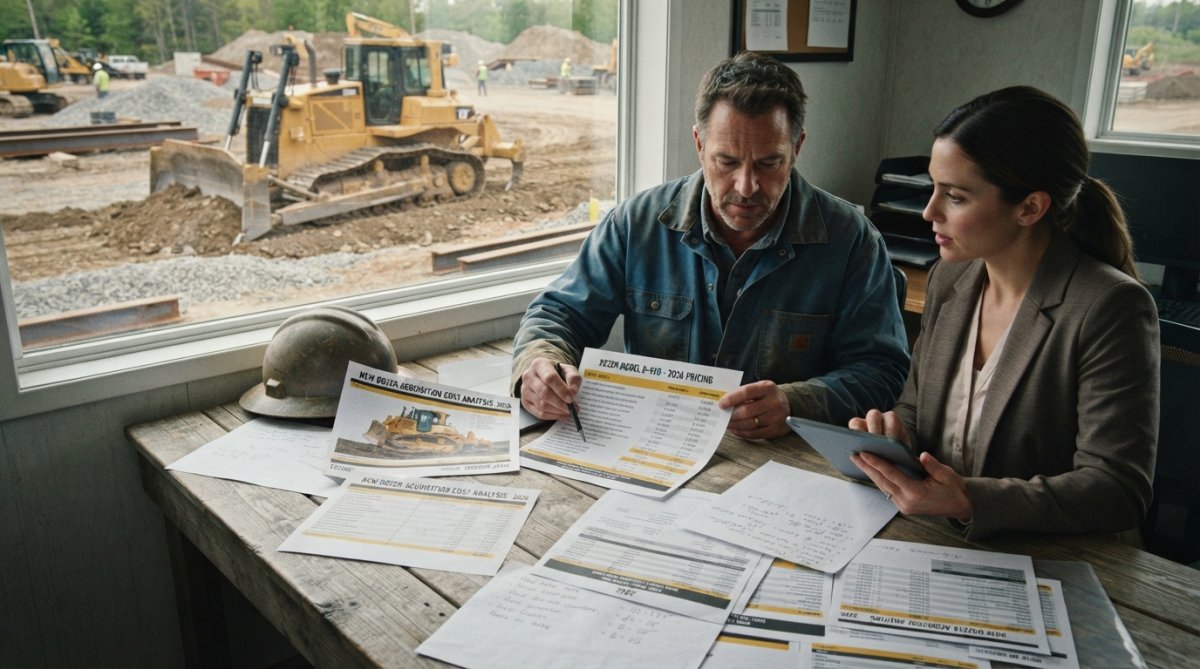
 listicle
Cost of a New Dozer 2026: Pricing & Specs
Table of Contents
- What Determines the Cost of a New Dozer in 2026
- Manufacturer Suggested Retail Price vs. Dealer Pricing
- New vs Used Bulldozer Price Comparison
- Heavy Equipment Financing Options for Dozer Purchase
- Dozer Maintenance and Ownership Costs Beyond Purchase Price
- Top Dozer Models and Their 2026 Price Points
- Regional Availability, Shipping, and Lead Times
- Frequently Asked Questions
Last Updated: September 23, 2026
What Determines the Cost of a New Dozer in 2026
The cost of a new dozer 2026 depends on far more than just the manufacturer's list price. Operating weight, engine horsepower, blade capacity, undercarriage configuration, and emission compliance all shift the final cost, sometimes by hundreds of thousands of dollars. Understanding these variables is essential before committing to a purchase or exploring equipment financing options.
A crawler dozer's price reflects its intended application. A compact model designed for finish grading costs a fraction of a mining-grade machine built to move massive volumes of material. The real cost of a new dozer 2026 also includes dealer markup, regional availability, shipping logistics, and the financing structure you choose, factors that can add 15-30% to the manufacturer's suggested retail price.
Operating Weight and Size Classifications
Operating weight is the primary cost driver, requiring stronger powertrains, larger hydraulic systems, and reinforced undercarriages that increase manufacturing complexity and material costs.
Dozers fall into three weight classes: compact (under 50,000 lbs, precision work), mid-size (50,000-100,000 lbs, general construction), and large-frame (over 100,000 lbs, mining and high-production earthmoving).
A dozer that's 20% heavier typically costs 30-40% more due to proportionally stronger components, making financing options critical for larger machines.
Engine Power and Performance Specifications
Horsepower directly correlates with price: compact dozers (75-150 hp), mid-size (150-300 hp), and large-frame (300-600+ hp), each reflecting different engine technology and emissions compliance.
Tier 4 Final emission compliance adds manufacturing cost through selective catalytic reduction systems and advanced fuel injection, mandatory for new equipment sold domestically.
Torque ratings matter as much as horsepower; high torque at low RPM prevents track spin and bogging, critical in mining and heavy civil work, and typically costs more.
Blade Capacity and Undercarriage Options
Blade capacity (compact: 3-5 cubic yards; large-frame: 15-25 cubic yards) requires proportionally stronger frame construction and hydraulic systems, adding significant cost.
Undercarriage configuration drives price variation: rubber tracks suit most applications but wear faster; steel tracks cost more upfront but last longer in mining. Wider tracks reduce ground pressure for soft soils but increase footprint and weight.
Hydraulic ripper systems cost $50,000-$150,000 depending on machine size and power, and should be factored into total cost of ownership calculations.
Manufacturer Suggested Retail Price vs. Dealer Pricing
MSRP is a starting point; dealers typically add 10-25% markup depending on inventory, demand, and configuration.
Dealer markup is negotiable for fleet purchases; large contractors often secure 10-15% discounts by committing to multiple units or establishing long-term relationships.
Regional availability affects pricing: high-demand areas charge premiums; rural regions offer better pricing but longer lead times. The cost of a new dozer 2026 in remote regions can be 15-20% higher due to shipping and dealer overhead.
Equipment financing marketplaces let you compare terms from multiple lenders for better rates.
New vs Used Bulldozer Price Comparison
Used dozers cost 40-60% less than comparable new machines. A three-year-old Caterpillar D11 retains 55-65% of original value; mid-size CASE or Komatsu retain 45-55%.
New machines offer full warranties (2-3 years or 5,000-10,000 hours), predictable maintenance, and latest emissions compliance; used machines have lower upfront costs but unknown maintenance history and shorter useful life.
Depreciation and Resale Value
Heavy equipment depreciates fastest in the first three years: 20-30% in year one, 15-20% in year two, 10-15% in year three. After five years, depreciation slows and value stabilizes.
Resale value depends on brand reputation, maintenance history, operating hours, and market conditions. Caterpillar and Komatsu command higher premiums (60-70% of original cost) than Shantui (45-55%).
Operating hours matter more than calendar age; machines with documented preventative maintenance command 10-20% premiums over those with spotty histories.
When New Equipment Makes Financial Sense
New equipment justifies higher cost when downtime is costly (mining, large-scale construction); reliability advantage often pays for itself within 3-5 years.
New machines make sense for 7-10+ year ownership; after depreciation flattens, value and operating costs stabilize. Used machines with high hours may require costly rebuilds within years.
For contractors with tight margins or seasonal work, leasing spreads costs over time and eliminates depreciation risk.
Heavy Equipment Financing Options for Dozer Purchase
Equipment financing comes in three structures: traditional loans, leases, and rent-to-own arrangements, each with different cash flow, tax, and ownership implications.
Traditional equipment loans require 10-20% down, 3-7 year terms, and fixed monthly payments. Interest rates depend on credit profile, down payment, and residual value assessment.
Financing vs. Leasing Structures
Leasing spreads costs over 3-5 years with no large down payment; lessor handles maintenance and repairs. No residual value risk or depreciation exposure.
Leasing offers no equity buildup and locks you into the term with early termination penalties. Best for contractors upgrading frequently or preferring predictable expenses.
Rent-to-own arrangements include a purchase option at term end, offering flexibility if business conditions change. Payments fall between leasing and traditional loans.
Equipment Finance Academy connects buyers with multiple lenders offering diverse financing structures. Approvals happen in hours, and funding can close same-day, allowing you to move quickly when the right equipment becomes available. The marketplace model lets you compare terms from the nation's top equipment lenders rather than negotiating with a single dealer-affiliated lender.
Dozer Maintenance and Ownership Costs Beyond Purchase Price
The cost of a new dozer 2026 extends beyond purchase price; annual maintenance, fuel, and repairs can exceed 10-15% of original cost for heavily used machines.
Fuel consumption scales with operating hours and load: large-frame dozers consume 20-30 gal/hr (annual cost: $100,000-$150,000); mid-size 12-18 gal/hr; compact 6-10 gal/hr.
Preventative Maintenance and Service Intervals
Preventative maintenance is the single most important cost control lever; skipping it creates massive repair bills later and undermines total cost of ownership.
Typical service intervals: oil changes every 250 hours, hydraulic filters every 500 hours, major inspections every 2,000 hours.
Dealership service costs $1,500-$3,000 per visit; independent shops charge 20-30% less but may lack OEM parts and diagnostic tools. Many contractors balance both for warranty-critical and routine work.
Warranty Coverage and Extended Service Agreements
Standard warranties cover 2-3 years or 5,000-10,000 hours. Extended service agreements (ESAs) stretch to 5-7 years or 15,000-20,000 hours, costing 10-20% of purchase price.
ESAs make sense for long-term ownership or high downtime costs. Seasonal operators may suffice with standard coverage.
Caterpillar and Komatsu offer more generous warranty coverage than smaller brands. Read fine print carefully; some exclude wear items like tracks and hoses.
Top Dozer Models and Their 2026 Price Points
The dozer market spans many sizes, capabilities, and price points. Understanding which models compete in your application space helps narrow purchasing decisions and financing calculations.
Large-Frame Dozers: Caterpillar D11 and D16
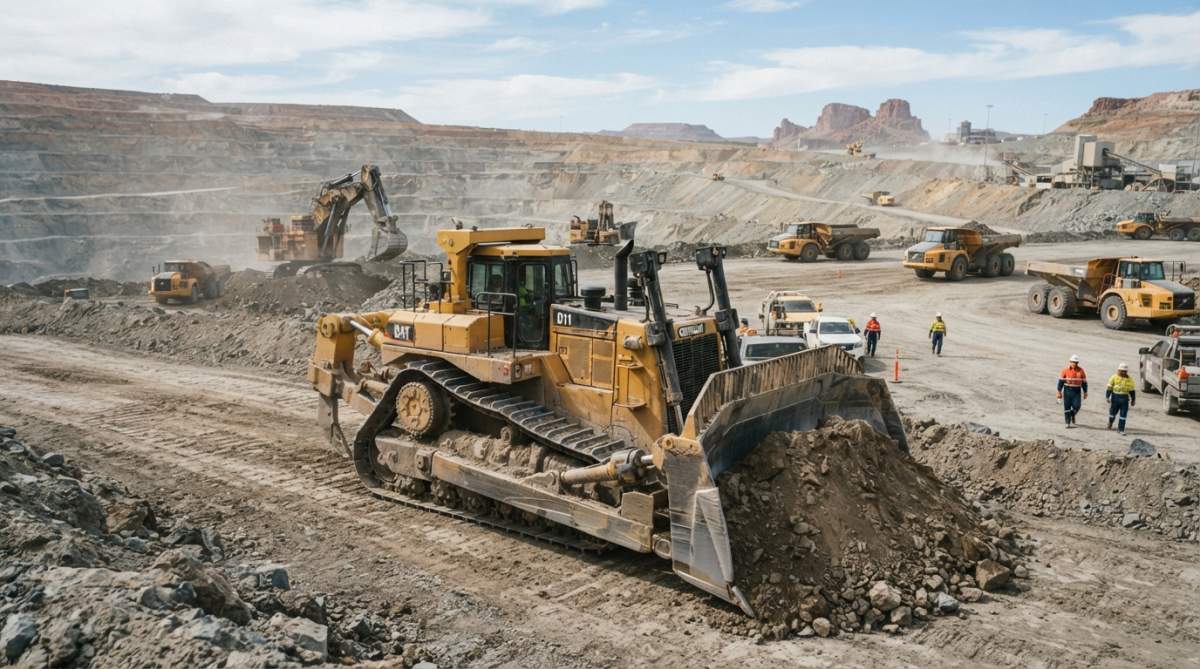
The Caterpillar D11 is the industry standard for large-scale mining with 600+ hp and 25+ cubic yard blade capacity. The cost of a new dozer 2026 in the D11 class ranges from $2,200,000 to $3,500,000.
The D11's advanced powertrain components are engineered for rebuildability, supporting long machine life and strong resale value for operations planning 10,000+ hours.
The Caterpillar D16 (starting at $1,700,000) features enhanced power, optimized undercarriage, and advanced operator control systems, offering a compelling alternative to the D11 for contractors prioritizing newer technology.
Both machines require specialized financing due to their capital intensity. Equipment financing marketplaces help large contractors secure competitive rates across multiple lenders rather than relying on single dealer-affiliated options.
Mid-Size Options: CASE N-Series and Komatsu D155AX-8
The CASE N-Series (650N, 750N, 850N) targets general construction and utility work with price points lower than large-frame machines. The CASE 750N balances power and maneuverability for site preparation and utility work, with an updated hydraulic system for responsive blade control and improved undercarriage durability. These mid-size machines attract contractors managing multiple projects across varied soil conditions.
The Komatsu D155AX-8 competes directly in the mid-size mining and heavy civil space. Featuring automatic transmission with lock-up torque converter and large blade capacity, the D155AX-8 excels at high-production ripping and dozing.
Compact and Specialty Models
Compact dozers like the CASE 650N serve precision grading and residential construction where maneuverability and operator visibility matter more than raw pushing power. At lower price points than mid-size machines, compact dozers appeal to contractors managing tight job sites and finish-grade work.
Regional Availability, Shipping, and Lead Times
Equipment availability varies dramatically by region. Major metro areas with heavy construction activity maintain large dealer inventories, enabling quick delivery. Rural or less-developed regions may require 4-8 week lead times for equipment delivery.
Frequently Asked Questions
How much does a brand new Caterpillar dozer cost in 2026?
Caterpillar's large-frame dozers range significantly in price based on model and configuration. The D16 starts around $1.7 million, while the D11 ranges from $2.2 million to $3.5 million depending on specifications and dealer markup. Exact pricing varies by region, delivery terms, and customization options. Contact a Caterpillar dealer for current quotes on your specific configuration and delivery timeline.
What factors influence the total cost of a new dozer purchase?
Operating weight, engine horsepower, blade capacity, undercarriage type, and emissions compliance level (Tier 4 Final) all affect pricing. Regional shipping logistics, dealer location, warranty options, and machine control technology integration add to the base cost. Supply chain delays and lead times also influence final pricing. Financing structure and down payment size can affect your total capital expenditure over the equipment's lifecycle.
Is it more cost-effective to finance a new dozer or buy used equipment?
New dozers offer warranty protection, latest emissions compliance, and predictable maintenance costs, making them suitable for operations requiring uptime reliability. Used equipment carries lower upfront capital requirements and faster depreciation is already absorbed. The decision depends on your cash flow, expected machine utilization, and operational lifespan needs. Heavy equipment financing options can reduce the financial strain of new purchases through structured payment plans with approvals in hours.
What is the typical total cost of ownership for a new dozer over five years?
Beyond the purchase price, budget for fuel, preventative maintenance, operator training, potential repairs, and insurance. Fuel costs typically represent 30-40% of operating expenses. Maintenance intervals vary by manufacturer but generally require service every 250-500 operating hours. Warranty coverage and extended service agreements can significantly reduce unexpected costs. Tier 4 Final emission compliance systems may require specialized maintenance, increasing service costs compared to older models.