 how-to
What Documents You Need to Sell Heavy Equipment
Table of Contents
- Essential Documentation Checklist for Selling Heavy Equipment
- Understanding Equipment Titles and Ownership Verification
- Creating a Heavy Equipment Bill of Sale Template
- Verifying Serial Numbers and Equipment Specifications
- Organizing Heavy Equipment Maintenance Records for Resale
- Securing a Lien Release for Heavy Machinery
- Completing the Title Transfer and Legal Handoff
- Frequently Asked Questions
Last Updated: September 24, 2026
Essential Documentation Checklist for Selling Heavy Equipment
Selling heavy equipment requires more than a handshake and a price agreement. You need the right documents to protect yourself legally and ensure a smooth transfer of ownership. Without proper paperwork, you risk disputes, liability issues, and complications that could delay payment or damage your reputation.
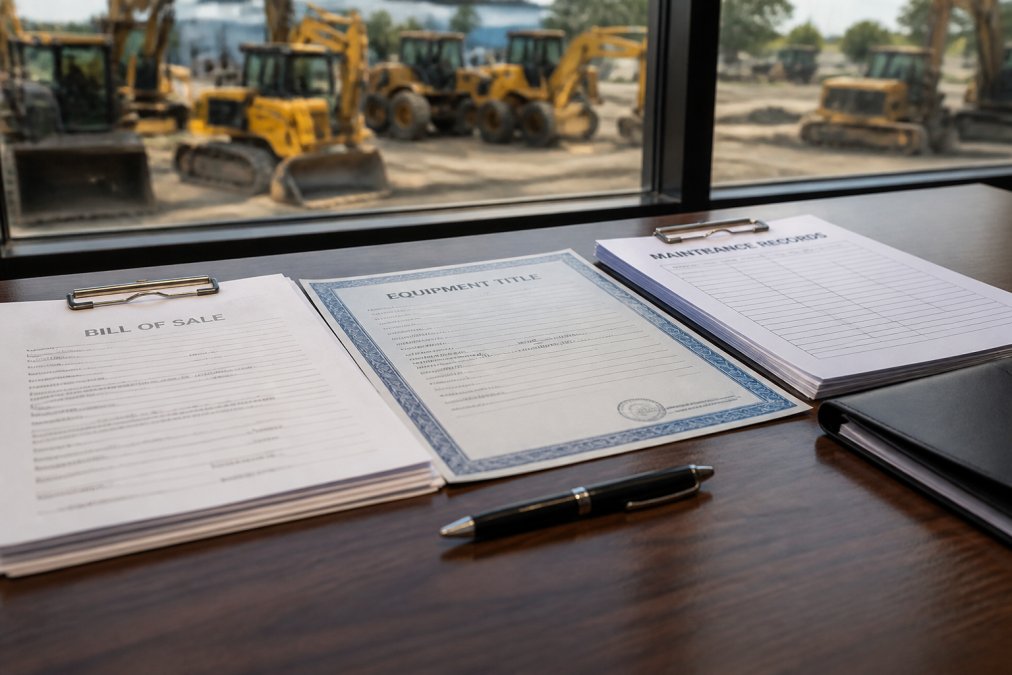
The documents to sell heavy equipment vary based on the equipment type, your location, and whether you're selling to a business or individual. However, certain core documents apply to nearly every sale. These protect both you and the buyer by establishing clear ownership, condition, and legal responsibility.
Here's what you absolutely need:
- Bill of sale, Proves the transaction occurred and transfers ownership
- Equipment title or certificate of ownership, Establishes legal ownership transfer
- Maintenance and service records, Shows equipment condition and care history
- Equipment specifications sheet, Lists make, model, serial number, and operating hours
- Lien release documentation, Confirms no outstanding loans or claims against the equipment
- Technical inspection report, Documents current condition and any defects
- UCC-1 filing search results, Verifies no secured interests exist
- Export documentation (if applicable), Required for international sales
Missing even one of these documents can stall a deal or expose you to legal liability. Many sellers skip the technical inspection or lien release thinking it's unnecessary. That's a mistake. Buyers increasingly demand these documents before committing funds, especially for equipment worth more than $10,000.
Understanding Equipment Titles and Ownership Verification
An equipment title or certificate of ownership is your proof that you legally own the machine you're selling. This document varies significantly depending on equipment type and your state's requirements. Some equipment requires formal titles similar to vehicle titles. Other equipment relies on bill of sale documentation alone.
Heavy machinery like excavators, dozers, and cranes often require formal equipment titles in most states. Smaller tools and specialized equipment may not. The safest approach is to contact your state's equipment registration authority or consult the equipment manufacturer's documentation to determine what applies to your specific machine.
Ownership verification also means checking for liens. A lien is a legal claim against the equipment, usually from a lender who financed the original purchase. If a lien exists and you haven't paid it off, the lender retains ownership rights. You cannot legally sell equipment with an outstanding lien without the lender's permission and a lien release document.
To verify clear ownership:
- Contact the original equipment manufacturer for ownership records
- Search your state's UCC filing database for any secured interests
- Request a lien release from any financing company that helped you purchase the equipment
- Obtain a clear title document showing no outstanding claims
This verification process typically takes 3-7 business days but protects both you and the buyer from serious legal complications.
Creating a Heavy Equipment Bill of Sale Template
A bill of sale is the foundational document for any equipment sale. It serves as proof that a transaction occurred, identifies both parties, describes the equipment in detail, and documents the sale price and payment terms. Even if your state doesn't require a formal equipment title transfer, a bill of sale creates a legal record of the transaction.
Your bill of sale should include these essential elements:
- Seller information, Your full name, address, and contact details
- Buyer information, Full name, address, and contact details
- Equipment description, Make, model, year, serial number, and condition
- Sale price, Total amount agreed upon and payment method
- Equipment condition statement, "As-is" or any specific warranties offered
- Date of sale, When the transaction occurs
- Signatures, Both parties sign and date the document
A heavy equipment bill of sale template should also include a statement confirming that the seller has the legal right to sell the equipment and that no liens or claims exist against it. This protects the buyer and establishes your credibility as a seller.
Many states have specific bill of sale forms for heavy equipment. Check your state's Secretary of State office or equipment regulatory body for approved templates. Using an official template ensures compliance with local requirements and reduces disputes.
The bill of sale becomes part of the buyer's ownership documentation. If the buyer ever needs to prove they purchased the equipment legitimately, they'll reference this document. A well-prepared bill of sale also signals to potential buyers that you're a professional, organized seller, which can help you close deals faster.
Verifying Serial Numbers and Equipment Specifications
Serial numbers are unique identifiers assigned to each piece of equipment. They prevent fraud, verify authenticity, and establish clear ownership history. Before selling, you must verify that the serial number on your equipment matches the serial number on your title, bill of sale, and any maintenance records.
Serial number mismatches are red flags that can kill a deal. They suggest the equipment may be stolen, salvaged, or subject to a lien. Buyers will walk away from a sale if serial numbers don't match across documents.
Locate the serial number on your equipment by checking:
- The manufacturer's nameplate (usually welded or bolted to the frame)
- The equipment manual or original purchase documentation
- Your maintenance records and service logs
- The equipment title or certificate of ownership
Record the serial number exactly as it appears on the equipment. Don't estimate or guess. A single digit error creates serious verification problems.
Equipment specifications complement the serial number. Document:
- Make and model, Manufacturer name and specific model designation
- Year of manufacture, When the equipment was built
- Operating hours, Current meter reading (for machinery with hour meters)
- Engine type and size, Horsepower, displacement, or other engine specs
- Attachments and accessories, Buckets, blades, or other equipment included in the sale
These specifications help the buyer understand what they're purchasing and verify that the equipment matches the listing description. Include specifications in your bill of sale and provide the buyer with the original manufacturer's specification sheet if available.
Organizing Heavy Equipment Maintenance Records for Resale
Maintenance records prove that you've cared for the equipment properly. Buyers trust equipment with documented service history far more than machines with missing records. Well-maintained equipment commands higher prices and sells faster.
Your maintenance records should document:
- Service dates and intervals, When maintenance was performed
- Work performed, Oil changes, filter replacements, repairs, inspections
- Technician or service provider, Name and contact information
- Parts replaced, Specific components and part numbers
- Operating hours at service, Machine meter reading at time of service
- Cost of service, What was spent on maintenance
Organize these records chronologically, starting with the equipment purchase date. Create a summary document listing all major services performed over the equipment's life. This summary helps buyers quickly understand the maintenance history without reviewing dozens of individual service tickets.
If you've lost some maintenance records, don't fabricate them. Instead, note the gaps honestly. A buyer will respect transparency more than suspicious perfect records. You can also request service history from previous service providers if you remember who worked on the equipment.
Digital copies of maintenance records are easier to share with potential buyers.
Securing a Lien Release for Heavy Machinery
A lien release is a document from a lender stating that you've paid off any outstanding loan against the equipment. Without a lien release, the lender retains legal ownership rights. You cannot legally transfer ownership to a buyer until all liens are satisfied.
- The equipment description (make, model, serial number)
- The loan account number
- A statement that the loan is paid in full
- Confirmation that the lender releases all claims to the equipment
- The lender's signature and official seal
Completing the Title Transfer and Legal Handoff
The title transfer is the formal legal process of moving ownership from you to the buyer. This process varies by state and equipment type. Some states use formal title transfer forms. Others rely on bill of sale documentation combined with UCC filing updates.
The typical title transfer process includes:
- Complete the bill of sale, Both parties sign and date the document
- Obtain a lien release, Confirm all liens are satisfied
- File UCC-3 termination, If applicable, file paperwork to remove any secured interests
- Submit title transfer paperwork, File forms with the state agency
- Pay any transfer fees, States may charge fees for title transfers
- Receive new title, The buyer receives an updated title in their name
During the handoff, provide the buyer with:
- Original bill of sale (signed by both parties)
- Equipment title or certificate of ownership
- Lien release documentation
- Complete maintenance records
- Original equipment manual and specification sheets
- Warranty transfer documentation (if applicable)
- Keys, access codes, or other items needed to operate the equipment
Frequently Asked Questions
What documents do I need to prove ownership of heavy equipment?
Proof of ownership typically includes the original equipment title or certificate of ownership, the bill of sale from your purchase, and any UCC filings showing you hold the lien. For equipment without a formal title, maintenance records, purchase receipts, and equipment appraisal documentation can support your ownership claim. Some states recognize alternative proof through registration records or manufacturer documentation. Check your state's specific requirements, as they vary by jurisdiction.
Do I need a lien release for heavy machinery before selling?
Yes. If your equipment has an outstanding loan or lease, you must obtain a lien release from the lender before the sale can close. The lien release document confirms that the creditor has been paid or that you've satisfied the debt obligation. Without it, the buyer cannot legally take ownership. Contact your original lender or equipment finance company to request the lien release document, which typically takes 5-10 business days to process.
What maintenance records should I provide when selling heavy equipment?
Provide a complete history of service records, repair logs, and maintenance documentation covering the equipment's operating life. Include dates of major repairs, parts replacements, oil changes, inspections, and any downtime. Organized heavy equipment maintenance records for resale demonstrate proper care and increase buyer confidence. Digital or printed records are acceptable; organize them chronologically. Buyers often request this documentation to assess the machine's condition and remaining lifespan.
Is a serial number verification required to sell heavy equipment?
Yes. The serial number (or VIN for vehicles) must match across all documentation including the title, bill of sale, and equipment appraisal report. Verify the serial number on the equipment's nameplate matches your ownership documents before listing. Mismatches can delay or prevent the sale. Buyers will independently verify the serial number as part of their due diligence, so accuracy is critical to closing the transaction smoothly.