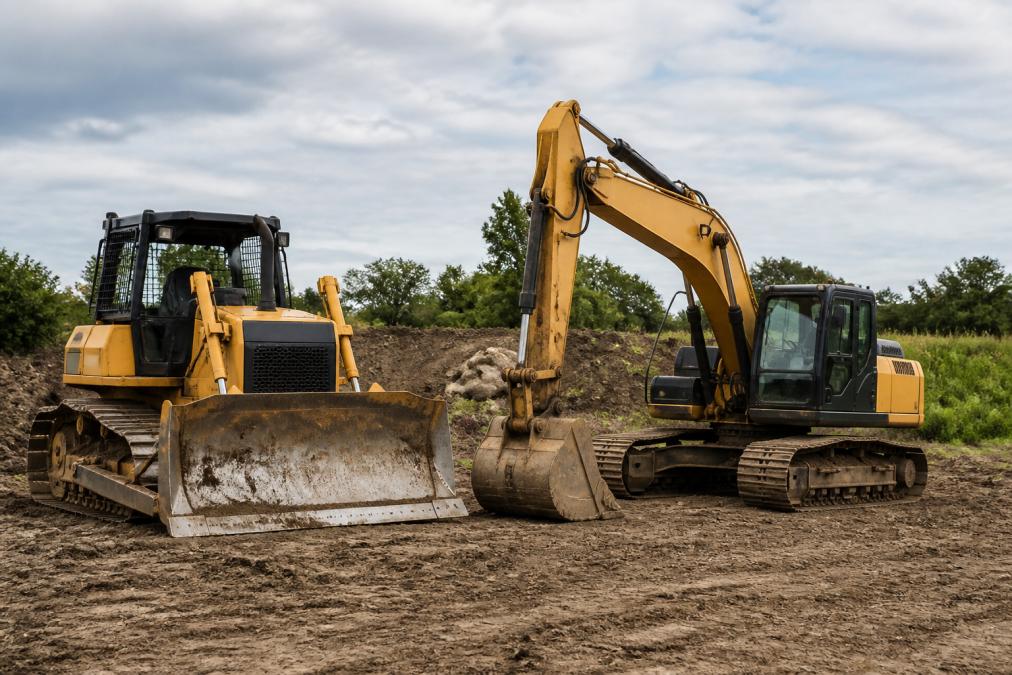
 comparison
Dozer vs Excavator for Site Clearing: Which Fits Your Job
Table of Contents
- Dozer vs Excavator: Core Differences for Site Clearing
- Pushing Power: When a Dozer Dominates Site Clearing
- Precision Digging: Why Excavators Excel at Selective Removal
- Excavator vs Dozer for Stump Removal and Debris Handling
- Terrain, Soil Type, and Ground Pressure Considerations
- Site Clearing Equipment Rental Costs and Financing Options
- Heavy Equipment Auctions: Where to Find and Finance Your Machine
- Decision Framework: Choosing the Right Machine for Your Project
- Frequently Asked Questions
Last Updated: September 25, 2026
Dozer vs Excavator: Core Differences for Site Clearing
A dozer and excavator solve the same problem in fundamentally different ways. The dozer excels at raw pushing power and large-scale debris removal. The excavator dominates precision work and selective material handling. Understanding which machine fits your project depends on your terrain, the type of clearing required, and your budget for equipment rental or purchase.
Choosing between a dozer vs excavator for site clearing means matching the right tool to your job. A dozer pushes material horizontally with raw force; an excavator digs and lifts with precision. Dozers win on large open areas; excavators excel at selective removal in tight spaces or near structures.
Pushing Power: When a Dozer Dominates Site Clearing
Caterpillar D-Series Dozers deliver the raw pushing power needed for site clearing. Their horizontal blade moves massive volumes of earth, stumps, and debris across open ground in straight lines.
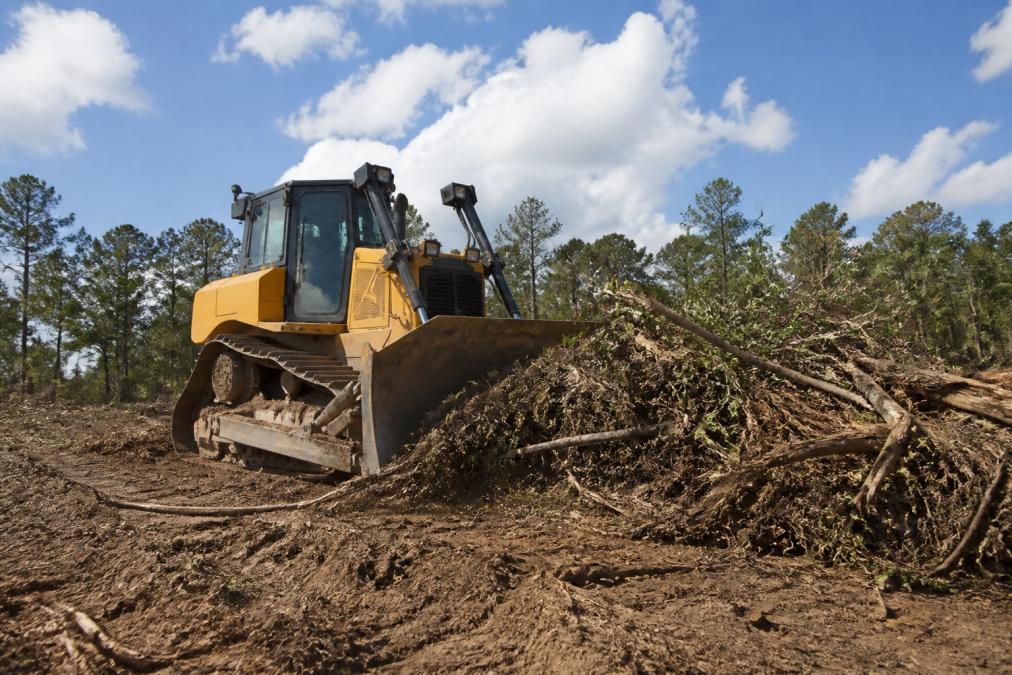
For clearing standing trees, uprooting stumps, or moving boulders, the dozer's high-torque engine and wide footprint apply sheer force across rough terrain without getting stuck.
Dozers excel at bulk earthmoving but lack precision. Once material is pushed into a pile, selective removal requires re-engaging the blade, a liability for projects near structures or requiring careful handling.
Precision Digging: Why Excavators Excel at Selective Removal
Excavators operate on a different principle: 360-degree rotation and hydraulic force provide control a dozer cannot match.
The excavator's bucket and arm enable selective control: remove single stumps without soil disturbance, create clean debris piles, and work in confined spaces near structures.
A hydraulic thumb attachment lets the excavator grip, sort, and place materials precisely, invaluable where debris management matters.
Excavators fall short on speed in large open areas. Moving material one bucket at a time, they're slower than dozers' continuous pushing. For time-critical projects on wide-open sites, the dozer wins.
Excavator vs Dozer for Stump Removal and Debris Handling
Stump removal separates these machines clearly. A dozer pushes stumps out through sheer force, but disturbs surrounding soil and often breaks stumps, leaving roots behind.
An excavator removes stumps with control: the bucket digs around the base, the arm lifts cleanly, and a hydraulic thumb can grip and twist the stump free with minimal soil disturbance.
For post-clearing debris handling, the excavator's advantage grows: material sorting becomes practical, separating rock from wood and topsoil from subsoil. A dozer creates one mixed pile, requiring extra sorting work later.
The dozer's one advantage: it moves debris faster across long distances. For moving material across large properties, the dozer's continuous pushing covers ground quickly.
Terrain, Soil Type, and Ground Pressure Considerations
Soil type determines machine performance. Dozers and excavators distribute weight differently; understanding soil classification and moisture content transforms equipment selection into a data-driven decision.
Sandy soils favor both machines, though dozers move material faster. Silty soils retain moisture and become sticky, favoring dozers' wider track footprint. Clay soils present the greatest challenge: when dry, they favor dozers' pushing force; when wet, both machines struggle without ground stabilization.
Moisture content is critical. Soil at saturation (15-25% moisture) reduces dozer efficiency by 30-50% and causes excavators to sink into ruts. If soil moisture exceeds 20%, delay work or use a dozer with a ripper attachment to break hardpan, costing 15-20% more but preventing equipment damage.
Ground pressure determines sinkage risk. Small excavators exert 8-12 PSI; mid-size dozers exert 5-7 PSI. On soft clay, pressure above 6 PSI causes rutting. Before equipment arrives, drive a steel rod by hand: if it penetrates more than 12 inches, favor the dozer; if it stops within 6 inches, either machine works.
On slopes steeper than 20 degrees, an excavator's lower center of gravity provides stability a dozer cannot match. On slopes under 15 degrees with compacted soil, a dozer's blade control is superior. Between 15-20 degrees, soil type decides: soft soil favors the excavator; firm soil favors the dozer.
Soils with more than 30% rock fragments favor dozers because pushing force moves boulders efficiently. Excavators must dig around boulders, slowing production by 40-60%. However, for selective removal while preserving topsoil, the excavator's precision justifies slower pace.
Site Clearing Equipment Rental Costs and Financing Options
Equipment rental costs vary, but regulatory compliance and permitting add hidden costs that vary by state and locality.
Most states require erosion and sediment control (ESC) permits for clearing over 1 acre. An excavator's selective removal and smaller footprint often requires less extensive erosion control than a dozer's broad disturbance. On a 3-acre project, ESC compliance costs can be significant; an excavator may reduce costs.
Tree removal permits add another layer. Most municipalities require a permit to remove trees over a certain diameter (typically 6-12 inches, depending on local ordinance). Removal of protected species, such as oak, hickory, or native hardwoods in certain regions, requires advance notification and sometimes mitigation planting. Dozers remove trees indiscriminately through pushing and uprooting; excavators allow selective removal of only permitted trees. On sites with mixed vegetation, the excavator's selectivity often saves costs in permit violations and mitigation.
Debris disposal regulations vary significantly. Some jurisdictions require separation of wood, rock, and soil for different disposal streams. Burning cleared vegetation is prohibited in many areas. Landfill tipping fees vary depending on material type and location. A dozer creates mixed debris piles that require sorting before disposal, adding labor and time. An excavator with a thumb attachment can sort materials into separate piles during clearing, reducing post-clearing sorting costs by 25-40%. On a 5-acre clearing project generating 200-300 tons of debris, this difference translates to significant disposal cost savings.
Wetland and stream buffer regulations impose the strictest constraints.
Heavy Equipment Auctions: Where to Find and Finance Your Machine
Heavy equipment auctions and online marketplaces have transformed how contractors source machinery. Heavy equipment auctions and online marketplaces have transformed how contractors source machinery. Purchasing through an established marketplace costs more than private sales but saves money compared to dealer retail. The marketplace handles logistics, which means you don't coordinate shipping yourself. For contractors outside major equipment hubs, this access to nationwide inventory is invaluable.
Decision Framework: Choosing the Right Machine for Your Project
Start with project scope. How many acres need clearing? Is the area open or congested with obstacles? Are you removing stumps, grading, or both? These questions narrow the choice immediately.
| Project Characteristic | Dozer Advantage | Excavator Advantage | Consideration |
|---|---|---|---|
| Large, open areas (5+ acres) | Faster bulk clearing | Slower but precise | Choose dozer for speed |
| Selective stump removal | Crude, disturbs soil | Clean, controlled removal | Choose excavator for precision |
| Tight spaces, obstacles | Limited maneuverability | Excellent control | Choose excavator for access |
| Grading and slope work | Efficient blade control | Better on uneven terrain | Choose excavator for slopes |
| Wet or soft soil | Better weight distribution | Risk of sinking | Choose dozer for soft ground |
| Rock and boulder removal | Superior pushing force | Good with thumb attachment | Choose dozer for massive rocks |
Frequently Asked Questions
What is the primary difference between a dozer and an excavator for land clearing?
A dozer excels at pushing and moving large volumes of material across open areas using a front blade, while an excavator provides precision digging and selective removal with a bucket and boom. Dozers generate raw pushing power for bulk clearing; excavators offer maneuverability and control for targeted work. Your choice depends on whether you need speed and volume or accuracy and selectivity.
Is an excavator better for removing stumps and large debris than a dozer?
Yes. Excavators with hydraulic thumbs have superior control for stump removal and can extract roots without disturbing surrounding soil. A dozer can push stumps, but it often spreads debris across the site and disturbs more earth. For selective stump removal, an excavator is the better choice; for clearing large areas where stump location matters less, a dozer moves material faster.
How does soil type and moisture affect which machine you should choose?
Wet or soft soil favors excavators because their undercarriage distributes weight differently and they don't require as much ground pressure. Dozers can compact soil under their tracks in wet conditions, reducing traction. Hard, rocky terrain suits dozers for their pushing power and durability. Always assess site topography and moisture before selecting equipment to avoid getting stuck or causing unnecessary site damage.
What should I expect to pay for dozer and excavator rental for site clearing?
Rental costs vary based on machine size, duration, and local market rates. Rental rates depend on daily, weekly, or monthly terms. For time-sensitive projects, equipment financing can help you acquire machinery quickly. Contact lenders through a financing marketplace for same-day approval and fast funding to match your project timeline.
Site clearing success depends on matching equipment to the job, not on picking the "better" machine. Most large projects use both, a dozer for bulk earthmoving and an excavator for precision work. If you're financing equipment for a new project, Equipment Finance Academy connects you with lenders who understand heavy machinery and can deliver same-day funding. Get started with Equipment Finance Academy and access financing that moves as fast as your project timeline demands.