 how-to
How to Value Used Construction Fleet: Step-by-Step
Table of Contents
- How to Value Used Construction Fleet: The Core Methods
- Heavy Equipment Depreciation Schedule and Machine Hours
- Factors That Influence Equipment Value
- Equipment Total Cost of Ownership Calculator
- Used Construction Equipment Price Trends and Auction Data
- Preparing Your Fleet for Appraisal
- Valuing Damaged or Non-Operational Equipment
- Frequently Asked Questions
Last Updated: September 20, 2026
How to Value Used Construction Fleet: The Core Methods
Valuing a used construction fleet requires understanding three fundamental approaches. Equipment Finance Academy helps contractors and fleet managers navigate this process by connecting them with financing solutions.
Sales comparison looks at what similar equipment sold for recently. Cost-based valuation calculates replacement cost minus depreciation. Income capitalization estimates value based on cash flow the equipment generates.
Real-world equipment value sits at the intersection of all three methods. A machine might show high residual value on paper but face weak market demand, or be in perfect condition yet worth less because newer models dominate the market.
Sales Comparison Method
The sales comparison method answers a simple question: What did similar equipment sell for recently?
Find comparable equipment that sold in the last 90 days, adjust for condition and features, and arrive at fair market value. For a 2019 excavator with 4,500 hours, search for 2018-2020 sales with similar usage.
Adjustments matter: newer tires add value, rebuilt engines reduce operating costs, and attachment configurations change value significantly. Access recent auction data, dealer listings, and private sales to identify market trends.
The challenge is data availability: private sales rarely get publicized, auctions often reflect distressed sales, and online marketplaces show asking prices rather than actual selling prices.
Start with auction results from the last 60-90 days, check dealer inventory, and review online asking prices discounted 10-15% for negotiation. If three independent sources cluster around the same price, that's your market signal.
Cost-Based Valuation
Cost-based valuation works backward from replacement cost.
Calculate replacement cost, then subtract accumulated depreciation based on age and usage. A new CAT 320 excavator costs roughly $350,000; a 2019 model with 4,500 hours might depreciate 40-50%, landing around $175,000-$210,000.
This method is useful for insurance and tax accounting but rigid, it doesn't account for market demand. A perfectly maintained machine from an unpopular model year sits at calculated value even if it won't sell.
Heavy equipment typically depreciates 15-20% in year one, then 10-12% annually for years two through five. Machine hours and maintenance history accelerate or slow depreciation.
To use this method, you need the original equipment cost and a depreciation schedule for that specific model. Manufacturers and finance companies publish these. Apply adjustments for condition, hours, and market factors. The result is useful for financial reporting but should never be your only valuation.
Income Capitalization Approach
Income capitalization values equipment based on the cash it generates.
This method calculates value based on expected future income. A concrete pump generating $500 daily for 250 days yearly produces $125,000 annual revenue. At a 20-25% capitalization rate, the equipment value is around $500,000-$625,000.
This method requires honest assumptions about use rates and rental income. Most owners overestimate actual working days; weather, downtime, and seasonal variation reduce theoretical income. Conservative assumptions produce defensible valuations.
Income capitalization works best for equipment with predictable rental markets like excavators and dozers. Specialized equipment with limited demand makes this method difficult due to cash flow uncertainty.
The capitalization rate you choose dramatically affects the result. A 20% rate values the equipment higher than a 25% rate. Your rate should reflect the risk of the equipment not generating expected income and the time value of money. Higher-risk equipment gets a higher capitalization rate.
Heavy Equipment Depreciation Schedule and Machine Hours
Understanding depreciation schedules and machine hours is essential to accurate valuation. These two factors determine residual value more than almost anything else.
Understanding Annual Depreciation Rates
Year one depreciation typically runs 15-20%. Year two is 10-12%. By year five, depreciation slows to 5-7% annually. After year seven, depreciation flattens significantly unless the equipment enters a lower market tier.
Depreciation varies by equipment type and manufacturer. Premium brands (Caterpillar, Komatsu, John Deere) hold value better than off-brand equivalents.
Well-maintained equipment depreciates slower. A machine with documented regular service might hold 55-60% of its value at five years; the same model with spotty maintenance might be at 45-50%.
Market cycles influence depreciation. During booms, equipment holds value better; during downturns, depreciation accelerates. Adjust expectations if the market is unusually strong or weak.
How Machine Hours Impact Residual Value
Machine hours matter more than calendar age for heavy equipment.
A five-year-old excavator with 2,000 hours is worth significantly more than one with 8,000 hours. The industry standard is 1,000-1,500 machine hours per year; machines above that range have less remaining useful life.
Each additional 1,000 hours typically reduces value by 3-5%. Underutilized equipment depreciates faster because it ages without generating economic benefit.
A machine with a rebuilt engine might have 8,000 total hours but only 2,000 since the rebuild. That recent rebuild significantly improves value; buyers care about current engine hours, not historical totals.
Documentation of machine hours is critical. Equipment without clear hour records is worth 10-20% less because buyers can't verify actual usage. Telematics systems and maintenance records provide this documentation. A machine with GPS-tracked hours and service records commands a premium.
Factors That Influence Equipment Value
Beyond the core valuation methods, specific factors either increase or decrease what your equipment is actually worth.
Operating Condition and Maintenance History
A machine that starts immediately, runs smoothly, and shows no leaks is worth 15-25% more than one with starting issues or leaks. Mechanical condition matters more than cosmetic condition.
Documented regular oil changes, filter replacements, and inspections give buyers confidence. A service record showing 500-hour intervals is worth real money; missing records raise red flags.
Hydraulic systems, engines, and transmissions are the most expensive to repair. Known issues in these areas depreciate sharply; recent rebuilds command a premium.
Tire condition on mobile equipment affects value significantly. New tires add 5-10% to value. Worn tires reduce value by similar amounts. Buyers factor tire replacement into their purchasing decision immediately.
Serial Number Verification and Service Records
A clear title with matching serial numbers is non-negotiable. Mismatched or missing serial numbers raise legal concerns and reduce value by 20-30% or make equipment unsellable.
Service records connected to the serial number create documented equipment history.
Year Model and Market Demand
Year model affects both depreciation and market demand.
Market demand for specific models varies. A popular 2022 model is worth 5-10% more than a 2021 model. An outdated 2015 model might be worth 20% less than a 2016 model.
Equipment Total Cost of Ownership Calculator
Total cost of ownership (TCO) reveals true economic value. Purchase price is just the beginning; add fuel, maintenance, repairs, insurance, storage, and financing. A cheaper machine with higher operating costs might have worse total economics than a more expensive machine that runs cheaper.
| Cost Category | Annual Estimate | Notes |
|---|---|---|
| Fuel | $8,000-$15,000 | Varies by equipment type and use |
| Maintenance | $3,000-$8,000 | Scheduled service and parts |
| Repairs | $2,000-$6,000 | Unexpected breakdowns and fixes |
| Insurance | $1,500-$3,500 | Equipment coverage and liability |
| Storage/Parking | $1,200-$2,400 | Yard space and security |
| Financing | $4,000-$12,000 | Interest on equipment loans |
| Total Annual TCO | $19,700-$47,900 | Highly variable by equipment and usage |
Used Construction Equipment Price Trends and Auction Data
Construction equipment prices follow broader economic cycles. During strong periods, values hold steady or increase. During downturns, values drop 15-30% as supply exceeds demand. Current market conditions should inform valuation timing.
Preparing Your Fleet for Appraisal
Professional appraisals deliver accurate valuations, but preparation matters.
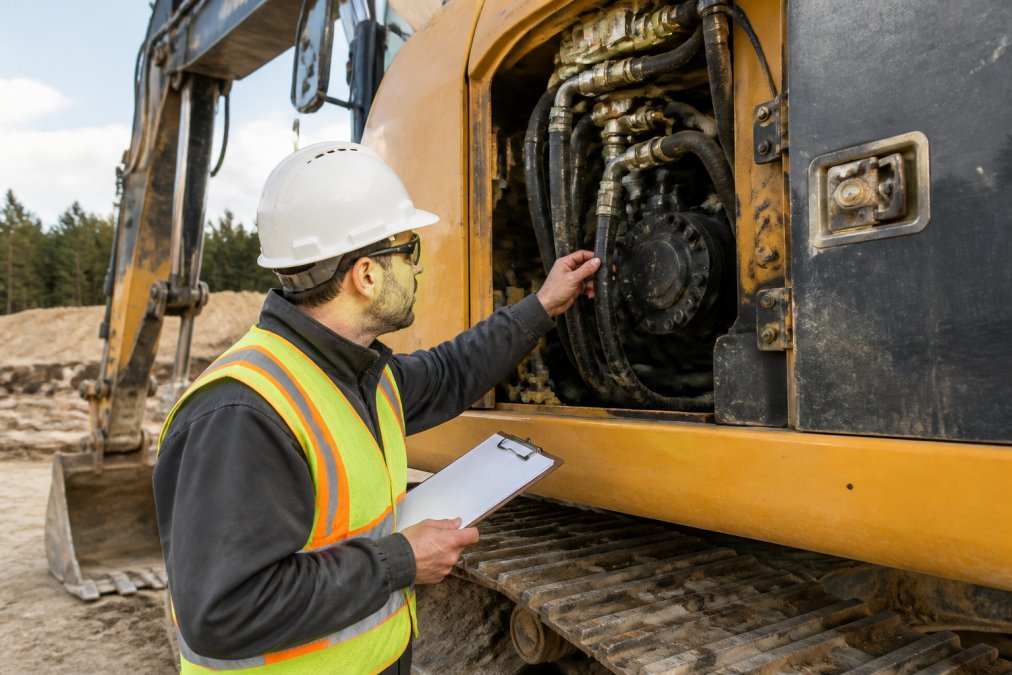
Digital Inspection Checklist
Use this checklist to document equipment condition before appraisal:
- Take exterior photos from four angles in daylight
- Document all visible damage or wear
- Check fluid levels and condition (oil, coolant, hydraulic fluid)
- Test all gauges and warning lights
- Verify serial number matches documentation
- Record current machine hours
- Check tire condition and pressure
- Test engine start and idle quality
- Verify all attachments and accessories are present
- Document any recent repairs or maintenance
- Check for leaks under the machine
- Verify paint condition and rust spots
- Test cab controls and safety features
- Record any unusual sounds or vibrations during operation
Documentation and Valuation Support
Organize all equipment documentation in one file. Include the original purchase invoice, maintenance records showing regular service intervals, repair receipts for major work, and title documents.
Valuing Damaged or Non-Operational Equipment
Equipment that doesn't run or has significant damage requires different valuation approaches.
Frequently Asked Questions
What factors most influence the resale value of construction equipment?
Operating condition, machine hours, maintenance history, and year model are the primary drivers of resale value. Equipment in excellent condition with low hours and complete service records commands 20-40% premiums over comparable machines. Market demand for specific equipment types also shifts value significantly based on regional construction activity and fleet turnover cycles.
How do I determine the fair market value of heavy machinery using depreciation schedules?
Use the heavy equipment depreciation schedule to establish baseline value by year model, then adjust for actual machine hours and condition. Most construction equipment depreciates 15-20% annually in the first five years, then 8-12% annually thereafter. Subtract additional value for excess hours beyond industry averages, poor maintenance records, or needed repairs. Cross-reference your adjusted figure against recent auction results for identical or similar models.
Does equipment age or engine hours matter more for valuation?
Machine hours typically matter more than calendar age. A five-year-old excavator with 3,000 hours may be worth 30-50% more than an eight-year-old model with 8,000 hours. Hours directly indicate wear on engines, hydraulics, and structural components. Age matters when equipment has sat idle or when newer technology offers significant efficiency gains, but operational hours are the primary wear metric lenders and buyers evaluate.
How can I use an equipment total cost of ownership calculator to support my valuation?
Input the equipment's purchase price, expected lifespan in hours, fuel costs, maintenance expenses, and salvage value. The calculator reveals the true per-hour operating cost, which helps justify your asking price to potential buyers. Equipment with lower total cost of ownership relative to newer models commands higher resale value. This data also supports trade-in negotiations and helps you position your fleet competitively against market alternatives.