 ultimate-guide
Used Excavator Price Valuation Guide
Table of Contents
- Understanding Used Excavator Price Factors
- Heavy Equipment Depreciation Schedule
- Used Excavator Inspection Checklist for Valuation
- Excavator Resale Value by Brand
- How to Determine Fair Market Value
- Financing and Tax Implications of Used Equipment Purchases
- Post-Purchase Hidden Costs and Maintenance Planning
- Buying vs. Leasing: A Valuation Perspective
- Frequently Asked Questions
Last Updated: September 2, 2026
Understanding Used Excavator Price Factors
A used excavator price depends on operating hours, age, condition, brand reputation, and regional demand. Operating hours represent the most critical valuation metric, a low-hour machine commands a premium due to less internal wear on hydraulics, engine, and undercarriage. Brand matters significantly; certain manufacturers hold resale value better due to parts availability, repair reputation, and market demand.
Operating Hours and Machine Age
Operating hours tell the story of actual work history more accurately than calendar age alone. A five-year-old excavator with 2,000 hours operates differently than one with 8,000 hours. Machines with moderate hours (3,000-5,000) typically sit in the sweet spot for resale value. Low-hour machines command premiums; high-hour machines require deeper inspection and often see steeper discounts because buyers anticipate major maintenance within the first year of ownership.
A newer excavator with high hours may outvalue an older machine with lower hours, depending on the model and market demand. Machine age compounds the hours calculation but doesn't override it.
Size Category: Mini, Compact, and Large Excavators
Mini excavators (under 6 tons) serve a different market than compact models (6-15 tons) or large excavators (over 15 tons). Each category has distinct pricing patterns and depreciation schedules. Mini excavators appeal to landscapers, small contractors, and rental companies, keeping resale markets relatively stable. Compact excavators bridge the gap between mini and large machines, offering more power while remaining maneuverable. Large excavators target heavy construction, mining, and infrastructure work.
Size directly impacts total cost of ownership. Mini excavators cost less to operate, transport, and maintain, so used models retain value better proportionally. Large excavators depreciate faster in dollar terms but often hold stronger percentage value if maintained properly.
Heavy Equipment Depreciation Schedule
Excavators depreciate fastest in the first two years of ownership. A new machine loses 20-30% of its value within 24 months as it transitions from new to used status (peer-reviewed research). This depreciation curve flattens after year three, meaning a five-year-old excavator loses value more gradually than a two-year-old one.
Year-by-Year Depreciation Patterns
The first year sees the steepest value decline. A brand-new excavator purchased for $150,000 might be worth $105,000-$120,000 after 12 months. By year three, the machine has typically lost 35-45% of its original value. From year four onward, depreciation slows considerably. A well-maintained five-year-old excavator might be worth 50-60% of its original purchase price; a ten-year-old machine could retain 30-40%.
Depreciation is steepest when the machine is newest, making the 3-5 year range attractive for budget-conscious buyers seeking modern machines with years of useful life remaining.
Residual Value Benchmarks
Residual value varies by brand and market conditions. Premium brands maintain higher residual values due to stronger resale demand and parts availability. Regional demand heavily influences residual value, an excavator worth $65,000 in a strong construction market might fetch only $55,000 in a slower region. Spring and summer see higher equipment sales and prices; winter often sees softer demand.
Tracking residual value benchmarks over time helps you spot market trends and identify deviations signaling exceptional condition or underlying issues.
Used Excavator Inspection Checklist for Valuation
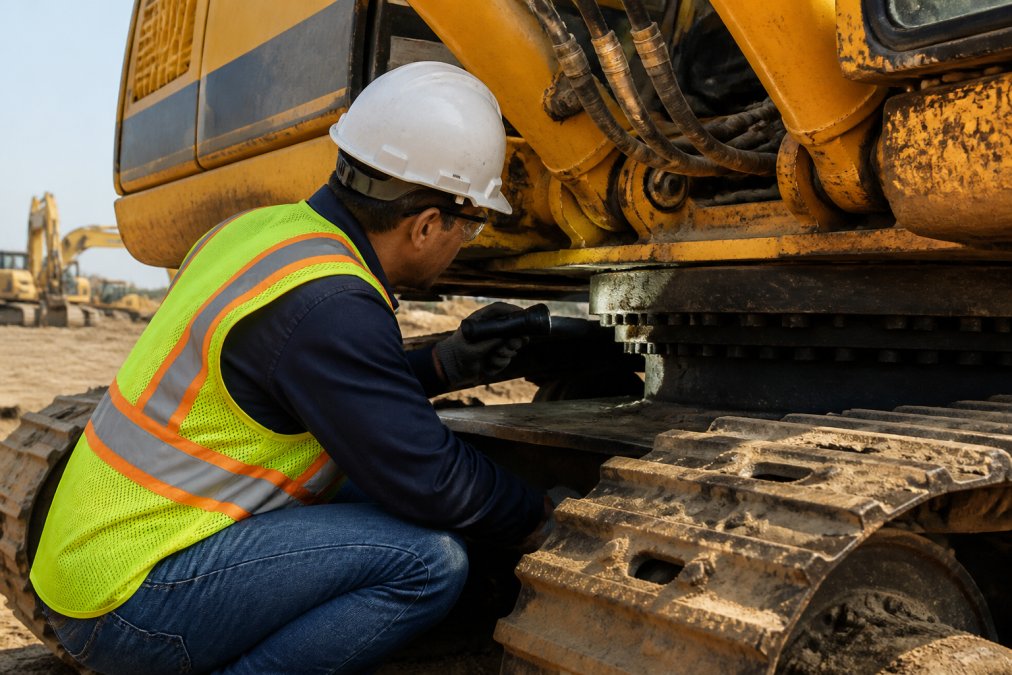
A thorough inspection transforms vague pricing into data-backed valuation. Buyers who inspect carefully often negotiate 5-10% better prices. An inspection checklist should cover five critical areas: hydraulics, undercarriage, engine performance, telematics data, and structural integrity.
Hydraulic System and Undercarriage Assessment
The hydraulic system powers every movement an excavator makes. Inspect all visible hoses for cracks, bulges, or seeping fluid. Check hydraulic fluid color and clarity; dark or cloudy fluid suggests contamination and poor maintenance.
The undercarriage bears the machine's weight and absorbs shock from digging. Inspect tracks or wheels for excessive wear, cracks, or missing components. Check bucket teeth for wear patterns; uneven wear suggests improper load distribution. Look for rust or corrosion on the boom, arm, and bucket. Surface rust is cosmetic, but deep pitting indicates exposure to saltwater or harsh chemicals. Examine welds for cracks or signs of repair.
Engine Performance and Telematics Review
Start the engine and listen for abnormal sounds. Knocking, grinding, or excessive valve noise indicates internal wear. Let the engine idle and observe smoke color. Blue smoke suggests oil burning; black smoke indicates incomplete combustion, both signal engine problems.
Check the engine oil level and condition. Dark, gritty oil indicates poor maintenance. Review the service history for regular oil changes. Request telematics history from the seller. This data shows operating hours, idle time, load patterns, and maintenance alerts. Machines with consistent operation patterns and addressed maintenance alerts suggest responsible ownership.
Attachment Package and Structural Integrity
Attachments like buckets, thumbs, or compactors add functionality but also add wear points. Inspect each attachment for cracks, bent components, or worn pins. Check the structural integrity of the boom, arm, and bucket. Bent or cracked components require welding or replacement, expensive repairs that reduce machine value.
Examine the cabin condition if equipped. Cracked windows, worn seats, or non-functional controls affect operator comfort and signal poor maintenance overall.
Excavator Resale Value by Brand
Brand reputation directly correlates with resale value. Leading brands like Caterpillar, Komatsu, Volvo, and Hitachi typically retain 55-70% of original value at the five-year mark. Mid-tier brands like JCB, Sany, and Doosan hold 45-60%. Economy brands often drop to 35-50% by year five.
Brand strength varies regionally. Caterpillar dominates in North America; Komatsu holds particular strength on the West Coast; Volvo machines are popular in regions with strong European equipment networks. Parts availability determines long-term ownership costs. Common brands have readily available parts and experienced technicians. Obscure brands may require ordering parts internationally, increasing repair costs and downtime.
How to Determine Fair Market Value
Fair market value reflects what a willing buyer would pay a willing seller in an arm's-length transaction. Three approaches converge on this number: comparable sales analysis, cost approach, and income approach.
Comparing Auction Results and Bid Prices
Auction data provides real market transactions. Review completed auctions for machines matching your specifications: same brand, similar model year, comparable operating hours, and equivalent condition. Look for at least three comparable sales from the past 30-60 days. Average the prices, then adjust for differences. If your machine has lower hours, add 5-10% to the average; if it has higher hours or visible wear, subtract accordingly.

Bid prices at auction often differ from asking prices on dealer lots. Auction buyers bid competitively, driving prices up. Private sales may show lower prices due to less competition among buyers.
Regional Demand and Market Activity
Regional construction activity directly impacts equipment prices. Markets with strong building activity see higher demand and prices for excavators. Track regional construction indices and equipment rental use rates. High use suggests strong demand; low use signals oversupply and downward price pressure. Spring and summer typically see higher prices than fall and winter.
Monitor how quickly similar machines sell in your region. If comparable machines sell within 30 days, the market is strong and prices are likely near fair value. If machines linger for 60+ days, supply exceeds demand and prices may be negotiable downward.
Total Cost of Ownership Calculations
Fair market value should reflect total cost of ownership over the machine's remaining useful life. Calculate annual operating costs: fuel, maintenance, repairs, operator wages, and depreciation. A machine costing $15,000 annually to operate is worth less than one costing $10,000 annually, all else equal.
Document all known maintenance needs. If inspection revealed upcoming major repairs, subtract those costs from fair market value. A machine needing $5,000 in repairs should be priced $5,000 lower than an equivalent machine in perfect condition.
Financing and Tax Implications of Used Equipment Purchases
Equipment financing typically requires 20-30% down payment, with the balance financed over 3-5 years. Depreciation deductions apply to used equipment purchased for business use. The IRS allows Section 179 expensing, which lets you deduct the full purchase price in the year of acquisition (subject to annual limits). This significantly reduces after-tax cost. Consult a tax professional to understand how Section 179 applies to your situation.
Used equipment purchased from a dealer may qualify for different financing terms than equipment from private sellers. Equipment loans typically carry higher interest rates than real estate loans because equipment depreciates and has lower collateral value. Sales tax applies to used equipment purchases in most states, though rates vary.
Post-Purchase Hidden Costs and Maintenance Planning
Buying a used excavator requires ongoing cost commitment beyond the purchase price. A used excavator typically requires maintenance every 250-500 operating hours. Budget 10-15% of the machine's purchase price annually for routine maintenance. A $60,000 machine should have $6,000-$9,000 set aside yearly for upkeep.
Major repairs can arrive unexpectedly. A hydraulic pump failure costs $3,000-$8,000. Engine overhaul runs $5,000-$15,000. Track replacement can exceed $10,000. Machines with high hours face higher probability of major repairs within the first 1-2 years of ownership.
Operator training and certification add costs if your team isn't already qualified. Budget $1,000-$3,000 for comprehensive operator training. Storage and transportation costs accumulate if the machine isn't actively deployed.
Buying vs. Leasing: A Valuation Perspective
The decision between buying and leasing used excavators involves comparing total cost over the equipment's useful life. Buying makes sense when you need equipment for extended periods and can achieve positive cash flow from equipment use. Leasing works better for short-term projects or when you need flexibility to upgrade equipment.
Leasing typically costs 8-12% of the equipment's value monthly. A $60,000 excavator leases for $4,800-$7,200 monthly. Over 24 months, that's $115,000-$173,000. Buying the same machine for $60,000 and operating it for 24 months costs far less if you can deploy it productively.
The breakeven analysis depends on your use rate. If you deploy equipment 80+ hours monthly, buying typically wins financially. If you use equipment 20-30 hours monthly, leasing becomes more economical. Consider also the equipment's remaining useful life. A used excavator with 8,000 hours might have 5-7 years remaining. If your projects span 3-4 years, buying makes sense because you'll recoup your investment through usage.
EquipMarket simplifies the buying process by connecting you directly with verified sellers. Rather than guessing at fair market value or worrying about seller legitimacy, you can browse equipment from trusted sources, request inspections, and negotiate directly without intermediaries eating into your margins.
Determining a fair used excavator price requires analyzing operating hours, machine age, brand reputation, condition, and regional demand simultaneously. The inspection checklist transforms subjective impressions into objective data. Comparing auction results and maintenance records grounds your valuation in market reality. Understanding depreciation patterns helps you identify whether a particular machine is overpriced or undervalued. Whether you're buying equipment for your fleet or selling machines you no longer need, accurate valuation protects your investment and ensures fair transactions.
Frequently Asked Questions
Q: Is there a Kelley Blue Book or KBB for excavators?
A: No single standardized blue book exists for excavators like it does for vehicles. Instead, used excavator pricing relies on auction results, dealer inventory, and market comparables. Industry-specific platforms track bid prices and recent sales, but fair market value depends on model year, operating hours, condition, and regional demand. Working with verified dealers or using equipment valuation tools helps establish accurate pricing.
Q: What factors most significantly impact the resale value of an excavator?
A: Operating hours are the primary driver of excavator resale value, often more important than model year alone. Maintenance history and service records directly affect buyer confidence and pricing. Undercarriage and hydraulic system condition determine remaining useful life. Brand reputation influences residual value, established manufacturers hold value better. Regional demand, attachment packages, and whether the machine is high-hour or low-hour also shape fair market value substantially.
Q: How do I calculate the depreciation of a used excavator?
A: Heavy equipment depreciation follows a predictable schedule: machines typically lose 15-20% of value in the first year, then 10-15% annually for years two through five, and stabilize at slower rates afterward. To calculate: take the original purchase price, apply year-one depreciation, then apply subsequent annual percentages based on the machine's age and operating hours. Condition and maintenance history can accelerate or slow depreciation. Comparing your machine's specs to recent auction results refines the calculation.
Q: What should I look for during an inspection to verify an excavator's value?
A: Start with hydraulic system health, check for leaks, smooth operation, and pressure readings. Inspect the undercarriage for cracks, wear, and rust. Review the engine for performance and emissions compliance. Examine the attachment package and boom/bucket condition. Request and verify maintenance records and telematics data if available. Look for structural integrity issues and signs of accident damage. A thorough inspection checklist prevents overpaying for hidden problems that reduce resale value.
Q: How does operating hours affect used excavator pricing?
A: Operating hours directly correlate with equipment lifecycle and remaining service life. A low-hour machine (under 5,000 hours) commands premium pricing; mid-hour machines (5,000-10,000 hours) offer value; high-hour machines (over 15,000 hours) require deeper discounts despite potentially solid maintenance. Hours alone don't determine value, a well-maintained 12,000-hour machine can outprice a neglected 8,000-hour unit. Always cross-reference hours against service history and condition assessment.
Q: Does the brand of an excavator affect its long-term valuation?
A: Yes, brand reputation significantly influences excavator resale value. Established manufacturers with strong dealer networks and parts availability hold value better than lesser-known brands. Brands with proven reliability records attract more buyers, supporting higher bid prices. However, a premium brand with poor maintenance history may resale lower than a mid-tier brand in excellent condition. Brand matters, but service history and condition ultimately determine whether excavator resale value meets expectations.