 how-to
Best Excavator Size for Residential Landscaping
Table of Contents
- Understand Excavator Size Classes and Weight Categories
- What Size Mini Excavator for Landscaping Tasks
- Mini Excavator Digging Depth and Maximum Reach
- Mini Excavator Lifting Capacity and Bucket Size
- Mini Excavator Access Width and Maneuverability
- Match Machine Size to Soil Conditions and Terrain
- Rent vs. Buy: Cost and Practical Considerations for Residential Projects
- Frequently Asked Questions
Last Updated: October 10, 2026
Understand Excavator Size Classes and Weight Categories
Selecting the best excavator size for residential landscaping projects starts with understanding the three main weight classes that dominate the market, as excavator size residential landscaping decisions depend on these categories. Operating weight determines what a machine can handle, how much ground pressure it exerts, and whether it fits through residential gates and pathways. The machines fall into distinct categories that serve different job scopes and site constraints.
Mini excavators (under 10,000 lbs operating weight)
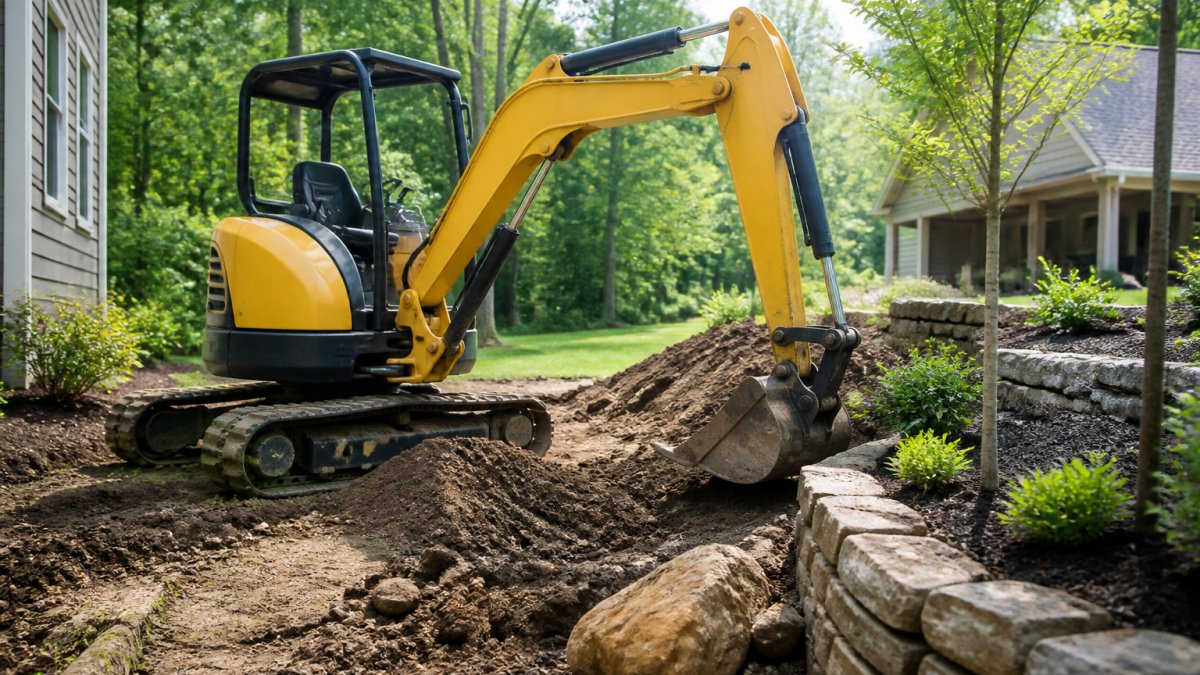
Mini excavators are the workhorse of residential landscaping. These compact machines weigh between 2,500 and 9,500 pounds and fit through standard residential gates (most require 36-48 inches of clearance). A typical mini excavator has a digging depth of 8-10 feet and a maximum reach of 15-18 feet, making them ideal for small to medium residential projects.
The real advantage of mini excavators lies in their ground pressure. Weighing less than 10,000 pounds, they exert minimal stress on lawns and existing hardscaping. This matters when working near patios, driveways, or landscaping you want to preserve. Many come with rubber tracks instead of steel, further reducing ground impact.
Compact excavators (10,000-20,000 lbs operating weight)
Compact excavators bridge the gap between mini and mid-size machines. Operating weights between 10,000 and 20,000 pounds give them significantly more digging force and reach, typically 10-12 feet deep with 18-22 feet of maximum reach. These machines handle larger trenching jobs and foundation work that mini excavators struggle with.
The tradeoff is access. Compact excavators need wider gates (often 60+ inches) and require commercial transport. Ground pressure increases substantially, so they're less suitable for finished residential landscapes. Use compact excavators when the project scope demands their extra power and reach.
Mid-size excavators (20,000-35,000 lbs operating weight)
Mid-size excavators deliver serious digging capacity for major residential projects like septic system installation, large drainage systems, or significant land clearing. Digging depth reaches 12-14 feet with maximum reach of 22-26 feet. Operating weights in this range require commercial hauling and typically cannot access residential properties through standard gates.
Mid-size machines are overkill for most residential landscaping. Reserve them for projects where you're moving substantial earth or working on larger properties with dedicated equipment access.
What Size Mini Excavator for Landscaping Tasks
Determining the right excavator size residential landscaping choice depends on your specific project. Most residential work falls into the mini excavator range because homeowners need machines that fit through gates and minimize lawn damage. Here's how to match machine size to common tasks.
Residential grading and site preparation
Grading a residential lot for new construction or landscape redesign typically requires a mini excavator in the 5,000-8,000 pound range. These machines move soil efficiently while fitting through residential access points. A mini excavator can grade roughly 1,000-1,500 square feet per day, depending on soil conditions and the complexity of the slope work.
For small residential projects under 2,000 square feet, a sub-6,000 pound mini excavator handles the work. Anything larger, reshaping multiple acres or working with clay-heavy soil, pushes toward the upper end of the mini range or requires a compact excavator.
Trenching for drainage and utilities
Drainage trenches and utility lines are the most common residential excavator jobs. Mini excavators excel here because the work is linear and doesn't require moving massive volumes of soil. A 6,000-8,000 pound mini excavator with a standard bucket digs trenches 3-4 feet deep at a rate of 50-100 linear feet per day.
For shallow drainage work (12-18 inches deep), even a 3,000-4,000 pound mini excavator works. For deeper utility trenches or rock-laden soil, move up to 8,000-10,000 pounds to ensure the machine has enough hydraulic force to break through compacted ground.
Septic installation and foundation work
Septic system installation requires digging a hole 4-6 feet deep and moving substantial soil volume. A compact excavator (12,000-15,000 pounds) handles this more efficiently than a mini, but if site access is tight, a larger mini excavator (8,000-10,000 pounds) can complete the job, it just takes longer and requires more careful bucket positioning.
Foundation work for small additions or decks typically requires a mini excavator. For larger foundation projects, a compact excavator becomes necessary.
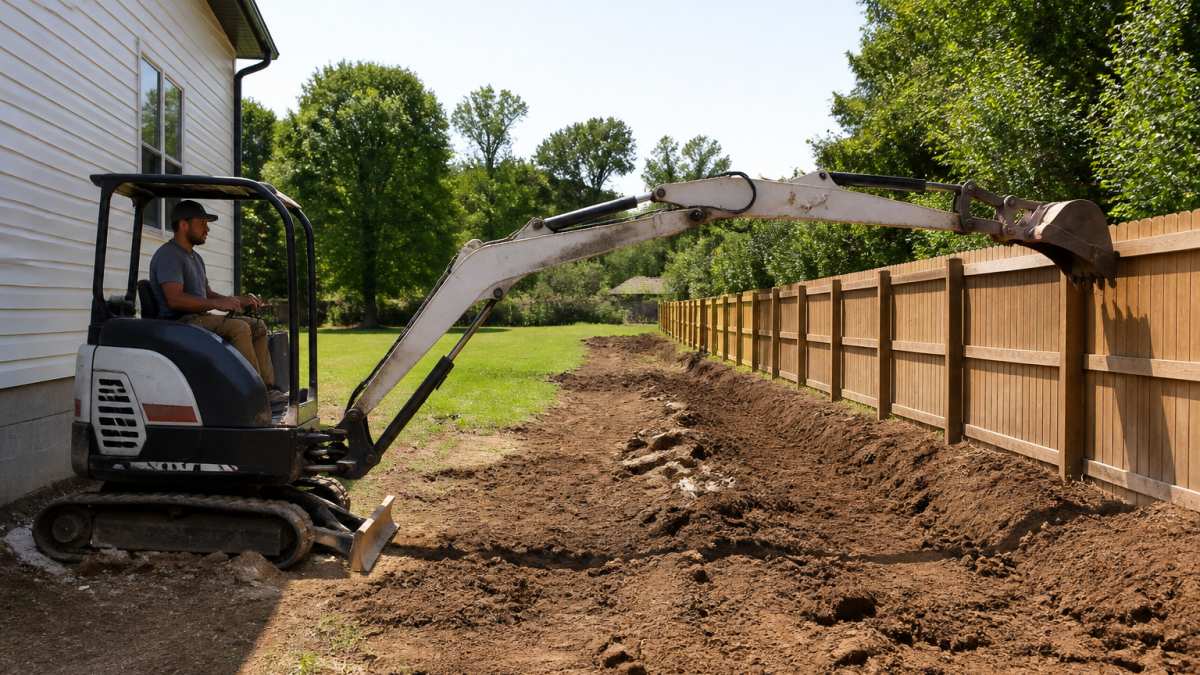
Mini Excavator Digging Depth and Maximum Reach
Understanding digging depth and maximum reach prevents you from renting a machine that cannot complete your project.
Digging depth measures how far below the machine's ground level the bucket can dig. A mini excavator with 9 feet of digging depth can excavate a trench 9 feet deep.
Most mini excavators offer 8-10 feet of digging depth and 15-18 feet of maximum reach. For standard residential drainage and landscaping work, these specs are sufficient.
Mini Excavator Lifting Capacity and Bucket Size
Bucket size and lifting capacity determine how much soil you move per scoop and how fast you complete the project. Larger buckets mean fewer passes, but they also require more hydraulic force, and heavier machines.
Mini excavators typically offer bucket sizes from 0.2 cubic yards (small) to 0.6 cubic yards (large). A 0.3 cubic yard bucket is standard for general landscaping work. Each scoop holds roughly 300-400 pounds of soil depending on moisture and density.
For trenching, choose a narrower bucket (12-18 inches wide) that fits the trench width. For grading and site prep, a wider bucket (24-36 inches) moves material faster.
Mini Excavator Access Width and Maneuverability
Access width is the critical constraint for residential projects. Most residential gates and pathways are 36-48 inches wide. If your mini excavator doesn't fit through, you cannot access the job site, period. Before renting, measure every gate, pathway, and tight space the machine must pass through.
Measuring gate and pathway clearance
Measure the narrowest opening between the gate posts or between obstacles. Account for the machine's full width, including tracks or tires. A 5-foot-wide mini excavator needs a 60-inch opening to pass safely. If you have a 48-inch gate, you need a machine no wider than 46 inches.
Also measure height clearance for overhead obstructions like tree branches or power lines. Most mini excavators are 8-10 feet tall with the boom retracted. Measure the lowest overhead obstruction and confirm the machine fits.
Document these measurements before calling for a rental quote. Provide them to the rental company so they can suggest machines that actually fit your site.
Zero-tail-swing models for tight spaces
Zero-tail-swing (ZTS) mini excavators don't extend beyond their track width when the boom rotates. Standard mini excavators have a tail swing, the rear of the machine swings out as the boom rotates, requiring additional clearance space. In tight residential yards, ZTS models are essential.
ZTS machines cost 10-15% more to rent but prevent expensive property damage. If your site has fences, structures, or vehicles within 5 feet of where the machine will operate, rent a ZTS model.
Match Machine Size to Soil Conditions and Terrain
Soil type and ground conditions affect which excavator size you need. Hard, rocky soil requires more hydraulic force. Soft, saturated soil requires lighter machines to avoid sinking. Steep terrain demands machines with better traction and stability.
Clay and compacted soil need more digging force, push toward the upper end of the mini excavator range (8,000-10,000 pounds) or consider a compact excavator.
Wet or saturated ground is tricky. Heavier machines sink and compact the soil, making grading work impossible. Lighter mini excavators distribute weight better.
Sloped terrain requires stability. Machines with lower centers of gravity and wider track bases perform better on hillsides. Confirm slope angles with your rental company and ask for machine recommendations suited to your terrain.
Rent vs. Buy: Cost and Practical Considerations for Residential Projects
Most residential landscapers rent excavators rather than buy. Renting keeps capital free, eliminates maintenance costs, and lets you right-size the machine for each project. Buying makes sense only if you operate excavators regularly, typically 100+ days per year.
Rental costs and project timeline
Mini excavator rental costs depend on machine size, rental duration, and local market rates. These prices vary significantly by region and season, expect higher rates during spring and summer.
Calculate your actual project duration, not just the days you'll actively operate the machine. If your trenching project takes 3 days but you need the machine on-site for a week (accounting for delivery, setup, and weather delays), rent for the full week. Most rental agreements charge for the entire rental period, not just active use days.
Transport and towing requirements
Transport costs add to small projects. Mini excavators under 10,000 pounds fit on standard trailers. Anything heavier requires commercial hauling. Some rental companies include delivery in their quote; others charge separately. Ask upfront and factor transport into your project budget.
If you have a suitable trailer and can operate a mini excavator (they're surprisingly easy to load), renting locally and self-transporting saves money. However, self-transport requires a commercial driver's license for machines over a certain weight, confirm your state's requirements.
Operator skill and safety considerations
Operating a mini excavator requires training, but it's learnable in a few hours. Most rental companies provide basic operation instruction. For your first time, budget extra time for the learning curve. Rough operation damages equipment and slows work.
Before operating any excavator, locate underground utilities. Call your local 811 service (typically free) to mark gas, electric, water, and sewer lines. Hitting a utility line creates safety hazards and expensive liability. This is non-negotiable.
| Excavator Size | Best For | Access Width Needed | Typical Daily Rental |
|---|---|---|---|
| Mini (under 6,000 lbs) | Small grading, shallow trenching | 36-42 inches | $200-$250 |
| Mini (6,000-10,000 lbs) | Standard trenching, drainage, site prep | 48-54 inches | $250-$350 |
| Compact (10,000-20,000 lbs) | Large trenching, septic, foundation work | 60+ inches | $300-$500 |
| Mid-size (20,000-35,000 lbs) | Major land clearing, large projects | 72+ inches | $400-$600 |
Choosing the best excavator size for residential landscaping comes down to matching machine specs to your actual site constraints and project scope. When you need financing to purchase equipment for your landscaping business, Equipment Finance Academy connects you with top equipment lenders who approve in hours and fund same-day.
Frequently Asked Questions
What is the best size mini excavator for landscaping?
For most residential landscaping projects, a mini excavator in the 8,000-12,000 lbs operating weight range works best. These machines offer enough digging depth (typically 10-12 feet) and bucket capacity (0.3-0.5 cubic yards) for grading, trenching, and drainage work while fitting through standard residential gates and driveways. Larger compact excavators suit heavier work like septic installation or substantial land clearing, but require wider access and higher transport costs.
How deep can a mini excavator dig for landscaping?
Most mini excavators can dig 10-14 feet deep, depending on operating weight and bucket configuration. Smaller units (under 8,000 lbs) typically reach 9-11 feet, while compact excavators (10,000-15,000 lbs) achieve 12-14 feet. Actual depth depends on soil type, bucket width, and hydraulic flow. For residential drainage trenches, septic lines, and foundation work, verify the machine's maximum reach specification before renting or purchasing.
Will a mini excavator fit through my residential gate?
Standard residential gates are 36-48 inches wide; most mini excavators require 48-60 inches of clearance when measured across the tracks and boom. Before selecting a machine, measure your gate width and any narrow pathways or passages. Zero-tail-swing models are narrower and designed for tight spaces. If access is severely limited, a smaller mini excavator or hiring an operator with a machine already on-site may be your only option.
Should I rent or buy a mini excavator for a residential landscaping project?
Rent if your project is one-time or spans fewer than 6-8 weeks. Buy or finance if you run a landscaping business or plan multiple projects annually. Factor in transport costs, operator training, maintenance, and storage. Equipment financing can make purchasing affordable with approvals in hours and same-day funding, allowing you to own the machine outright and use it across multiple jobs.