 listicle
Best Platform for Heavy Equipment Sales in 2026
Table of Contents
- How We Evaluated the Best Platforms for Heavy Equipment Sales
- Platform Comparison: Features, Fees, and Fit
- Top Platforms for Heavy Equipment Sales Reviewed
- EquipMarket: Verified Sellers, Direct Negotiation, No Auction Pressure
- Rock & Dirt: Subscription-Based Reach for Dealers
- Proxibid: Live and Online Auctions for Capital Equipment
- EquipNet: Free Listings with Commission at Sale
- AuctionTime.com: Dedicated Heavy Iron Auction Network
- MarketBook: Global Inventory Management with Mobile Access
- EverLogic: Dealership Management Software, Not a Marketplace
- Heavy Equipment Auction vs Private Sale: Which Gets You More?
- How to Sell Used Construction Equipment Without Losing Margin
- Heavy Equipment Appraisal Tools: Know Your Number Before You List
- Which Platform Should You Use?
- Frequently Asked Questions
Last Updated: August 16, 2026
Selling or buying heavy construction equipment is a high-stakes transaction. A single excavator can represent hundreds of thousands of dollars in capital, and choosing the wrong platform can cost you weeks of time and serious margin. This guide covers the top seven platforms for heavy equipment sales, breaks down auction versus private sale dynamics, and walks through operational factors most guides skip: fraud prevention, listing SEO, logistics coordination, and escrow integration.
Quick Picks:
- Best Overall: EquipMarket, verified sellers, direct negotiation, no auction pressure
- Best for Auction Exposure: Proxibid, live and online bidding for capital equipment
- Best for Dealers Needing Reach: Rock & Dirt, subscription-based marketing with lead tracking
- Best for Dealership Operations: EverLogic, all-in-one management software, not a marketplace
How We Evaluated the Best Platforms for Heavy Equipment Sales
Choosing the right platform comes down to five factors: transaction model, fee structure, buyer verification, inventory depth, and logistics support. A platform for a dealer moving 50 units per year differs significantly from what an independent contractor needs to sell a single late-model dozer.
Our evaluation criteria:
- Transaction model: Direct sale, auction, or hybrid
- Fee structure: Subscription, commission, listing fee, or free-to-list with back-end commission
- Buyer/seller verification: How the platform screens participants
- Inventory breadth: Excavators, dozers, cranes, attachments, parts
- Support for logistics: Inspection coordination, escrow, transport
We weighted platforms on their market reach for used construction equipment specifically. Specialized heavy machinery marketplaces convert better because the audience is already in procurement mode.
Platform Comparison: Features, Fees, and Fit
| Platform | Model | Fee Structure | Best For |
|---|---|---|---|
| EquipMarket | Direct sale | Contact for pricing | Verified direct transactions |
| Rock & Dirt | Marketplace | From ~$400/month | Dealers needing marketing reach |
| Proxibid | Auction | Event fees + commission | Auction houses, liquidation |
| EquipNet | Marketplace + Auction | Free to list; 15-20% commission at sale | Surplus industrial equipment |
| AuctionTime.com | Auction | Commission/listing fee | Farm and construction auctions |
| MarketBook | Marketplace | Free starter tier; paid plans | Global inventory management |
| EverLogic | DMS software | From $129/month/license | Dealership back-office operations |
Top Platforms for Heavy Equipment Sales Reviewed
The platforms below cover the full spectrum of how heavy equipment changes hands: private negotiation, live auction, online bidding, and dealer management software.
EquipMarket: Verified Sellers, Direct Negotiation, No Auction Pressure
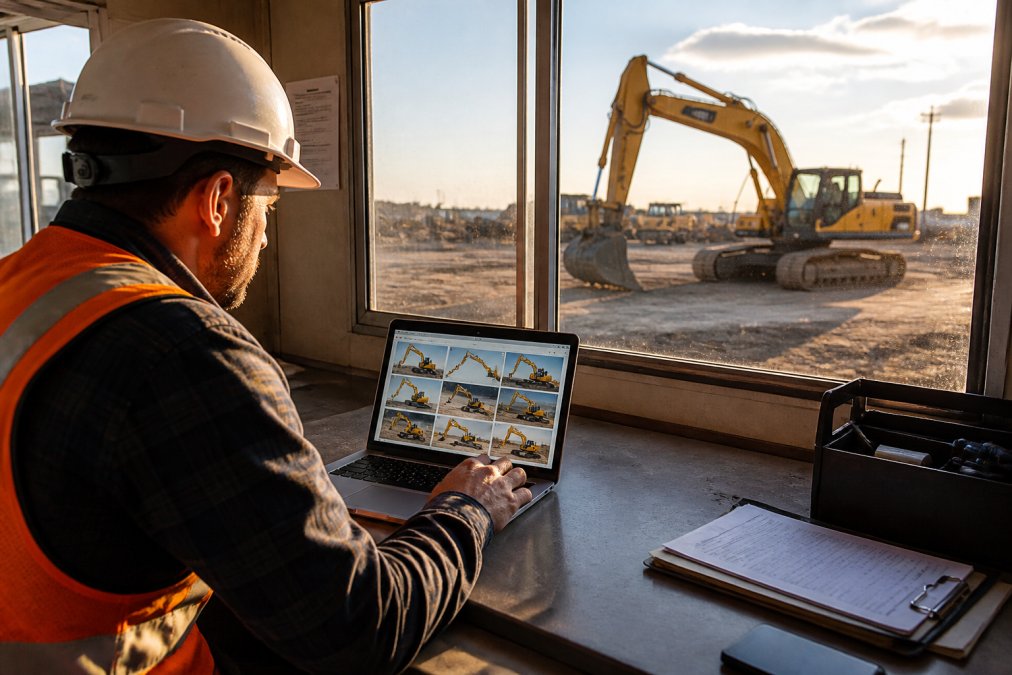
EquipMarket focuses exclusively on heavy construction machinery, meaning the buyer pool is qualified from the start. Every seller undergoes verification, directly addressing the fraud concern that plagues general classified sites.
Key features:
- Advanced search filters by equipment type, year, condition, and location
- Secure inquiry forms for direct seller contact
- Value estimator tool to establish realistic asking prices
- Inspection, transport, and payment arranged on buyer and seller terms
The direct negotiation model eliminates auction commissions that eat 15-20% of sale price. Thousands of sellers use the platform, making inventory depth a genuine strength for excavators and dozers.
Best for: Equipment managers, independent contractors, and dealers who want to control transaction terms and avoid auction commission structures.
Rock & Dirt: Subscription-Based Reach for Dealers
Rock & Dirt suits dealers needing consistent marketing exposure. The platform carries new and used construction equipment, trucks, trailers, cranes, attachments, and parts, with subscriptions starting near $400 per month. Professional marketing services and lead tracking are genuine differentiators for high-volume operations.
Pros: Established user base, social media amplification, lead tracking tools
Cons: Expensive for regional sellers, subscription cost doesn't scale for slow periods
Proxibid: Live and Online Auctions for Capital Equipment
Proxibid connects buyers and sellers through live onsite and online bidding. For auction houses managing asset liquidation, it offers cross-listing on BidSpotter and homepage advertising. Fee structures include event fees, commission rates, and advertising packages ranging from $720 to $7,375.
Proxibid excels when competitive bidding can push prices above private sale estimates. For fleet liquidation or estate sales, the auction format can outperform fixed-price listings.
Pros: Wide reach, simultaneous live and online bidding, marketing packages
Cons: Complex pricing, buyer's premium adds cost, not suited for individual unit sales
EquipNet: Free Listings with Commission at Sale
EquipNet's model is straightforward: list free, pay 15-20% commission at sale depending on exclusivity. The platform offers multiple sales channels: direct marketplace, SmartAuctions, FirstBid, Sealed Bid, Private Treaty, and Auction Plus.
One caveat: EquipNet's primary focus is industrial and manufacturing equipment, not heavy construction. Inventory for excavators and dozers is thinner here than on construction-specific platforms.
Pros: Free to list, global reach, diverse sales formats
Cons: High commission at sale, not construction-focused, buyer's premium raises total cost
AuctionTime.com: Dedicated Heavy Iron Auction Network
AuctionTime.com, part of Sandhills Global, specializes in farm, construction, trucks, trailers, and heavy equipment auctions. The platform aggregates listings from numerous sellers and auction companies with regularly updated auctions.
Pricing is negotiated directly and lacks transparency. The Sandhills Global affiliation provides market-based pricing data that helps calibrate equipment valuation against real transaction history.
Pros: Specialized in heavy equipment, extensive buyer network, market pricing insights
Cons: Opaque pricing, auction format doesn't suit fixed-price sellers
MarketBook: Global Inventory Management with Mobile Access
MarketBook offers a comprehensive database of farm equipment, construction equipment, trucks, and trailers with a mobile app for field-based inventory management. The free Starter tier allows one store, 10 products, and one user, sufficient for small independent sellers testing the platform.
Global reach creates high competition in active categories, which can compress prices for common equipment types.
Pros: Mobile-first interface, global reach, free entry tier
Cons: US pricing not transparently listed, high competition in common categories
EverLogic: Dealership Management Software, Not a Marketplace
EverLogic is an all-in-one dealership management system integrating sales, service, parts, and accounting, not a sales marketplace. Pricing starts at $129 per month per license with a three-license minimum ($387/month minimum). For multi-store dealerships, this is reasonable; for small operations, it's overkill.
Pros: Centralizes dealership operations, scalable licensing, web-based access
Cons: Not a buyer-facing marketplace, minimum three-license requirement
Heavy Equipment Auction vs Private Sale: Which Gets You More?
Auction format suits asset liquidation when speed matters more than per-unit return. Competitive bidding can occasionally push prices above market, but sellers absorb commission fees on both sides. Buyer's premiums reduce effective bid prices. Net proceeds after fees are frequently lower than well-negotiated private sales.
Private sale gives sellers control over pricing, timing, and buyer selection. The sales cycle is longer, but sellers avoid auction commissions. For high-value individual units, late-model excavators, large cranes, specialty attachments, private sale consistently preserves more margin.
Choose auction when liquidating large fleets quickly, selling older or lower-value equipment, or when the platform has demonstrated strong buyer depth for that category.
Choose private sale when selling individual high-value units, when timeline allows 30-90 days, or when you have specific buyer relationships.
How to Sell Used Construction Equipment Without Losing Margin
Selling profitably requires three things: accurate pricing, strong listing quality, and a controlled transaction process.
Listing Optimization: Photos, Specs, and Platform SEO
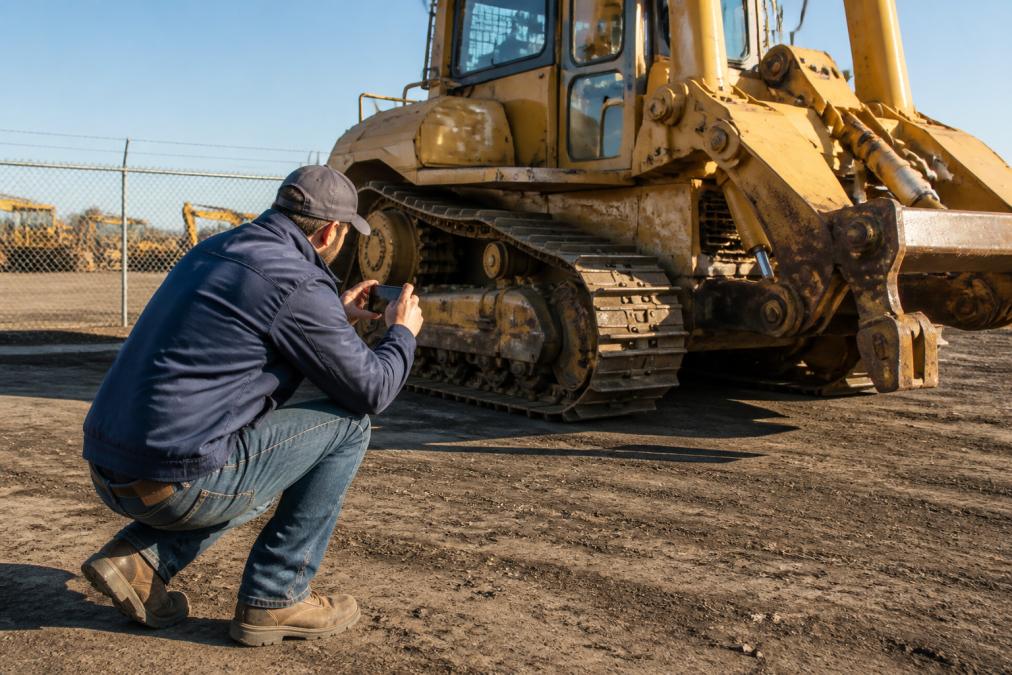
A weak listing is the single biggest margin killer. Buyers who can't verify condition will skip the listing or lowball offers.
Photo requirements:
- Minimum 12-15 photos per unit
- Full exterior from all four sides
- Undercarriage and track condition
- Cab interior showing hours meter and controls
- Engine compartment
- All attachments separately photographed
- Any visible damage documented clearly
Spec completeness:
- Make, model, year, and serial number
- Operating hours
- Engine make and horsepower
- Operating weight
- All attachments included
- Recent maintenance records
- Known defects disclosed
Platform SEO matters significantly. Listing titles should include equipment category, make, model, year, and condition. "2019 Caterpillar 320 Excavator - 3,200 Hours - Ready to Work" outperforms "Excavator for Sale" in search results.
Fraud Prevention and Buyer Verification Protocols
Fraud in heavy equipment transactions includes fake buyers using stolen payment instruments, sellers listing equipment they don't own, and identity fraud. Risk scales with transaction value.
Seller-side verification:
- Require proof of ownership before negotiation
- Verify buyer identity through government-issued ID
- Use secure payment methods: wire transfer with escrow, not personal checks
- For out-of-state buyers, require signed purchase agreement before releasing the asset
Buyer-side verification:
- Confirm seller's business registration if buying from a dealer
- Request equipment VIN or serial number and run a lien check
- Never wire funds before completing independent inspection
Platforms with built-in verification, like EquipMarket's verified seller program, reduce this friction significantly.
Logistics, Inspections, and Escrow Integration
Heavy equipment requires specialized transport. A 70-ton crane needs a lowboy trailer, qualified driver, and potentially oversize load permits.
Inspection coordination:
- Schedule third-party inspections before finalizing price
- Use certified appraisers for units above a value threshold
- Require minimum 2-hour inspection window
- Document findings in writing before funds transfer
Escrow integration protects both parties by holding buyer funds until delivery and inspection conditions are met. Cross-border sales trigger use tax obligations and may require export documentation and customs compliance. Consult a freight forwarder experienced in capital equipment before committing.
Heavy Equipment Appraisal Tools: Know Your Number Before You List
Appraisal establishes defensible market value before listing. Listing without an appraisal is one of the most common ways sellers leave money on the table.
Appraisal methods:
- Comparable sales analysis: Review recent sale prices for the same make, model, year, and condition. Fastest method but requires real transaction data.
- Cost approach: Calculate replacement cost and depreciate based on age, hours, and condition. Useful for specialty equipment with few comparables.
- Income approach: Estimate revenue the equipment generates in rental or production use. Relevant for equipment with strong rental demand.
EquipMarket's value estimator tool gives sellers a market-based starting point. For high-value units, a formal appraisal from a certified appraiser affiliated with the American Society of Appraisers provides defensible valuation.
Which Platform Should You Use?
| Seller Type | Recommended Platform | Reason |
|---|---|---|
| Independent contractor, single unit | EquipMarket | Verified buyers, no auction pressure, direct negotiation |
| Dealer moving regular inventory | Rock & Dirt | Subscription reach, lead tracking, marketing services |
| Fleet liquidation, multiple units | Proxibid or AuctionTime.com | Auction format maximizes exposure for bulk lots |
| Surplus industrial equipment | EquipNet | Free to list, global reach, multiple sale formats |
| Dealership needing back-office ops | EverLogic | DMS integration, not a marketplace |
| Global inventory with mobile access | MarketBook | Mobile-first, global reach, free entry tier |
For most buyers and sellers of used construction equipment, EquipMarket's combination of verified sellers, direct negotiation, and construction-specific inventory makes it the strongest starting point. The absence of auction commission structures means sellers keep more of the sale price.
The heavy equipment market moves fast. An excavator listed at the right price on the right platform sells in days. Listed in the wrong place at the wrong price, it sits for months.
Selling used construction equipment through the wrong channel is an expensive mistake: fees erode margin, slow sales strain cash flow, and unverified buyers create transaction risk. EquipMarket addresses all three directly, with verified seller profiles, a value estimator tool to anchor your pricing, and a direct negotiation model that keeps commission structures out of the equation. Start Selling Today on EquipMarket and connect with qualified buyers actively searching for the exact equipment you have available.
Frequently Asked Questions
What is the best website to sell used construction equipment?
The best platform depends on your goals. EquipMarket suits sellers who want direct negotiation with verified buyers, full control over pricing, and no auction pressure. Auction platforms work better when speed matters more than final price. Subscription-based classified sites like Rock & Dirt offer broad dealer exposure but carry monthly costs. For most independent sellers and small fleets, a dedicated heavy equipment marketplace with verified buyer access and direct inquiry tools offers the strongest balance of reach and margin control.
What are the fees for selling on heavy equipment marketplaces?
Fees vary significantly by platform type. Auction platforms typically charge sellers a commission ranging from 3% to 20% of the final sale price, plus potential listing or event fees. Subscription-based classified sites charge flat monthly rates regardless of whether equipment sells. EquipMarket's pricing is available directly on their website. Before listing anywhere, calculate your break-even price after fees so you know the minimum acceptable bid or offer.
Is it better to sell heavy equipment privately or through a dealer?
Private sales through a digital marketplace generally return more per unit because you skip dealer margins and auction commissions. The tradeoff is time: dealer or auction channels move equipment faster, which matters when cash flow is tight. For late-model excavators, dozers, or cranes with strong resale demand, a private listing on a verified marketplace often outperforms dealer trade-in values. For aged or specialized assets with a narrow buyer pool, an auction's broad reach can be the better path.
How do I determine the value of used heavy equipment before listing it?
Start with a heavy equipment appraisal tool or value estimator, such as the one built into EquipMarket, to get a baseline. Factor in the machine's make, model, year, hours, condition, and any attachments. Cross-reference recent sold listings on auction platforms for comparable units. For high-value assets, a certified equipment appraiser provides a formal valuation useful for financing, insurance, or IRS purposes. Overpricing stalls listings; underpricing leaves money on the table, so accurate equipment valuation is worth the time.
How does buyer verification work on heavy equipment platforms?
Reputable heavy equipment marketplaces vet sellers and, in some cases, buyers before allowing transactions. EquipMarket uses a verified seller program to reduce the fraud risk that plagues general classified sites. When evaluating any platform, look for identity verification, secure inquiry forms, and escrow options for high-value deals. Avoid platforms where buyers can contact you only via personal email or phone with no transaction layer, as these channels carry the highest risk of deposit fraud and fake payment scams common in heavy machinery sales.