 listicle
Best Sites for Used Excavators: 2026 Buyer's Guide
Table of Contents
- Top Sites for Buying Used Excavators: Quick Comparison
- 1. EquipMarket: Verified Sellers, Direct Negotiation
- 2. Auction Platforms: Ritchie Bros. and the Auction Model
- 3. Multi-Brand Listing Sites: Rock & Dirt, My Little Salesman, and Others
- 4. Brand-Specific Sources: Cat Used and Dealer Inventory
- Used Mini Excavator Price Guide: What to Expect by Size Class
- How to Inspect a Used Excavator Before You Commit
- Heavy Equipment Financing Options for Used Excavators
- Frequently Asked Questions
Last Updated: August 13, 2026
Finding the right used excavators online is harder than it looks. The market is crowded with auction platforms, listing aggregators, dealer portals, and private sellers, each with different pricing models, inspection standards, and buyer protection levels. This guide shows you which platforms are worth your time, what to inspect before you commit, and how to finance a purchase without overpaying.
The core tension: platforms optimized for transaction volume aren't optimized for buyer protection. The biggest auction houses move thousands of units monthly, offering deep inventory but placing all due diligence on you. Below, we'll show you how to evaluate each platform type, what questions to ask sellers, and how to build a total cost of ownership picture before you wire money.
Top Sites for Buying Used Excavators: Quick Comparison
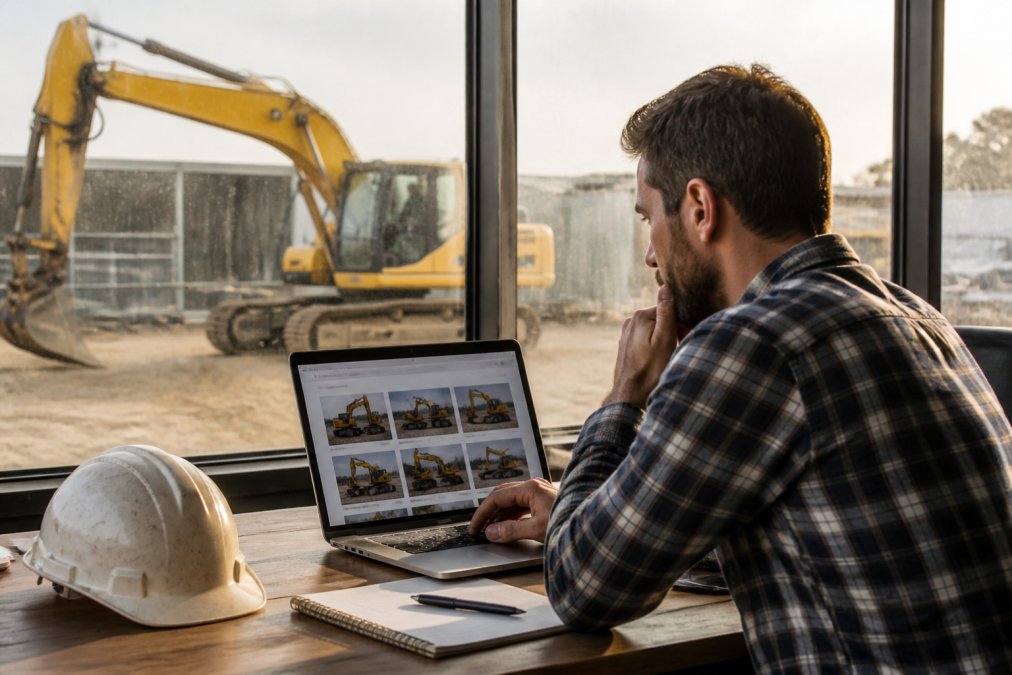
The best sites for used excavators fall into four categories: verified marketplaces, auction platforms, multi-brand listing sites, and brand-specific dealer portals.
| Platform | Model | Best For | Seller Verification | Inspection Reports |
|---|---|---|---|---|
| EquipMarket | Direct marketplace | All buyer types | Verified sellers | Arrange on your terms |
| Ritchie Bros. | Auction | Volume buyers | Auction house vetting | Available for many listings |
| Rock & Dirt | Listing aggregator | Browsing variety | Varies by seller | Buyer-arranged |
| My Little Salesman | Listing aggregator | Spec-specific searches | Varies by seller | Buyer-arranged |
| Cat Used | Dealer portal | Cat brand loyalists | Cat dealer network | Dealer-certified |
| Construction Equipment Guide | Regional listings | Local sourcing | Varies | Buyer-arranged |
| eBay Heavy Equipment | Auction/fixed price | Budget hunters | eBay seller ratings | Buyer-arranged |
Quick Picks:
- Best Overall: EquipMarket, verified sellers, direct negotiation, no auction pressure
- Best for Auction Volume: Ritchie Bros., largest global inventory with inspection reports
- Best for Brand Assurance: Cat Used, dealer-certified Caterpillar machines with financing access
- Best Budget Option: eBay Heavy Equipment, widest price range, highest buyer risk
1. EquipMarket: Verified Sellers, Direct Negotiation
EquipMarket connects buyers with verified sellers across heavy construction machinery, including excavators, dozers, and cranes, using advanced search filters for equipment type, model year, operating weight, and bucket capacity.
The verified seller model directly addresses the biggest concern: fake listings, misrepresented specs, and fraud. Thousands of sellers have listed inventory through EquipMarket, and buyers contact them directly through secure inquiry forms.
The workflow is straightforward: find a machine, contact the seller, arrange an independent inspection on your terms, and negotiate pricing and transport without middleman fees. The platform includes a value estimator tool, giving buyers a reference point before negotiations, a feature most listing aggregators lack.
What works: Verified sellers reduce scam risk. Direct negotiation means no real-time bidding competition. The value estimator helps you enter negotiations with a defensible number.
What to know: Inventory depth depends on regional seller activity. For specific machines on tight timelines, search early and use advanced filters to set up alerts.
2. Auction Platforms: Ritchie Bros. and the Auction Model
Ritchie Bros. Auctioneers is the dominant global heavy equipment auction platform, offering unmatched inventory breadth through live on-site auctions, online auctions via IronPlanet, and fixed-price Marketplace-E. Many listings include detailed inspection reports, a meaningful advantage over unmoderated listing sites.
The limitation: auction-based purchasing introduces pricing volatility. Bidding activity determines final price, and popular machines in good condition can exceed retail value. Winning bids require immediate payment or pre-arranged financing, creating pressure direct marketplace purchases don't.
According to Ritchie Bros. Auctioneers official site, the company sells billions in equipment annually across hundreds of worldwide events, making it one of the most liquid markets for used heavy equipment.
What works: Massive inventory, recognized reputation, inspection reports on many listings, multiple buying formats.
What to watch: Final prices fluctuate based on bidding competition. Set a hard ceiling before bidding, auction momentum is a real psychological force.
3. Multi-Brand Listing Sites: Rock & Dirt, My Little Salesman, and Others
Multi-brand listing aggregators provide broad inventory visibility with detailed filtering. Rock & Dirt and My Little Salesman are the most established names for construction machinery.
Rock & Dirt lists both new and used excavators with filters for make, model, year, engine hours, and location. Listings include direct-sale and auction formats. The limitation: listing quality varies, some sellers provide comprehensive photos and service records, others post minimal information.
My Little Salesman offers granular filtering by horsepower, operating weight, and hours worked, making it useful for sourcing machines to meet specific performance requirements. The platform covers excavators for construction, mining, and agricultural applications.
Both platforms lack standardized inspection processes and inconsistent seller verification. Buyers are responsible for all due diligence.
Construction Equipment Guide suits buyers prioritizing regional sourcing, combining equipment listings with industry news and auction calendars.
For pricing benchmarks across listing sites, the Associated Equipment Distributors industry resources provide useful context for evaluating used equipment pricing.
4. Brand-Specific Sources: Cat Used and Dealer Inventory
Going directly to the manufacturer's used equipment portal is the most reliable path to quality assurance. Cat Used lists used Caterpillar excavators inspected and serviced by Cat dealers, evaluated by technicians using genuine Cat parts. Buyers access Cat Financial for equipment financing, simplifying procurement.
The tradeoff: you're limited to one brand. Dealer-certified machines carry a price premium compared to multi-brand marketplaces or auction platforms.
For project managers needing documented service records, warranty coverage, and direct dealer service network access post-purchase, the premium is often justified. Total cost of ownership frequently favors a well-documented dealer machine over a cheaper machine with unknown maintenance history.
Komatsu, Volvo, Deere, and Hitachi maintain similar used equipment programs through dealer networks. Contact the nearest authorized dealer to access regional inventory.
Used Mini Excavator Price Guide: What to Expect by Size Class
Used mini excavator prices vary by operating weight class, engine hours, model year, and condition.
| Size Class | Operating Weight | Typical Application | Relative Price Range |
|---|---|---|---|
| Mini (compact) | Under 6 tonnes | Landscaping, utility work, tight access | Lowest |
| Midi | 6-10 tonnes | Residential construction, drainage | Moderate |
| Standard | 10-30 tonnes | Commercial construction, site preparation | Higher |
| Large | 30+ tonnes | Mining, large earthmoving, demolition | Highest |
A common mistake is focusing on purchase price without accounting for total cost of ownership. A mini excavator with 3,000 engine hours at a low price may require immediate undercarriage replacement, hydraulic repairs, and emissions compliance work that push real cost well above a higher-priced machine with comprehensive service records and lower hours.
The Equipment Leasing and Finance Association market data tracks heavy machinery financing trends and depreciation curves by equipment category.
Key pricing factors:
- Engine hours (lower hours command higher prices)
- Undercarriage condition (track replacement is expensive)
- Hydraulic system integrity
- Cab comfort features and technology
- Attachments included (quick coupler, buckets, thumbs)
- Emissions standards compliance (Tier 4 Final vs. older Tier 3)
- Service records and maintenance history
How to Inspect a Used Excavator Before You Commit
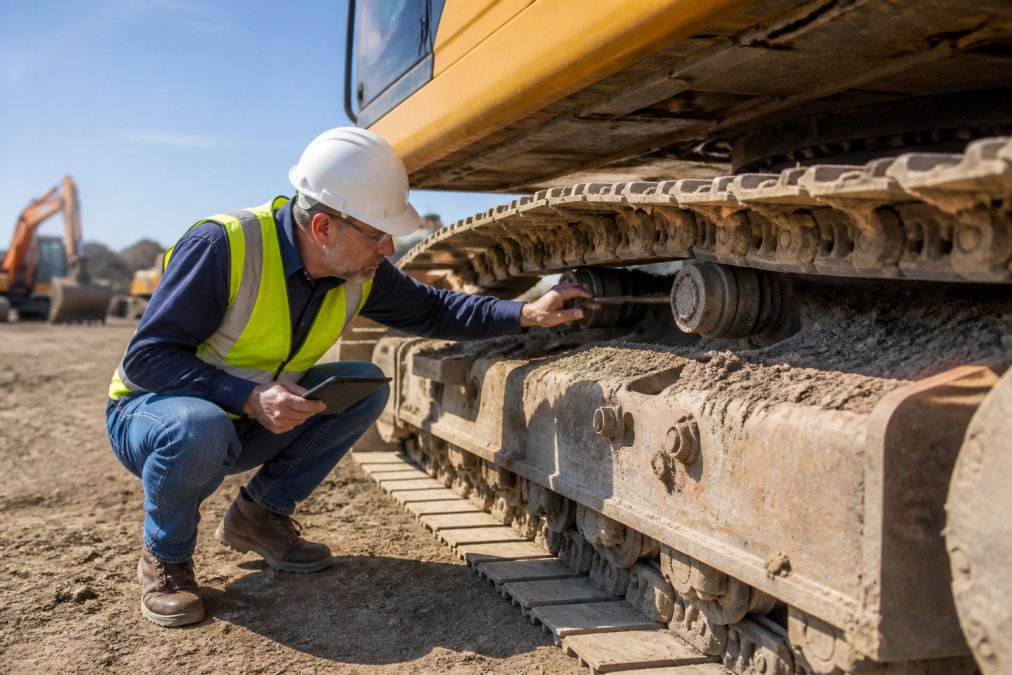
Knowing how to inspect a used excavator is the difference between a sound investment and an expensive mistake. The inspection should happen in person, with the machine running, ideally with an independent certified equipment appraiser present.
Start with basics: check the serial number on the frame against the seller's paperwork and manufacturer records. Serial number verification confirms the model year, factory specifications, and whether the machine has been reported stolen. The National Equipment Register theft database allows buyers to check serial numbers against a national stolen equipment registry.
Request complete maintenance history and service records. A machine without documentation isn't necessarily bad, but you're buying blind. Sellers unable to produce records should reduce the price to reflect unknown risk.
Undercarriage and Hydraulic System Checks
The undercarriage and hydraulic system are the two most expensive systems to repair.
Undercarriage inspection checklist:
- Measure track link wear against manufacturer limits
- Check roller and idler condition for flat spots, leaks, and excessive play
- Inspect sprocket teeth for shark-finning
- Check track tension and adjustment
- Look for cracked or bent track frames
- Assess overall undercarriage wear percentage
Hydraulic system checks:
- Start the machine cold and watch for slow response in boom, arm, and bucket movement
- Check all hydraulic cylinders for seal leaks and rod scoring
- Inspect hoses for cracking, abrasion, and fitting corrosion
- Cycle the quick coupler if present
- Check hydraulic fluid color and smell (dark or burnt fluid indicates overheating)
- Test swing bearing for excessive play
Also inspect the cab for seat condition, monitor functionality, and air conditioning performance.
Post-Purchase Inspection Checklist
Once you've taken delivery, run through this checklist before putting the machine to work:
- Verify serial number matches purchase documentation
- Change engine oil, hydraulic fluid, and filters
- Inspect all grease points and lubricate fully
- Check track tension and adjust if needed
- Test all attachments and verify quick coupler function
- Confirm emissions compliance documentation
- Register the machine with your insurance carrier
- Photograph all four sides and the cab for your records
- Schedule preventative maintenance within the first 50 operating hours
Heavy Equipment Financing Options for Used Excavators
Equipment financing for used excavators is more accessible than many buyers expect, but terms vary by machine age, hours, and buyer credit profile. Understanding your options before shopping puts you in a stronger negotiating position.
Common financing structures:
Equipment loans are straightforward: the lender funds the purchase, the machine serves as collateral, and you own it outright at loan end. This works well for long-term ownership.
Equipment leases come in two forms: operating leases function like rentals with buyout options, and finance leases resemble loans. Leasing preserves working capital and may offer tax advantages, consult a tax professional.
Dealer financing through Cat Financial and other dealers can offer competitive rates on certified pre-owned machines. Always compare against independent lenders.
SBA loans through the U.S. Small Business Administration equipment financing programs provide favorable terms for small contractors, particularly those not qualifying for conventional equipment loans at competitive rates.
Key factors lenders evaluate:
- Machine age and engine hours
- Business credit history and time in operation
- Down payment amount (typically 10-20%)
- Appraised equipment value vs. purchase price
- Existing debt service coverage ratio
Consider financing approval timelines: auction platforms require immediate payment upon winning. Get pre-approval with a specific dollar ceiling before the auction opens.
Sourcing used excavators involves navigating a market where transaction volume is prioritized over buyer education. EquipMarket addresses this directly by connecting buyers with verified sellers, providing direct negotiation tools, and giving both sides control over inspections, transport, and payment terms. The value estimator tool helps buyers enter negotiations with a defensible reference point, and the verified seller model reduces scam risk. Start Selling Today on EquipMarket and connect with qualified buyers across the country, or search current inventory to find the earthmoving machinery your next project requires.
Frequently Asked Questions
Where is the best place to buy a used excavator?
The best place depends on your priorities. Verified marketplace platforms like EquipMarket connect you directly with vetted sellers and let you negotiate on your own terms. Auction houses offer large inventory but prices fluctuate with bidding. Brand-specific dealer sites provide quality assurance for one manufacturer. For most buyers, a verified marketplace with advanced search filters and direct seller communication offers the most control over the transaction.
Is it safe to buy used heavy equipment online?
Buying used excavators online is safe when you use platforms with verified sellers and clear inspection policies. The risk rises sharply on unmoderated listing boards and social media marketplaces, where fake listings and payment fraud are common. Always verify the serial number against manufacturer records, request current photos with a date reference, and never wire payment before completing an independent inspection. Platforms that vet sellers before listing significantly reduce these risks.
What should I look for when buying a used excavator?
Focus on engine hours, undercarriage condition, hydraulic system integrity, and service records. High engine hours alone are not disqualifying if preventative maintenance was performed consistently. Check the bucket capacity, quick coupler function, and cab condition. Request the machine's full maintenance history and confirm the serial number matches documentation. An independent equipment appraisal before purchase adds a layer of protection, especially for machines priced above $50,000.
What are the hidden costs of buying a used excavator?
The purchase price covers only part of your total cost of ownership. Budget separately for machinery logistics and transport, which can run several thousand dollars depending on distance. Factor in immediate service needs, replacement attachments, emissions compliance if the machine is older, and any warranty coverage gaps. Auction buyers also face buyer's premiums that typically add 10-15% to the winning bid. Running a full TCO estimate before committing prevents budget surprises after delivery.
Which excavator brands hold their value best?
Caterpillar, Komatsu, John Deere, and Volvo consistently show strong resale value in the used heavy equipment market. Caterpillar in particular benefits from dealer support networks and widely available genuine parts, which sustains demand and resale value. Machines with documented service records and low operating hours depreciate more slowly regardless of brand. When comparing used excavators, check the model year and engine hours together, a well-maintained off-brand machine can outperform a neglected top-brand unit.