 how-to
How to Get Equipment Financing Fast: 7 Steps
Table of Contents
- What Equipment Financing Is and How Fast It Works
- Step 1: Gather Your Equipment Loan Application Documents
- Step 2: Understand Equipment Financing Approval Requirements
- Step 3: Get Equipment Financing with Bad Credit
- Step 4: Choose Between New and Used Equipment
- Step 5: Know Your Equipment Financing Approval Time
- Step 6: Compare Total Financing Costs
- Step 7: Submit Your Application and Track Approval
- Frequently Asked Questions
Last Updated: October 14, 2026
What Equipment Financing Is and How Fast It Works
Equipment financing fast is a loan or lease that lets you buy machinery, vehicles, or tools your business needs without paying the full cost upfront, with many lenders approving applications in hours.
Speed matters in this space. This matters because construction crews can't wait months to start a job, logistics companies need trucks ready now, and manufacturers can't let production lines sit idle.
Equipment financing works differently than a traditional business loan. The equipment itself acts as collateral.
Here's the basic flow: you apply, provide documents, get approved, and the lender sends money directly to the equipment dealer or seller. You never touch the funds.
The timeline varies. Some lenders close deals in 24 hours. Others take 3-5 business days. The speed depends on how organized your documents are, how quickly you respond to questions, and which lender you choose.
Step 1: Gather Your Equipment Loan Application Documents
Most equipment financing applications need the same core documents. Having them ready before you apply cuts approval time in half.
Lenders want to see proof that your business is real, profitable, and capable of making monthly payments. They also need to know exactly what equipment you're buying and from whom.
Essential documents checklist for same-day approval
Have these ready before you submit your equipment financing application:
- Business tax returns (last 2 years)
- Personal tax returns (last 2 years, especially if you own under 50% of the business)
- Bank statements (last 3 months, business and personal)
- Profit and loss statement (current year to date)
- Balance sheet (current, if available)
- Equipment quote or invoice (from the dealer or seller with specs and price)
- Proof of business registration (articles of incorporation, LLC certificate, or business license)
- Personal identification (driver's license or passport)
- Equipment photos (if buying used equipment)
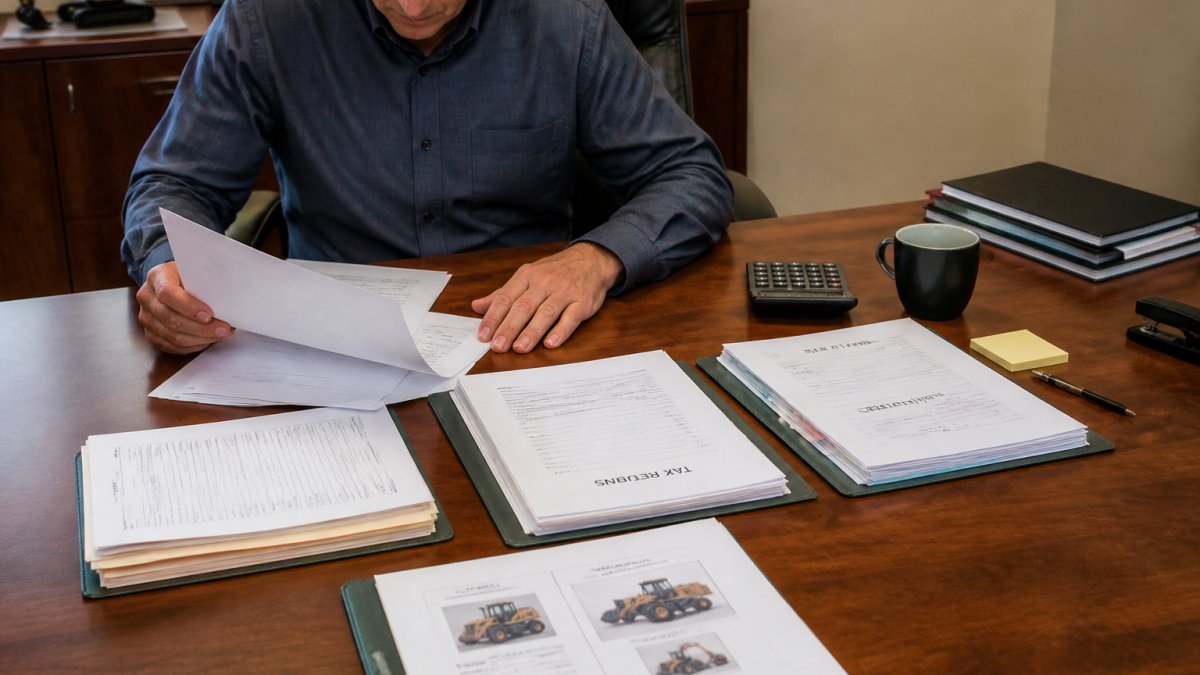
If you're buying used equipment from a private seller, include the seller's contact information and equipment history if available. If you're buying from a dealer or manufacturer, they often provide documentation automatically.
The equipment quote is critical. It tells the lender exactly what they're financing. Include the model number, year, condition (new or used), and price. Missing this delays approval.
Personal financial documents matter even if you have a business. Lenders check your personal credit and assets to assess your ability to guarantee the loan if the business struggles.
Step 2: Understand Equipment Financing Approval Requirements
Lenders evaluate three main factors when you apply for equipment financing: your credit score, your business revenue, and how long you've been in business. Understanding these helps you know whether you'll qualify and what terms to expect.
Credit score is the first filter. Most lenders want a score of 650 or higher, though some work with scores as low as 550.
Business revenue shows the lender you can afford monthly payments. Most want to see at least $50,000 in annual revenue, though some lenders work with businesses making $25,000 or less.
Time in business demonstrates stability. Most lenders want at least 2 years in operation. Newer businesses can still qualify but may face higher rates or smaller loan amounts.
Beyond these three, lenders check:
- Whether you've defaulted on previous loans
- How much debt your business already carries
- Your industry (some are considered higher risk)
- The equipment type (some equipment holds value better than others)
The good news: equipment financing approval requirements are less strict than traditional business loans. Because the equipment serves as collateral, lenders take on less risk. This is why you can often get approved faster and with lower credit scores.
Step 3: Get Equipment Financing with Bad Credit
Bad credit doesn't disqualify you from equipment financing. Many lenders specialize in working with businesses that have credit challenges.
If your score is below 650, you have options. Some lenders focus on businesses with credit scores in the 550-650 range. Others look past the number and focus on current cash flow and the equipment value itself.
When you have bad credit, expect these trade-offs:
- Higher interest rates. You'll pay more over the life of the loan, sometimes 2-3 percentage points higher than a business with excellent credit.
- Larger down payment. Lenders may ask for 10-20% down instead of nothing down. This reduces their risk if you default.
- Shorter repayment terms. Instead of 5-7 years, you might get 3-5 years. Monthly payments are higher but you pay less interest overall.
- Stricter documentation. Lenders want more proof that you can afford the payments.
To improve your chances with bad credit:
Put down a larger down payment if you can. This shows commitment and reduces the lender's exposure.
Bring a co-signer with better credit. A business partner or personal guarantor with a stronger credit profile makes you a lower-risk applicant.
Show current business success. Even if your credit history is rough, strong recent bank statements and profit prove you're doing well now.
Choose equipment that holds value. Used equipment in high demand (like late-model excavators or forklifts) is easier to finance than specialized machinery nobody wants.
Equipment Finance Academy provides Quick Equipment Financing. Access the nation's top equipment lenders and tech-powered financing marketplace.
Step 4: Choose Between New and Used Equipment
New equipment and used equipment have different financing paths and different approval speeds.
New equipment is easier to finance. The dealer provides complete documentation, the equipment has a warranty, and lenders know its exact value. Approval typically takes 2-3 business days.
Used equipment can be financed faster if you have all the documentation. The challenge is proving the equipment's condition and value.
New equipment costs more upfront but has lower maintenance risk in the first few years. Used equipment costs less but may need repairs sooner.
For equipment financing fast, buy new equipment from an authorized dealer. They handle documentation and can often close deals same-day or next-day.
If you're buying used equipment:
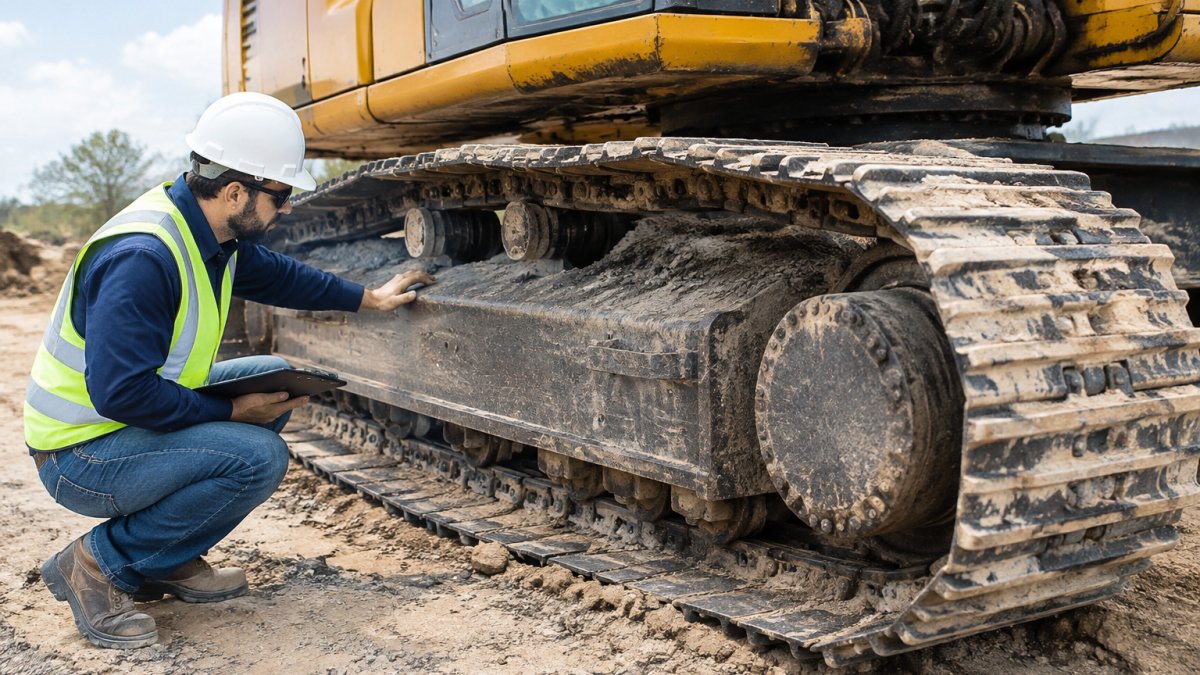
- Get a pre-purchase inspection from a qualified mechanic
- Collect the equipment's service history
- Take detailed photos from multiple angles
- Get the seller's contact information for the lender
Private-party sales take longer than dealer sales because lenders need extra verification. Budget an extra 2-3 business days if you're buying from an individual.
Equipment Finance Academy works with lenders who finance both new and used equipment. Many have simplified processes for dealer purchases that cut approval time significantly.
Step 5: Know Your Equipment Financing Approval Time
Approval speed depends on how organized you are and which lender you choose. Understanding the timeline helps you plan.
Fast-funding timeline and what to expect
Same-day funding is possible but requires everything to align. You need complete documents, a simple application, and a lender with fast underwriting.
Here's what a typical fast-funding timeline looks like:
Morning (9 AM - 12 PM): You submit your application with all required documents. The lender's system automatically scores your application based on credit, revenue, and time in business.
Afternoon (12 PM - 5 PM): A loan officer reviews your file. If everything checks out, they request approval from their underwriting team. Simple applications get approved the same day. Complex ones move to the next step.
Next business day: If the lender needs clarification, they call or email. You respond within a few hours. Once approved, they prepare loan documents for e-signature.
Within 24-48 hours of approval: You sign documents electronically. The lender funds the equipment dealer or seller. You receive confirmation the equipment is paid for.
Total time: 1-2 business days for straightforward applications.
More typical timelines run 3-5 business days:
- Day 1: Application submitted
- Day 2: Initial review and credit check
- Day 3: Underwriting review
- Day 4: Approval and document preparation
- Day 5: Funding
Delays happen when:
- Documents are incomplete or unclear
- The lender needs to verify information with your bank
- Your credit file has errors that need investigation
- The equipment seller doesn't respond quickly with documentation
To hit the fast timeline, respond to lender requests immediately. If they ask for clarification, reply within 2 hours, not 2 days.
Step 6: Compare Total Financing Costs
The interest rate matters, but it's not the only cost. Total financing cost includes the rate, the term length, any fees, and whether you're making a down payment.
Two lenders might offer different rates on the same loan. The one with the lower rate isn't always cheaper overall.
Example: A $50,000 equipment loan.
Lender A offers 8% interest over 5 years with no down payment. Total interest paid: $10,637.
Lender B offers 7.5% interest over 3 years with 10% down ($5,000). Total interest paid: $3,187. But you need $5,000 cash upfront.
Lender B costs less in total interest, but you need cash now. Lender A spreads payments over longer, lowering your monthly payment.
Calculate total cost this way:
Take the loan amount, the interest rate, and the term. Use an online calculator or ask the lender for a payment breakdown. Compare the total amount you'll pay across all payments.
Also compare:
- Origination fees. Some lenders charge 1-3% of the loan amount upfront.
- Prepayment penalties. Can you pay off the loan early without penalty? If yes, you might refinance later at a lower rate.
- Monthly payment amount. Can your business cash flow handle it?
- Warranty and maintenance. Some leases include maintenance; loans don't. Factor in repair costs for used equipment.
Equipment Finance Academy helps you compare offers from multiple lenders. Seeing several options side-by-side makes it easy to spot which one actually costs less.
Step 7: Submit Your Application and Track Approval
Once you've chosen a lender, the application process is straightforward.
To submit your application:
Log into the lender's portal or their website.
Upload all required documents in the format requested. Most lenders accept PDF, JPG, or PNG files.
Include a note if anything unusual appears in your financial documents.
Submit the application. You'll receive a confirmation email with an application number. Save this number.
To track approval:
Most lenders provide a status dashboard. Log in daily to see if your application has moved to the next stage.
If the status says "pending documentation," check your email immediately. Lenders usually send a list of what they need.
Call the lender if your application sits in "under review" for more than 24 hours without updates.
Once you see "approved," the next step is signing loan documents. This usually happens electronically through DocuSign or a similar platform.
After you sign, the lender contacts the equipment dealer or seller to arrange payment. Funding typically occurs within 24 hours of signed documents.
Frequently Asked Questions
What is the fastest way to get equipment financing?
The fastest path combines three actions: gather required documents before applying, choose a lender that offers same-day decisions, and ensure your financial statements are current and accurate. Equipment financing can close in hours rather than days when you submit a complete application upfront. Prequalification checks do not impact credit scores and let you see approval odds before committing to a full application.
What documents do I need for equipment financing approval?
Standard documents include recent business tax returns (typically 2 years), current bank statements (last 3 months), business financial statements, a personal credit report, proof of business ownership, and an equipment quote or invoice. Construction and logistics companies often need proof of active projects or contracts. Having these ready before applying cuts approval time significantly and demonstrates organization to lenders.
Can I get equipment financing with bad credit?
Yes. Many lenders offer equipment financing to businesses with credit scores below 650, especially if your business shows strong revenue and cash flow. Lenders focus on the equipment as collateral and your business's ability to generate income. A larger down payment or shorter repayment term can improve approval odds. Prequalification lets you test your eligibility without a hard credit inquiry.
How quickly can equipment financing be approved?
Equipment financing approval typically takes 24 to 48 hours for complete applications, with some lenders offering same-day decisions. Funding can occur within 24 hours of approval. Speed depends on document completeness, lender workflow, and whether your business meets standard qualification thresholds. Prequalification adds 15 to 30 minutes and gives you approval odds before a formal application.
Getting equipment financing fast comes down to preparation and choosing the right lender. Have your documents organized, know your numbers, and apply to lenders experienced with your industry and credit profile. Equipment Finance Academy connects you with lenders who specialize in fast approvals for businesses like yours. Our marketplace gives you access to multiple lenders in hours, not weeks, so you can compare terms and get funded when you need it.