 how-to
How to Verify Heavy Machinery Sellers: A Step-by-Step Guide
Table of Contents
- Why Verifying Heavy Machinery Sellers Matters
- Step 1: Research the Seller's Background and Legitimacy
- Step 2: Confirm Ownership and Title History
- Step 3: Verify Equipment Using Heavy Equipment Serial Number Lookup
- Step 4: Conduct a Used Construction Equipment Inspection Checklist
- Step 5: Request and Review a Heavy Equipment Bill of Sale Template
- Red Flags: What to Watch for When Buying Heavy Equipment
- Frequently Asked Questions
Last Updated: August 19, 2026
Why Verifying Heavy Machinery Sellers Matters
Buying used heavy equipment represents one of the largest capital investments construction firms make. A single excavator or dozer can cost tens of thousands of dollars, making due diligence non-negotiable. Yet many buyers skip verification steps, trusting seller claims or relying solely on visual inspection. This approach leaves you vulnerable to fraud, hidden mechanical problems, and legal complications that surface months after purchase.
The stakes are real. A machine with falsified maintenance records might fail catastrophically on your job site, halting operations and costing you time and money. Sellers with questionable legitimacy may disappear after payment, leaving you without recourse. Undisclosed liens can mean losing equipment you thought you owned. These aren't theoretical risks, they happen regularly in the heavy equipment market.
At EquipMarket, we've seen buyers avoid expensive mistakes by following a systematic verification process. The good news: verifying a heavy machinery seller isn't complicated. It requires methodical research, documentation review, and specific checks that take a few hours but protect your investment. This guide walks you through each step, from background research to operational testing, so you can confidently evaluate sellers and equipment before committing capital.
Step 1: Research the Seller's Background and Legitimacy
Before you inspect a single machine, verify the seller exists as a legitimate business entity. Scammers often pose as dealers or equipment owners with professional-sounding names and polished listings. A basic background check eliminates most fraudulent operators immediately.
Check Business Registration and Licensing
Start by confirming the seller's business registration. If they claim to be a company, search your state's Secretary of State database or the equivalent business registry. Look for the business name, registration number, and filing date. Legitimate dealers typically have been registered for at least two years.
For equipment dealers specifically, check whether they hold the required licensing in your state. Some states require dealers to be licensed with the Department of Motor Vehicles or an equivalent agency. Call your state's regulatory body and ask what licensing applies to heavy equipment dealers in that jurisdiction. A seller who claims to be a dealer but has no license is an immediate red flag.
If the seller is an independent contractor or small business owner, verify their business name matches their legal entity. Search the IRS FEIN database or ask for an EIN when you contact them. Legitimate sellers have nothing to hide when you ask for basic business verification.
Verify Seller Contact Information and References
Request multiple ways to contact the seller: phone number, physical business address, email, and website. Then verify each independently. Call the number and confirm it reaches the person or business you're communicating with. Visit the physical address if possible, does it match the business type? A dealer claiming to operate from a residential garage is suspicious.
Ask for references from previous buyers. Contact at least two and ask specific questions: Did the seller provide accurate equipment descriptions? Were there hidden problems after purchase? Did the seller respond promptly to questions? How long did the sale take from inquiry to delivery? References willing to discuss their experience add credibility to the seller.
Search online for the seller's name and business. Google reviews, Better Business Bureau ratings, and industry forums often reveal patterns. One negative review might be an outlier. Multiple complaints about misrepresentation or non-delivery indicate systemic problems. Check if the seller has been mentioned in legal disputes or regulatory complaints.

Step 2: Confirm Ownership and Title History
Ownership verification protects you from purchasing equipment that's encumbered by liens, subject to repossession, or stolen. This step requires documentation and database searches.
Request Documentation of Ownership
Ask the seller to provide a bill of sale from their purchase, original manufacturer's documentation, and any title certificates. In states that issue titles for heavy equipment, request a copy showing the seller as the current owner. The title should be clear, no liens listed, no outstanding claims.
If the seller cannot produce documentation proving they own the equipment, do not proceed. Equipment without clear ownership history is either stolen, subject to an undisclosed lien, or involved in a legal dispute. Any of these situations means you inherit the problem.
For used construction equipment, also request proof the seller legally acquired it. Ask where they purchased it and request contact information for the previous owner. A seller who can't trace the equipment's history backward is hiding something.
Perform a Lien Search
A lien is a legal claim against equipment, typically held by a lender who financed the original purchase. If a lien exists and hasn't been satisfied, the lender can repossess the equipment even after you buy it. You lose both the machine and your money.
Search the UCC (Uniform Commercial Code) database for your state. This database records secured interests in personal property, including heavy equipment. Search by the equipment's serial number and the seller's name. If a lien appears, contact the lienholder and ask whether it's been satisfied. Request written confirmation that the lien will be released before or at the time of sale.
Some states also maintain equipment-specific registries. Check whether your state has a Heavy Equipment Registry or similar database. These registries sometimes capture equipment ownership and outstanding claims.
Step 3: Verify Equipment Using Heavy Equipment Serial Number Lookup
The serial number is your most reliable tool for verifying equipment authenticity and history. Every manufacturer assigns unique serial numbers to track production, specifications, and service records.
Locate the Serial Number
Find the equipment's serial number on the machine itself. Location varies by manufacturer and equipment type. For excavators, check the frame near the engine, on the boom, or on the undercarriage. For dozers, look on the frame or engine block. The serial number is typically stamped or welded into metal.
Record the complete serial number exactly as it appears. Include all letters and numbers in the correct sequence. A single digit error will return no results or incorrect information.
Also note the equipment's model number, year of manufacture, and engine model. These details help cross-reference information across databases.
Cross-Reference with Manufacturer Database
Contact the equipment manufacturer directly with the serial number. Most major manufacturers, Caterpillar, Komatsu, Hitachi, John Deere, and others, maintain databases of equipment they've produced. Provide the serial number and ask for the equipment's manufacturing specifications, original purchase date, and registered owner history if available.
Manufacturers typically provide this information free to verify authenticity. They'll confirm whether the serial number is legitimate and whether it matches the equipment specifications the seller claims.
Some manufacturers publish online databases where you can search by serial number. Caterpillar's online system, for example, allows you to look up equipment history. Check the manufacturer's website for self-service lookup tools before calling.
If the manufacturer cannot find the serial number in their database, the equipment may be counterfeit, stolen, or the serial number may have been altered. Do not purchase equipment with unverifiable serial numbers.
Step 4: Conduct a Used Construction Equipment Inspection Checklist
Visual and operational inspection reveals the equipment's true condition. This is where you catch mechanical problems, safety issues, and wear patterns that affect resale value and operational reliability.
Evaluate Engine Hours and Maintenance Records
Engine hours indicate how much the equipment has been used. Unlike vehicle mileage, which varies based on distance traveled, heavy equipment hours reflect actual operational time. An excavator with 5,000 hours has been worked harder than one with 2,000 hours, even if both are the same age.
Request complete maintenance records from the seller. Legitimate owners maintain logs documenting oil changes, filter replacements, hydraulic fluid service, major repairs, and parts replacements. These records prove the equipment has been maintained according to manufacturer recommendations.
Review the maintenance history for patterns. Consistent service intervals suggest responsible ownership. Large gaps between service dates or missing records suggest neglect. If the seller claims the equipment has never required major repairs, that's unrealistic for older machines and suggests records are incomplete.
Ask about any major repair history. Has the engine been rebuilt? Have hydraulic systems been replaced? When was the last major service? Reputable sellers provide this information willingly. Evasive answers indicate hidden problems.
Assess Machine Condition and Operational Testing
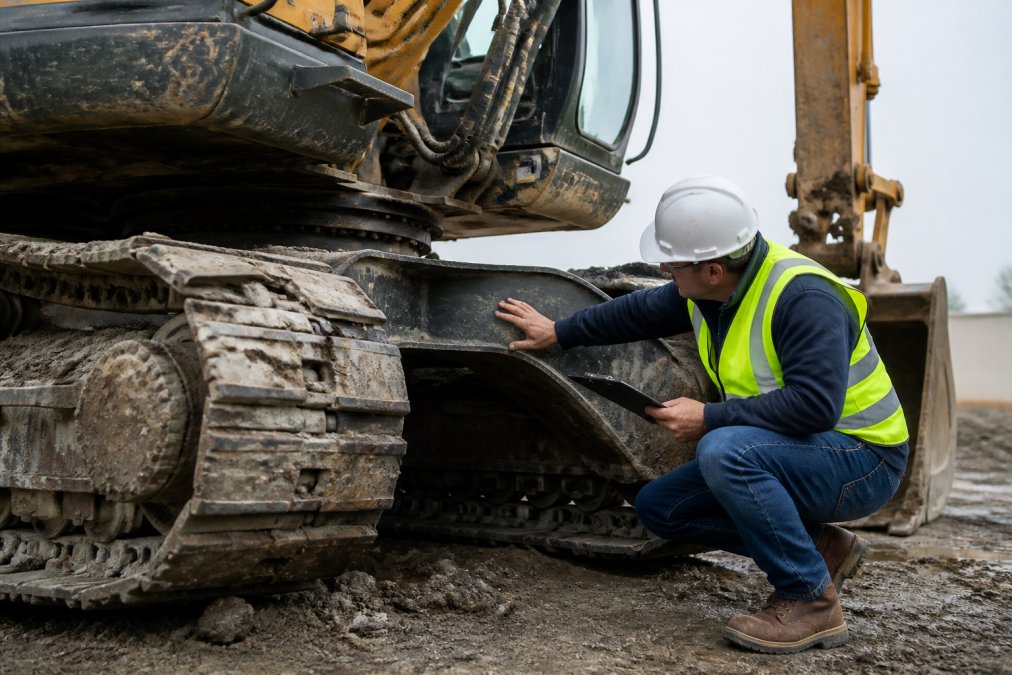
Perform a physical walk-around inspection. Look for rust, corrosion, cracks, and leaks. Check the undercarriage for damage, bent components, or signs of previous collision repair. Inspect hydraulic hoses for cracks or leaks. Examine welds for cracks or stress fractures.
Operate the equipment if possible. Start the engine and listen for unusual sounds, grinding, knocking, or excessive noise indicates mechanical problems. Check hydraulic functions: boom movement, bucket curl, swing rotation. All movements should be smooth and responsive. Jerky or slow responses suggest hydraulic system problems.
Test the operator controls. Are they responsive? Do they return to neutral smoothly? Check safety systems: emergency stops, alarms, and warning lights. Malfunctioning safety systems are a liability and may prevent equipment from being used on regulated job sites.
Take photos and video during inspection. Document the equipment's condition from multiple angles. If you discover problems later, you'll have evidence of the equipment's condition at the time of inspection.
Step 5: Request and Review a Heavy Equipment Bill of Sale Template
A proper bill of sale protects both buyer and seller by documenting the transaction details, equipment specifications, and condition at sale. Use a comprehensive template that includes all essential information.
A complete bill of sale should include the seller's name and business entity, buyer's name and business entity, equipment description with manufacturer, model, serial number, year, and current condition, purchase price and payment terms, and equipment condition statement, typically "sold as-is" unless you've negotiated repairs.
Include a statement confirming the seller warrants they own the equipment free and clear of liens. This protects you if undisclosed liens surface later. Also include a clause stating the seller has disclosed all known mechanical problems and repair history.
Request that the bill of sale be signed and dated by both parties. Keep a copy for your records. Some states require bills of sale to be notarized for heavy equipment transactions. Check your state's requirements and comply with them.
The bill of sale becomes critical documentation if disputes arise. A detailed, signed bill of sale establishes what was promised and what was delivered, protecting your interests if the seller misrepresented the equipment.
Red Flags: What to Watch for When Buying Heavy Equipment
Certain warning signs indicate a seller or transaction warrants extreme caution or should be avoided entirely.
Incomplete or unavailable documentation is a major warning sign. If a seller cannot produce a bill of sale from their purchase, title certificates, maintenance records, or manufacturer documentation, they may not actually own the equipment or may be hiding its history. Legitimate sellers maintain these documents.
Refusal to allow inspection or testing is another red flag. Honest sellers welcome thorough inspection because they're confident in their equipment's condition. Sellers who rush you, limit inspection time, or refuse to let you operate the equipment are hiding something.
Prices significantly below market value often indicate problems. If equipment is priced 20-30% below comparable machines, ask why. The answer might reveal hidden mechanical issues, title problems, or salvage history.
Pressure to purchase quickly or reluctance to provide time for due diligence indicates the seller wants to complete the transaction before you discover problems. Legitimate sellers understand that large purchases require verification time and don't pressure buyers.
Vague or inconsistent descriptions of the equipment's history, previous owners, or repair work suggest the seller is fabricating information. Ask specific questions and note inconsistencies. A seller who can't consistently describe the equipment's background is unreliable.
Reluctance to provide seller references or previous buyer contact information indicates the seller has something to hide. Legitimate sellers encourage you to contact references because they're confident in their reputation.
Equipment with altered or tampered serial numbers is stolen or counterfeit. Never purchase equipment with serial numbers that have been ground down, welded over, or replaced. Contact the manufacturer to verify serial number authenticity.
Undisclosed liens discovered during your lien search mean the seller doesn't actually own the equipment free and clear. Do not proceed with the purchase until liens are satisfied and released in writing.
Verifying a heavy machinery seller requires time and attention, but it's the most cost-effective insurance you can buy. A few hours of research and documentation review prevents tens of thousands of dollars in losses from fraud, mechanical failure, or legal complications.
EquipMarket simplifies this process by connecting you with verified sellers. The platform's advanced search filters and direct communication tools let you reach qualified buyers and sellers across the country, arrange inspections on your terms, and manage transactions with confidence. When you're ready to buy or sell heavy equipment, start with sellers who've proven their credibility. Start Selling Today and find the right equipment for your next project.
Frequently Asked Questions
How do I verify the ownership of heavy equipment before buying?
Request the original title or bill of sale from the seller and cross-reference it with their name and business registration. Perform a lien search through your state's Secretary of State office or UCC database to confirm no outstanding claims exist on the equipment. Ask the seller for proof of purchase and maintenance records that show continuous ownership. Contact the manufacturer using the equipment's serial number to verify the original owner and registration history. Never proceed without clear documentation of ownership transfer.
What should I check when using a heavy equipment serial number lookup?
Locate the serial number on the equipment's nameplate or frame and verify it matches all documentation. Use the manufacturer's database to confirm the equipment's model, year of manufacture, and original specifications. Check that the serial number hasn't been reported as stolen through the National Equipment Register or similar databases. Ensure the serial number is clearly visible and hasn't been altered or tamped with. Cross-reference the manufacturer data with the seller's claimed specifications to catch discrepancies that may indicate fraud or misrepresentation.
What are the biggest red flags when buying from a heavy machinery seller?
Watch for sellers unwilling to provide maintenance records, service history, or title documentation. Be suspicious of significantly below-market pricing, vague equipment descriptions, or refusal to allow third-party inspections. Avoid sellers with no verifiable business history, inconsistent contact information, or pressure to close deals quickly. Equipment with missing or altered serial numbers, mismatched hour meters, or undisclosed major repairs are serious concerns. Sellers asking for payment before delivery or through untraceable methods are major fraud indicators.
Should I hire a third-party inspector before buying heavy equipment?
Yes, hiring a third-party inspector is highly recommended for equipment purchases over $10,000. An independent inspector can verify equipment condition, test operational systems, and review maintenance history objectively. They can identify hidden damage, worn components, and mechanical issues that affect equipment value and lifespan. A professional inspection report protects you legally and provides documentation if disputes arise. The inspection cost typically ranges from $500 to $2,000 depending on equipment complexity but can save you from purchasing defective machinery.