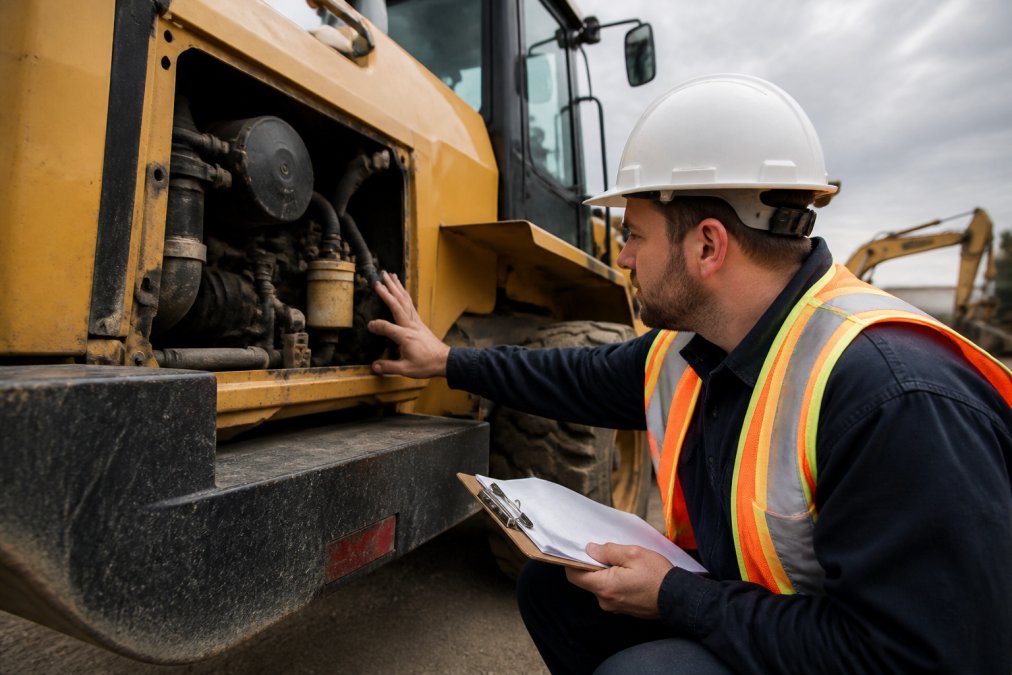
 how-to
How to Verify Used Heavy Equipment: 2026 Guide
Table of Contents
- What You'll Need Before You Start
- Heavy Equipment Serial Number Lookup: Where to Start
- How to Check for Stolen Heavy Equipment
- Used Construction Equipment Inspection Checklist
- Verifying Operating Hours and Service History
- How to Verify Used Heavy Equipment Transactions Safely
- Frequently Asked Questions
Last Updated: August 15, 2026
What You'll Need Before You Start
Knowing how to verify used heavy equipment before purchase is the single most important skill in machinery procurement. Buyers who skip this step face real risks: stolen equipment, hidden liens, fraudulent hour meters, or machinery that fails within weeks of purchase.
Before you visit a machine or wire payment, gather these items:
- A smartphone or tablet with a camera and internet access
- The seller's documentation: title, bill of sale, maintenance logs
- The make, model, and approximate year of the machine
- A flashlight and clean rag for physical inspection
- A notepad or inspection app to record findings
Heavy machinery purchases involve significant capital. The verification process is your primary defense against fraud, hidden mechanical problems, and title disputes.
| Verification Step | When to Do It | Priority |
|---|---|---|
| Serial number lookup | Before site visit | Critical |
| Lien and title search | Before site visit | Critical |
| Physical inspection | On site | Critical |
| Hour meter verification | On site | High |
| Service records review | On site or via email | High |
| Transaction safety setup | Before payment | Critical |
Heavy Equipment Serial Number Lookup: Where to Start
A heavy equipment serial number lookup is the starting point for every legitimate pre-purchase verification. The serial number is a machine's permanent identity: it connects the unit to its original manufacturer record, ownership history, and any theft or lien filings.
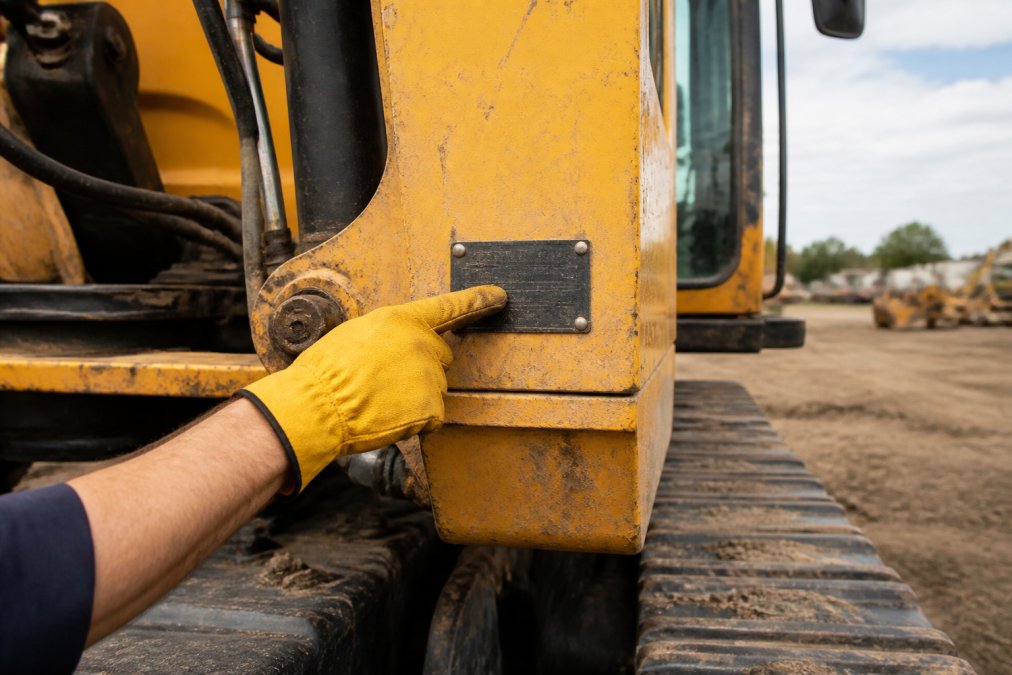
Reading the Serial Number Plate
The serial number plate is usually riveted or welded to the machine frame. On excavators, look at the lower frame near the cab steps or on the boom. On dozers, check the front frame below the blade mounting points. Wheel loaders typically carry the plate on the main frame behind the front axle.
Most equipment built after the late 1980s follows a 17-character structure. Note the full string exactly: a single transposed digit produces a failed lookup and can mask a stolen unit. Photograph the plate under good lighting before writing anything down.
Watch for these red flags on the plate itself:
- Weld marks or grind marks around the plate edges
- Mismatched paint or overspray covering the plate
- Rivets that look newer than surrounding metal
- Stampings that appear shallow or inconsistent in depth
Any of these signs suggests the plate has been removed and replaced, indicating a stolen or re-identified machine.
Using Manufacturer Databases and Registry Services
Once you have the serial number, run it through the manufacturer's official portal. Most major equipment manufacturers maintain online lookup tools where you can confirm the model, production year, and sometimes the original sales region.
The National Equipment Register theft database is the primary registry service used by law enforcement and insurers to track stolen construction equipment. A search here will flag units reported stolen across the country. For a complete equipment valuation and history, cross-reference the serial number with at least two independent sources before proceeding.
How to Check for Stolen Heavy Equipment
Stolen heavy equipment is a larger problem than most buyers realize. According to the National Insurance Crime Bureau's equipment theft resources, construction equipment theft costs the industry hundreds of millions of dollars annually, and recovery rates remain low. Buyers who unknowingly purchase stolen machinery face asset seizure with no recourse for recovering their payment.
Checking for stolen heavy equipment requires more than a single database search. It demands a layered approach.
Running a Lien Search and Title Verification
A lien search is non-negotiable. A machine can look clean in a theft registry but still carry an outstanding loan, judgment lien, or tax lien from a previous owner. If you purchase equipment with an unresolved lien, the lienholder has a legal claim against the machine regardless of your good-faith purchase.
Run the lien search through your state's UCC (Uniform Commercial Code) filing system. Most states provide online search access through the Secretary of State's office. Search under both the seller's business name and the serial number. For high-value transactions, engage a title company or commercial attorney to conduct a formal title transfer review.
Legal title verification should confirm:
- The seller's name matches the title document
- No active UCC financing statements list the machine as collateral
- No federal or state tax liens are attached to the seller
- The title is free of salvage or rebuilt designations
Spotting Signs of Tampering or Alteration
Check the hour meter display for signs of rollback: scratches around the bezel, a digital display that doesn't match the machine's visible wear, or a meter that reads suspiciously low for the machine's apparent condition. Inspect welds along the main frame for inconsistencies suggesting structural repair after major damage. Excessive wear on pedals, seat, and controls relative to displayed hours is a reliable indicator that the hour meter has been altered.
Used Construction Equipment Inspection Checklist
A thorough used construction equipment inspection checklist covers three core systems: engine and fluids, hydraulics, and undercarriage.
Engine, Exhaust, and Fluid Analysis
Start the engine cold if possible. Cold starts reveal problems that a warmed-up engine can mask.
Exhaust smoke color tells you a great deal:
- Blue or blue-gray smoke: oil burning in the combustion chamber, indicating worn rings or valve seals
- Black smoke: fuel system issues, injector problems, or air restriction
- White smoke on a cold morning: often normal condensation, but persistent white smoke indicates coolant entering the combustion chamber
Check all fluid levels and condition. Oil that appears milky or foamy indicates coolant contamination, a serious red flag for head gasket failure. Hydraulic fluid that looks dark, smells burnt, or contains visible particles points to oil contamination and potential pump wear. Pull the dipstick and examine the oil on a white rag: metal particles indicate internal component fatigue.
Hydraulic System and Undercarriage Evaluation
Test hydraulic pressure under load. Operate every function: boom, stick, bucket, blade, or outriggers depending on machine type. Watch for drift: a bucket or blade that slowly drops under its own weight with controls in neutral indicates worn cylinder seals or a faulty control valve. Hydraulic systems are expensive to rebuild.
Check all hydraulic lines and fittings for active leaks, chafed hoses, or fittings with rust weeping around the threads. Run the machine through its full range of motion and look for wet spots on the ground afterward.
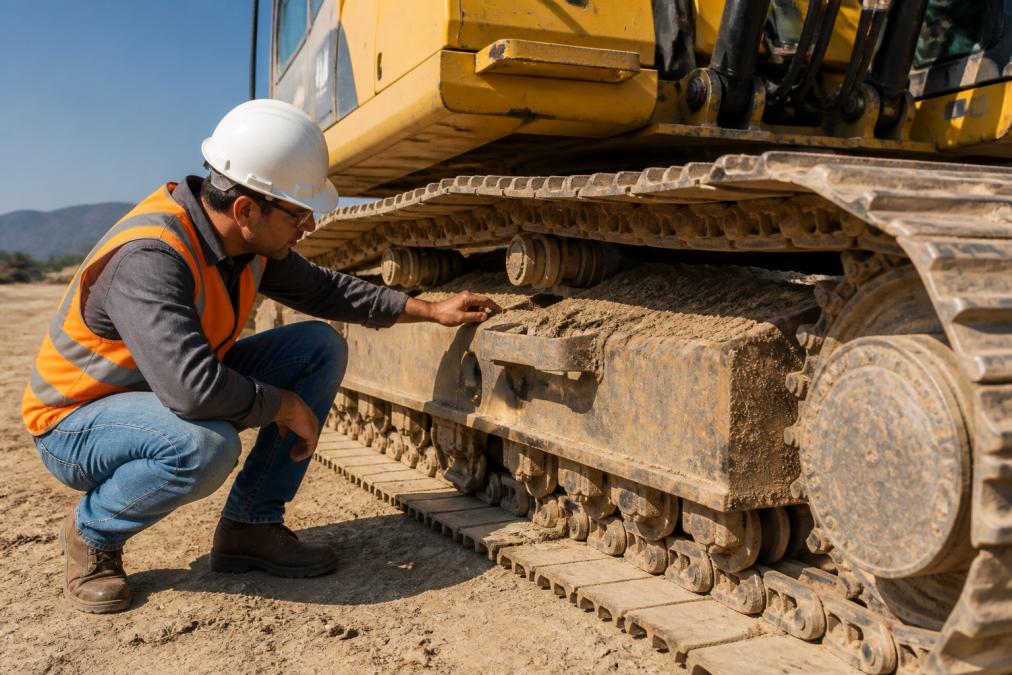
Undercarriage wear is the single largest cost variable in tracked equipment. Measure track sag: excessive sag indicates worn sprockets and rollers. Examine track link thickness, roller flanges, and sprocket tooth profiles. Undercarriage replacement on a large excavator is a major expense.
Checklist Variations by Machine Type
Excavators: Focus on swing bearing play, boom and stick pin wear, and bucket teeth condition.
Dozers: Inspect the final drives for oil leaks, the blade tilt and angle cylinders, and the track adjuster tension.
Wheel Loaders: Check the articulation joint for play, the front and rear axle seals, and the transmission for smooth shifts across all gears.
Cranes and Lifting Equipment: Structural integrity of the boom sections, wire rope condition, and load testing records are mandatory review items. The OSHA crane inspection requirements specify inspection intervals and documentation standards that should be reflected in the seller's records.
Verifying Operating Hours and Service History
Operating hours are the primary proxy for machine wear, but they are only reliable when verified against the service history. An hour meter alone tells you nothing if it has been altered or if the machine has been run without proper maintenance intervals.
Request the complete maintenance logs from the seller. Legitimate sellers of well-maintained equipment will have records: oil change intervals, filter replacements, hydraulic fluid changes, and any component replacements. Gaps in the service history shift risk significantly and should be reflected in price negotiation.
Cross-reference the hour meter reading against the physical wear indicators you observed during inspection. A machine showing 3,000 hours on the meter but with severely worn undercarriage components and a cab interior that looks heavily used has almost certainly had its meter rolled back.
For machines with telematics systems installed, many manufacturers offer remote hour verification through their fleet management portals. Ask the seller to pull a telematics report for GPS-correlated work history that is extremely difficult to falsify.
How to Verify Used Heavy Equipment Transactions Safely
Knowing how to verify used heavy equipment is only half the job. Completing the transaction without falling victim to payment fraud or title manipulation is equally important.
Using Mobile Inspection Apps and Digital Fraud Detection
Mobile inspection apps allow inspectors to complete structured checklists, attach timestamped photos, and generate shareable inspection reports in the field. These reports create a documented record that protects both buyer and seller and provides a baseline for any post-sale disputes.
Before traveling to inspect any machine, run the listing photos through a reverse image search. Fraudulent listings frequently reuse photos from legitimate past sales.
EquipMarket's verified seller network addresses this risk directly: sellers go through a verification process, and the platform's direct communication tools allow buyers to request additional documentation and arrange third-party inspections before any commitment is made.
Wire Transfer Safety and Escrow Services
Wire transfers are the standard payment method for heavy machinery transactions, but they carry serious fraud risk. Once a wire transfer is sent to a fraudulent account, recovery is extremely difficult.
Protect yourself with these practices:
- Verify wire instructions by calling the seller directly on a phone number obtained independently, not from the same email that sent the instructions
- Use an escrow service for transactions above a threshold your business sets internally. Escrow holds funds until both parties confirm delivery and title transfer
- Never wire funds to a third-party account that differs from the seller's documented business name
- Confirm the title transfer is complete and in your name before releasing escrowed funds
For large transactions, a commercial escrow service adds modest cost relative to the protection it provides.
Verifying used heavy equipment before purchase requires discipline across multiple parallel tracks: serial number and theft registry checks, lien and title searches, physical inspection of engine, hydraulic, and undercarriage systems, and secure transaction practices. Skipping any of these steps creates exposure that can cost far more than the machine itself. EquipMarket connects buyers with verified sellers and provides the direct communication tools to arrange independent inspections, request documentation, and negotiate on your terms before any funds move. Start your search on EquipMarket and buy with the confidence that comes from doing the verification work right.
Frequently Asked Questions
How do I verify the serial number of used heavy equipment?
Locate the product identification number on the machine's serial number plate, typically found on the frame, cab door, or engine block. Record the number and run it through the manufacturer's official database or a registry service. Cross-reference it against the title documents and any maintenance logs the seller provides. Mismatches between the plate number and paperwork are a clear red flag that the machine may have been tampered with or is not what the seller claims.
How can I check if a piece of heavy equipment is stolen?
Start with a lien search through your state's UCC filing system and confirm the title is free of encumbrances. Run the serial number through the National Equipment Register (NER), a database used by law enforcement and insurers to track stolen heavy machinery. You can also contact your local law enforcement agency's property crime unit. Equipment with altered or missing serial number plates, or a seller unwilling to provide a clear title, should be treated as potentially stolen until proven otherwise.
What documents are required to prove ownership of heavy equipment?
At minimum, a seller should provide a clear Certificate of Title, a bill of sale, and maintenance logs or service records. For financed equipment, a lien release from the lender is required before title transfer can occur legally. Some states also require a notarized bill of sale. Verify that the name on the title matches the seller's government-issued ID. An equipment appraisal report adds further legitimacy verification, especially for high-value transactions involving cranes or large excavators.
What are the biggest red flags when inspecting used heavy equipment?
Watch for excessive exhaust smoke, which signals engine wear or oil contamination. Hydraulic fluid leaks, uneven undercarriage wear, and hour meter readings that look tampered with are all serious warning signs. On the paperwork side, missing maintenance logs, a title in a third party's name, and a seller pushing for wire transfer with no escrow option are common fraud indicators. Any reluctance to allow a third-party pre-purchase inspection should immediately raise concern.