 how-to
Inspecting Used Construction Machinery: Tips
Table of Contents
- Why Thorough Inspection Matters for Used Construction Machinery
- Physical Inspection of Engine and Powertrain
- How to Check Hydraulic Systems on Used Equipment
- Evaluating Undercarriage, Tread Depth, and Structural Integrity
- Reviewing Operational History and Maintenance Logs
- Used Heavy Equipment Inspection Checklist
- OSHA Heavy Equipment Inspection Standards and Certification
- Red Flags and Fraud Prevention When Buying Used Machinery
- Frequently Asked Questions
Why Thorough Inspection Matters for Used Construction Machinery
Buying used heavy equipment without rigorous inspection means accepting unknown risk, downtime, safety liability, and repair costs that can exceed the purchase price. Two machines with identical operating hours can have vastly different remaining useful life depending on maintenance history and how aggressively they were operated. A comprehensive inspection reveals hidden problems across every critical system: engine, powertrain, hydraulics, undercarriage, and structural integrity. Inspection also gives you negotiating leverage, documented wear becomes points to renegotiate price or seller responsibility.
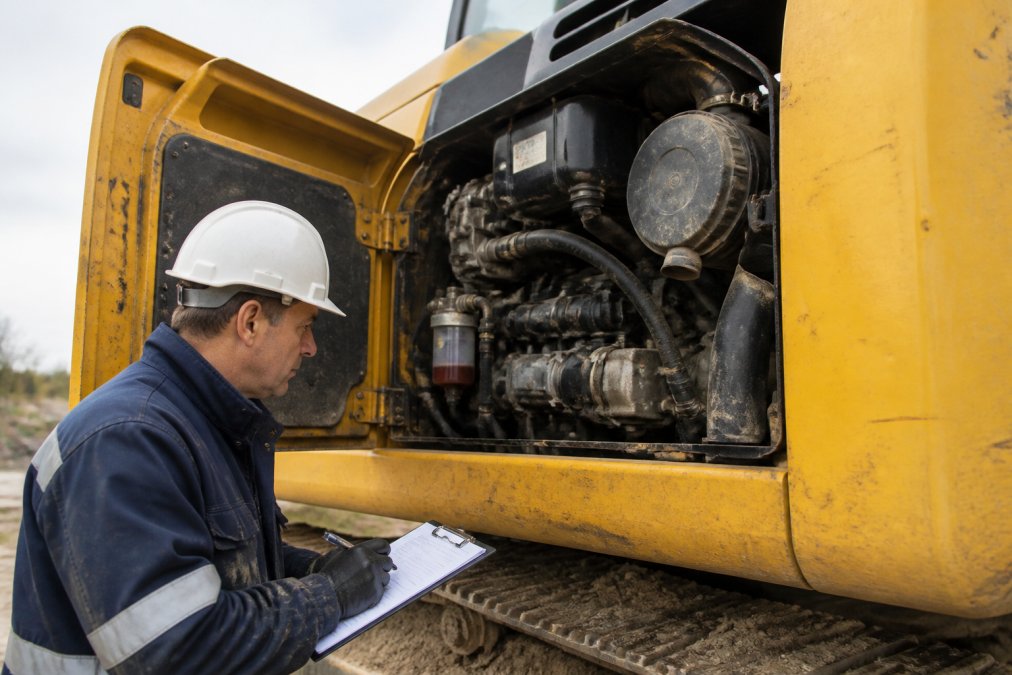
Physical Inspection of Engine and Powertrain
The engine and powertrain determine whether the machine will perform reliably or become a repair liability.
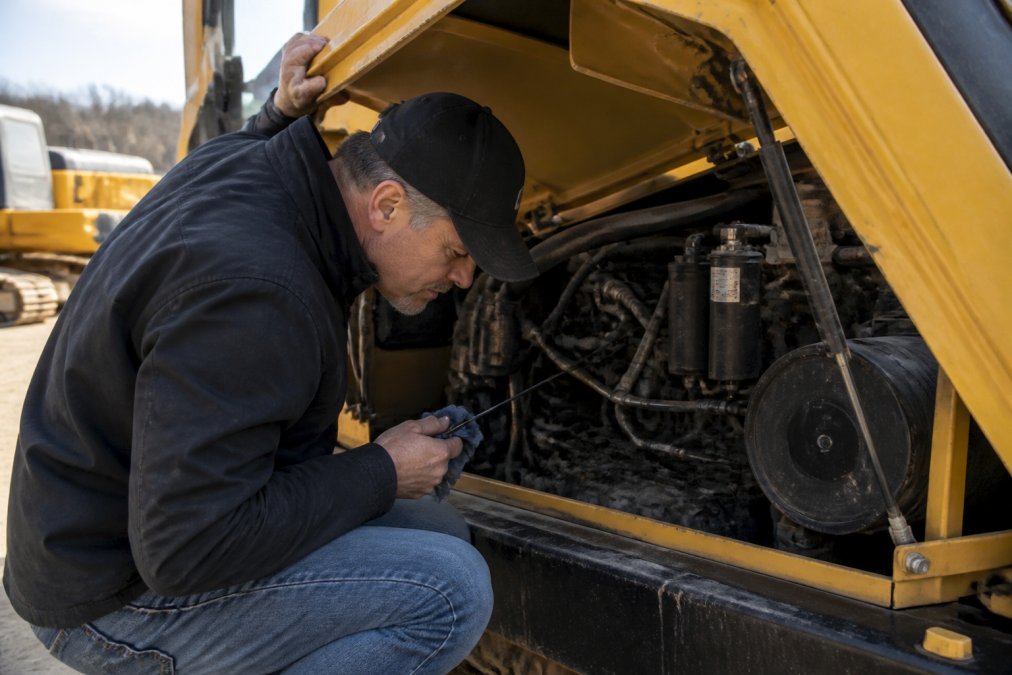
Check fluid levels and condition first. Oil should be amber to brown, not black (hard running) or milky (water contamination). Coolant should be bright green or orange; transmission fluid reddish, not dark; hydraulic fluid clear to amber. Discolored or cloudy fluids signal internal wear or contamination.
Look for visible leaks around the engine block, pan, and seals. Minor seepage is normal; active dripping is not. Oil leaks from the pan gasket are inexpensive; leaks from the crankshaft seal or head gasket are costly. Check for crusty, dried fluid buildup around hoses and connections, evidence of past or ongoing leaks.
Inspect the engine compartment for corrosion, loose wiring, cracked hoses, and frayed belts. Start the engine and listen for knocking, grinding, or excessive noise. Check the air filter for clogs and examine spark plugs for excessive carbon buildup. Blue exhaust smoke indicates oil burning (worn rings or valve seals); white smoke suggests coolant leakage; black smoke points to rich fuel mixture.
For the powertrain, check transmission and differential fluid. Shift through all gears to verify smooth engagement. Listen for grinding or hesitation. Check for leaks at transmission and axle seals. Inspect the clutch (if manual) by depressing the pedal fully, it should feel firm and not slip when the engine is running.
How to Check Hydraulic Systems on Used Equipment
Hydraulic systems power the bucket, boom, blade, and attachments. A failing hydraulic system can render expensive machinery non-functional.
Drain a small fluid sample into a clear container and examine it in sunlight. The fluid should be translucent amber or reddish, not opaque or dark brown. Dark fluid indicates oxidation and contamination; milky or cloudy fluid signals water contamination, which causes corrosion and component failure. Burnt or acrid smell indicates the system has overheated. Request a fluid analysis from the seller if available, this data reveals exactly what's happening inside the system.
Inspect all visible hoses for cracks, bulges, leaks, and wear. Check connection points for corrosion or seeping, which suggest poor maintenance or seal failure. Operate the equipment and watch hydraulic cylinders extend and retract smoothly without jerking, stalling, or drifting. Jerky movement indicates contaminated fluid or worn pump. Drift (slow lowering under load) signals internal seal leakage and is expensive to repair.
Listen for whining or grinding sounds during pump operation, these indicate pump wear. The pump is often the most expensive component to replace. Verify that pressure builds quickly; slow buildup suggests a worn pump or internal leakage. Check when the hydraulic filter was last changed. If service records show no filter change in years, budget for a complete fluid and filter change immediately after purchase.
Evaluating Undercarriage, Tread Depth, and Structural Integrity
The undercarriage bears the machine's weight and stress. Excessive wear signals hard use or poor maintenance.
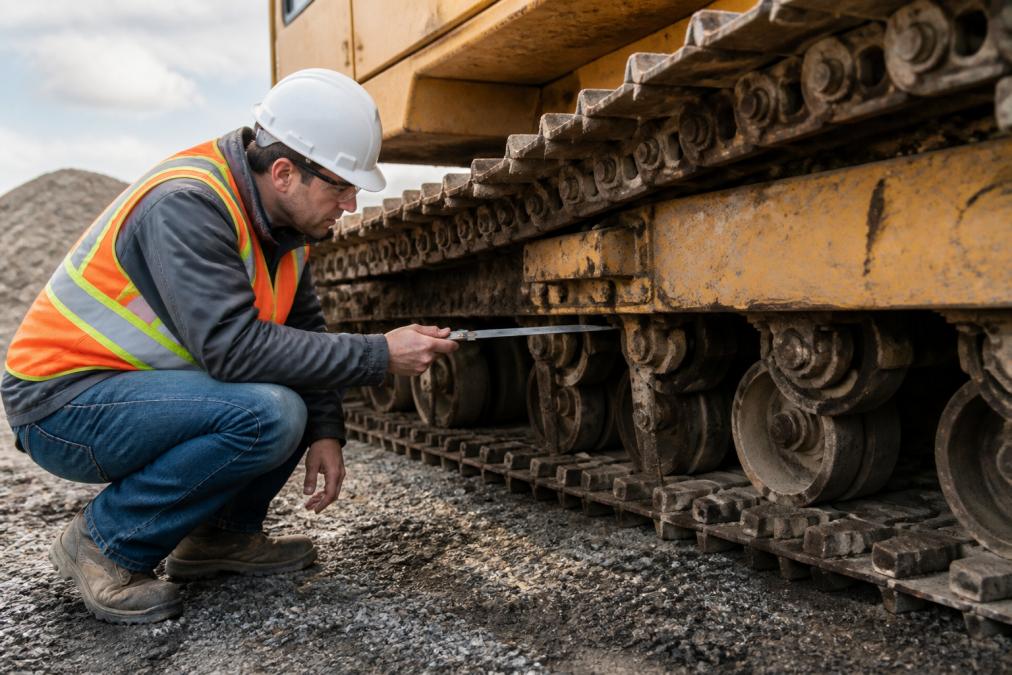
For tracked equipment, measure track tread depth at multiple points. New tracks have 20-25mm of tread; below 10mm means replacement is imminent (osha.gov). Look for missing or broken links, cracks, and excessive side-to-side play. Check track tension, it should be snug but not so tight that it's difficult to turn by hand.
For wheeled equipment, inspect tire tread depth using a penny or gauge. Insert a penny with Lincoln's head upside down; if you see the top of his head, tread is below 2/32 inch and the tire is unsafe. Uneven wear indicates alignment or suspension problems. Cracked sidewalls or bulges mean the tire is failing.
Examine the chassis and frame for cracks, bends, and rust. Structural cracks in the frame are serious and can't be reliably repaired. Look at welds on the frame and boom; cracks in welds indicate overloading or extreme stress. Check the undercarriage for bent or cracked components: arms, cylinders, linkages, and attachment points. Inspect where the bucket or blade connects to the boom, these connection points take enormous stress and are common failure points.
Reviewing Operational History and Maintenance Logs
The machine's history is often more predictive than its current condition. A well-maintained machine with high operating hours often outlasts a poorly maintained machine with low hours.
Request complete maintenance records from the seller. Look for regular oil and filter changes (typically every 200-500 hours), hydraulic fluid and filter changes, coolant flushes, transmission service records, and major repairs with documentation. Consistent maintenance records indicate the machine was cared for. Gaps in records are suspicious.
Check the total operating hours and cross-reference with the machine's age. A 2015 excavator with 500 hours is lightly used; one with 8,000 hours is heavily used. Typical heavy equipment runs 1,000-1,500 hours per year. Ask about primary applications, demolition and mining are harder on equipment than routine grading. Ask about work site conditions; sandy/dusty environments require more frequent filter changes and cause faster wear.
Verify the machine's ownership history. Equipment that changed hands frequently might indicate problems. Request documentation of previous owners and when ownership transferred.
Used Heavy Equipment Inspection Checklist
| Component | What to Check | Pass Criteria | Concern Level |
|---|---|---|---|
| Engine oil | Color and consistency | Amber to brown, not black or milky | High |
| Coolant | Color and level | Bright green/orange, full | Medium |
| Hydraulic fluid | Color and clarity | Amber/reddish, translucent | High |
| Engine | Leaks, noise, starting | No active drips, smooth start, no knocking | High |
| Transmission | Fluid, shifting, leaks | Red fluid, smooth shifts, no grinding | High |
| Hydraulic hoses | Cracks, leaks, bulges | No visible damage, no seeping | High |
| Hydraulic cylinders | Smooth operation, drift | Smooth extend/ retract, no drift | High |
| Track/tire tread | Depth and wear pattern | >10mm tracks, >2/32" tires, even wear | High |
| Undercarriage | Cracks, bends, corrosion | No structural cracks or bends | High |
| Frame and welds | Integrity and cracks | No cracks in welds or frame | High |
| Maintenance records | Completeness and frequency | Regular service documented | Medium |
| Operating hours | Age-appropriate usage | 1,000-1,500 hrs/year typical | Medium |
| Ownership history | Previous owners and transfers | Verifiable history, few transfers | Low |
OSHA Heavy Equipment Inspection Standards and Certification
OSHA establishes standards for heavy equipment operation and maintenance. While OSHA standards focus primarily on safe operation, understanding them helps you evaluate whether equipment meets current safety requirements. Equipment you purchase must be capable of being maintained to meet OSHA standards after purchase.
According to OSHA's heavy equipment and machinery standards, employers are responsible for ensuring equipment is maintained in safe working condition. OSHA requires functioning brakes, steering, visibility, and warning systems. Test brakes thoroughly, they should be responsive and not fade. Steering should be tight with no excessive play. Visibility should be adequate or improvable with mirrors or cameras. Backup alarms and warning lights should function.
Many states and municipalities require equipment certification or inspection before operation. Verify requirements in your jurisdiction. Some equipment may require pre-operation certification from a qualified inspector. Factor this cost into your purchase decision if required.
The OSHA Competent Person Standard requires someone competent in heavy equipment operation and maintenance oversee your inspection. If you're not experienced with the specific equipment type, hire a qualified inspector.
Red Flags and Fraud Prevention When Buying Used Machinery
Certain conditions and seller behaviors should trigger caution.
Condition Red Flags:
- Mismatched components suggest heavy repairs or cobbled-together machines
- Extensive welded repairs on frame or boom indicate overloading or damage
- Evidence of flooding or water damage causes widespread electrical and mechanical failures
- Hour meter tampering or reset
- Heavy repainting might hide damage or disguise the machine's condition
Seller Red Flags:
- Unwillingness to allow pre-purchase inspection
- Pressure to buy quickly
- Inability or unwillingness to provide maintenance records
- Vague descriptions of history or condition
- Prices significantly below market value
Fraud Prevention:
Verify the machine's identity and ownership using the serial number. Cross-reference with the manufacturer's records if possible. Check the equipment's title and ownership documentation. For significant purchases, hire a third-party inspector specializing in heavy equipment. Use EquipMarket's verified seller system to reduce fraud risk, verified sellers have been screened and are accountable for their listings. Document everything: take photos and videos during inspection, note the serial number and operating hours, and keep records of all communications with the seller.
Frequently Asked Questions
Q: What should I inspect when buying a used excavator?
A: Start with the engine and powertrain for leaks, corrosion, and fluid levels. Check the hydraulic system for fluid clarity and pressure readings. Inspect the undercarriage for track wear, bent teeth on the bucket, and structural cracks. Review maintenance logs to verify regular servicing. Verify the serial number matches the title and check operating hours against the machine's age. Finally, test all controls and attachments on site to confirm operational functionality.
Q: How do I verify the maintenance history of used heavy machinery?
A: Request the complete service record from the seller, including dates of major repairs, fluid changes, and component replacements. Cross-reference the documented operating hours with the machine's current meter reading. Contact the previous owner or rental company if available. Check for service stickers or documentation in the cab. Verify that preventative maintenance intervals were followed according to manufacturer guidelines. If records are incomplete, have a third-party mechanic perform a fluid analysis to assess internal component wear.
Q: What are the most common red flags in used construction equipment?
A: Mismatched paint or welding repairs suggest frame damage or accident history. Hydraulic fluid leaks indicate seal failure and costly repairs ahead. Excessive idle time without corresponding low operating hours suggests storage issues or engine problems. Rusted or corroded components signal poor maintenance or work in harsh conditions. Cracked welds on the chassis, bent attachments, or tracks with missing or broken teeth are expensive fixes. Serial numbers that don't match documentation or titles with liens indicate ownership or fraud issues.
Q: What are the OSHA requirements for equipment inspections?
A: OSHA requires operators and employers to conduct daily visual inspections of heavy equipment before use, documented in an inspection log. Monthly detailed inspections must check brakes, steering, hydraulic systems, and structural integrity. Defective equipment must be removed from service immediately and tagged. Equipment must meet manufacturer specifications and safety standards. Operators need training certification. While OSHA focuses on operational safety, pre-purchase inspections should exceed these minimums to assess equipment lifecycle and market value.
Buying used construction machinery without a thorough inspection is a gamble. The machines that deliver value are the ones where you've verified every critical system, reviewed the maintenance history, and understood exactly what you're getting. EquipMarket connects you with verified sellers who stand behind their equipment and support transparent inspections. Start your search today and find the machinery your project needs with confidence.