 how-to
Transporting Heavy Machinery After a Private Sale
Table of Contents
- Why Transporting Heavy Machinery After a Private Sale Needs Its Own Plan
- Step 1: Build a Heavy Equipment Transport Checklist Before You Pay
- Step 2: How to Find Heavy Equipment Haulers You Can Trust
- Step 3: Preparing Heavy Equipment for Transport
- Step 4: Loading, Securement, and the Buyer-Seller-Carrier Handoff
- Step 5: Permits, Paperwork, and State-Line Requirements
- Step 6: Estimating Heavy Machinery Shipping Cost for Your Machine
- Step 7: Delivery-Day Inspection and Damage Claims
- Frequently Asked Questions
Last Updated: October 20, 2026
Why Transporting Heavy Machinery After a Private Sale Needs Its Own Plan
Transporting heavy machinery after a private sale is where a clean transaction most often turns messy. The machine is bought, the money has moved, and a 12-ton excavator sits in a stranger's yard with no clear path to your site.
A private sale has no auction house, dealer prep team, or third party to call when something goes wrong. You own every step: paperwork, carrier vetting, loading, permits, and delivery inspection.
| Step | What It Covers | Why It Matters |
|---|---|---|
| 1 | Checklist, bill of sale, inspection | Proves ownership and condition |
| 2 | Finding and vetting haulers | Blocks scams and uninsured carriers |
| 3 | Preparing the machine | Prevents loading damage and delays |
| 4 | Loading and handoff | Fixes responsibility at the right moment |
| 5 | Permits and interstate paperwork | Keeps the load legal at every state line |
| 6 | Cost estimation | Sets a realistic budget before you commit |
| 7 | Delivery inspection | Preserves your right to a damage claim |
Step 1: Build a Heavy Equipment Transport Checklist Before You Pay
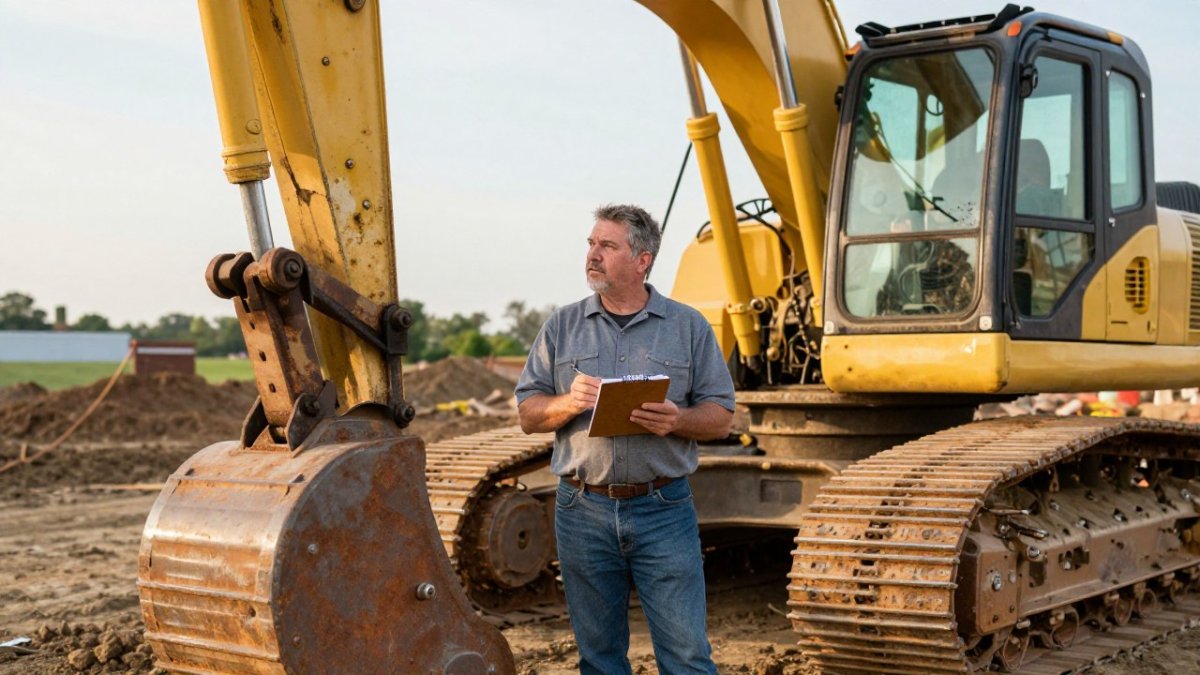
Start your heavy equipment transport checklist before money changes hands. Once you pay, your leverage drops to zero, and no auction house or dealer stands behind a private sale.
Verify the Seller and the Machine's Identity
Before you discuss transport, confirm you are dealing with the actual owner. Ask for a government-issued photo ID and compare the name to the ownership documents. A common pattern is a "seller" who is really a broker or relative with no legal authority to transfer the machine.
Match the machine to its paperwork:
- Photograph the serial plate and compare every character to the bill of sale and any prior invoice.
- Confirm make, model, year, and hour meter reading match the listing and documents.
- Ask for a photo of the serial plate next to a piece of mail or dated note, which makes it harder to reuse an old photo.
If the seller cannot produce a clean serial plate photo and matching documents, treat that as a stop sign. Recovering money from a private seller is far harder than finding another machine.
Bill of Sale and Ownership Documents
A bill of sale is the written record that transfers the machine from seller to buyer. It should contain:
- Full legal names and addresses of buyer and seller
- The machine's make, model, year, serial number, and hour meter reading
- The sale price and the date of sale
Ask for more than the bill of sale:
- The original purchase invoice or prior bill of sale, if available
- Any active lien release, since a financed machine may still carry a lender's claim
- The title or manufacturer's statement of origin where your state requires one
Rules on titles and lien releases vary by state, so check your motor vehicle or revenue department's guidance before you wire funds. For interstate moves, carry the bill of sale and lien release in the cab as proof of ownership.
Structure Payment and Release
Avoid paying in full before you hold a signed bill of sale and lien release. A safer sequence:
- Sign the bill of sale and lien release.
- Pay a documented deposit.
- Pay the balance at pickup, after confirming the machine matches the inspection record.
- Have the seller sign a release confirming the machine left the property and payment was received.
If the seller insists on full payment days before pickup with no signed documents, that is a warning sign. For large amounts, use escrow or a bank wire with a written agreement tying release of funds to pickup confirmation.
Pre-Purchase Inspection and Condition Evidence
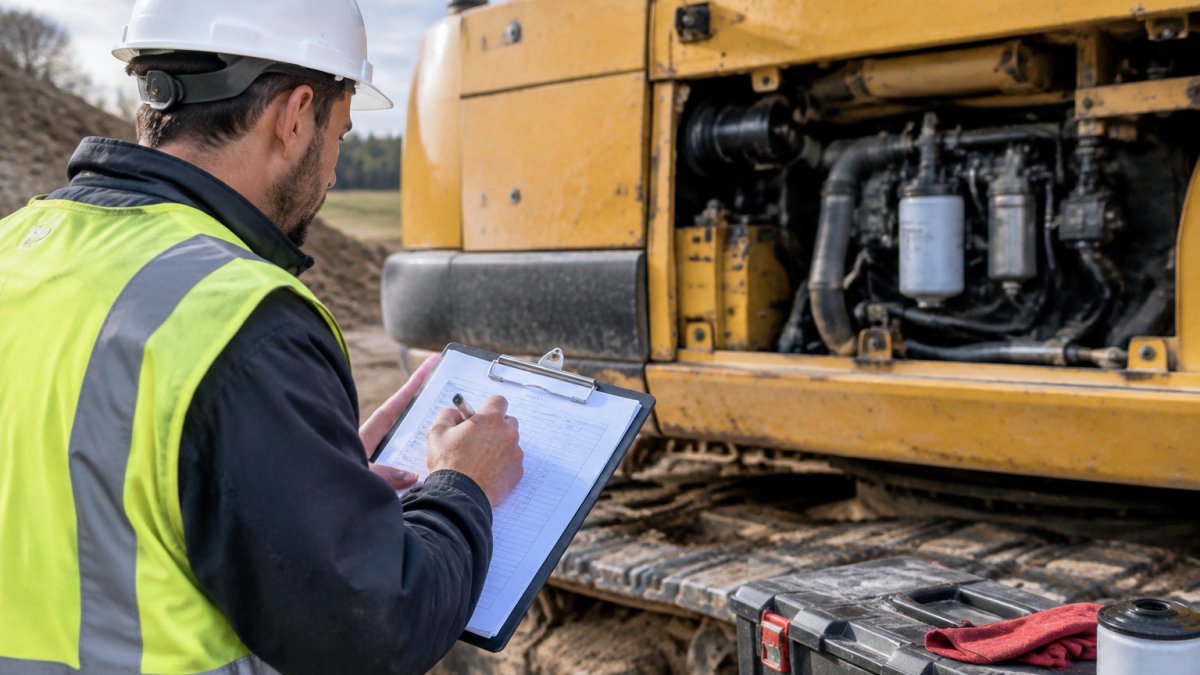
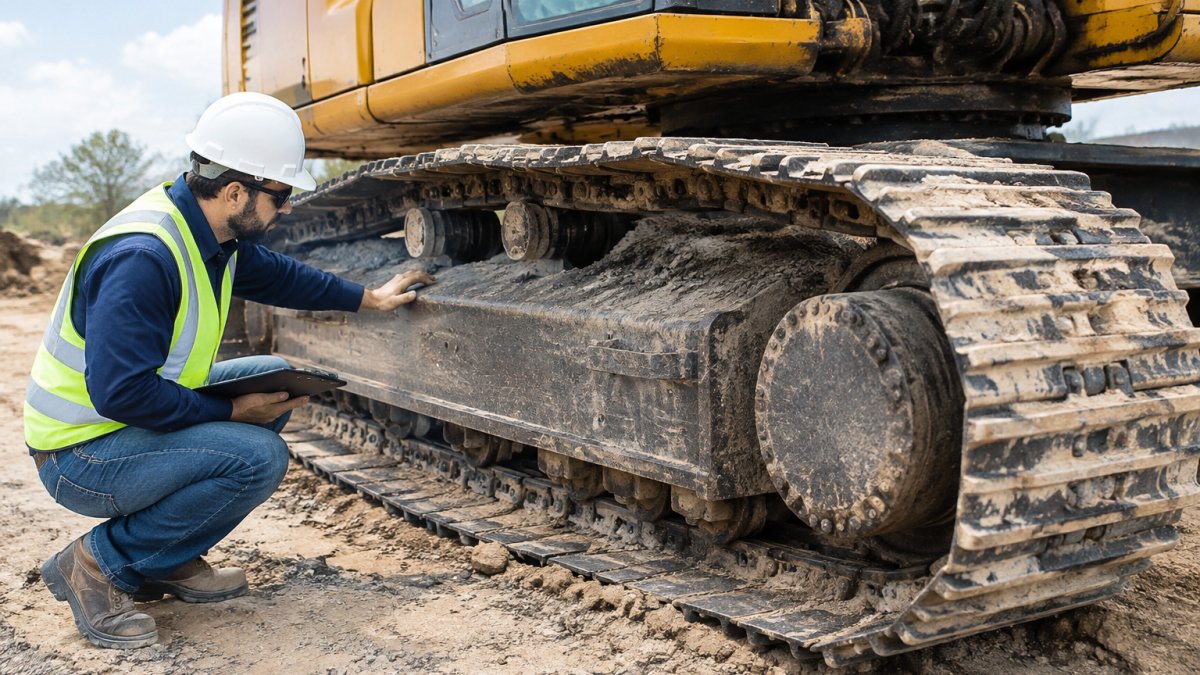
Photograph and document the machine the day you inspect it: hour meter, serial plate, tires or tracks, undercarriage, and any leaks or cracks. A short video of it starting and running is worth more than a page of notes.
Hire an independent inspector for anything expensive. Their report becomes your baseline if damage appears in transit; without it, a carrier can argue the damage was already there.
Step 2: How to Find Heavy Equipment Haulers You Can Trust
Finding heavy equipment haulers you can trust means verifying authority, insurance, and written terms before you discuss price. Most private-sale transport scams fail at this checkpoint, and the buyer who skips it has little recourse after the machine is gone.
Look for carriers through a load board, a broker with a verifiable surety bond, or a referral from another contractor. Then run the same checks on every one.
Verifying Authority and Insurance
Ask each carrier for three things and verify them independently:
- Operating authority. Confirm the carrier's active registration through the Federal Motor Carrier Safety Administration's SAFER system. A legitimate interstate carrier will have an active USDOT number and operating authority. If the number returns no record or an inactive status, stop.
- Insurance certificate. Call the insurer listed on the certificate, not the number the carrier gives you, and confirm the policy is active and covers cargo. Ask the insurer to email or fax the certificate directly to you so the carrier cannot alter it.
- Cargo coverage limit. The policy must cover the machine's full value. A carrier insured for less than your equipment is worth leaves you exposed for the difference.
Also confirm the carrier's safety rating and crash history through the same database. A cheap quote from an unrated carrier is not a bargain.
Check the Written Terms Before You Pay
Get the quote and terms in writing before any payment. The document should state:
- Pickup and delivery addresses and dates
- The machine's dimensions and weight as you provided them
- What the quote includes and excludes (permits, escorts, loading, storage)
Read the liability section closely. Many carriers limit cargo liability by tariff or contract, and some exclude damage from certain causes. If the terms are vague, get clarification in writing before you book.
Scam Warning Signs
Watch for these patterns:
- A quote far below every other, especially one that arrives within minutes
- A request for full payment by wire, gift card, or payment app before written terms
- A carrier who cannot produce a photo of the truck and trailer with the unit number visible
A common pattern is a broker who collects a deposit, never dispatches a truck, and stops answering calls. Verifying the actual carrier, not just the broker, closes that gap.
Buyer-Seller-Carrier Handoff Plan
Before pickup day, put the coordination plan in writing and send it to the seller and carrier:
- Who will be on site at pickup and their phone numbers
- The pickup window and expected arrival time
- Access details: gate codes, low branches, soft ground, and where the truck can turn around
A written handoff plan prevents the most common pickup-day failure: the truck arrives, no one is there, and the machine sits for another week while storage fees accrue.
Step 3: Preparing Heavy Equipment for Transport
Preparing heavy equipment for transport protects both the machine and your legal position. Do this in the days before pickup, not the morning of.
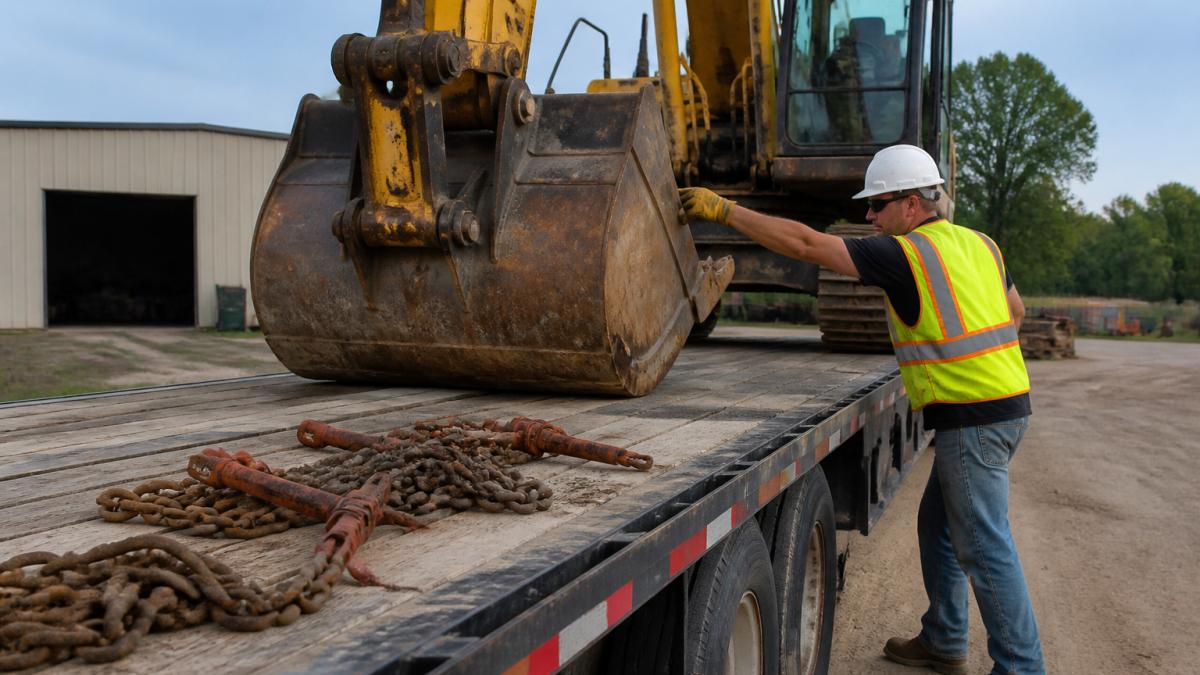
Start with the machine itself:
- Clean it, so cracks, leaks, and damage are visible to the driver at pickup
- Lower buckets, blades, and arms to their transport position
- Retract or secure any loose attachments
Then clear the pickup location. The carrier needs room to turn a tractor-trailer and a clear path to the machine.
Photograph the machine again right before loading. Those photos, matched to your inspection images, are your evidence trail.
Step 4: Loading, Securement, and the Buyer-Seller-Carrier Handoff
The buyer-seller-carrier handoff is the moment responsibility for the machine shifts, so document it in writing.
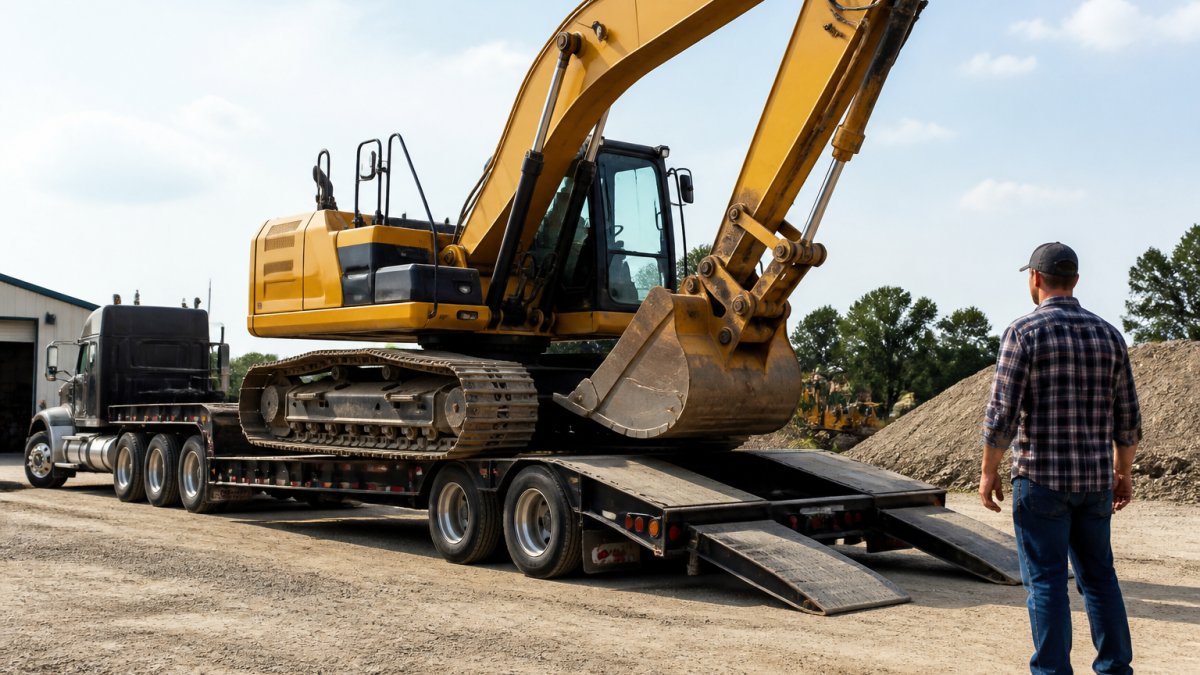
Match the trailer to the machine. A flatbed trailer suits most rubber-tired equipment.
Watch for these during loading:
- Ramps rated for the machine's weight and set at a safe angle
- Tie-downs at the required number of points, using chain binders tightened and locked
- Attachments secured separately, never left loose on the deck
The federal cargo securement rules in FMCSA's cargo securement guidance set minimum tie-down counts by equipment weight.
Sign a pickup condition report with the driver. Note the hour meter reading, any existing damage, and the time of pickup.
Step 5: Permits, Paperwork, and State-Line Requirements
Permits for oversized or overweight loads are the carrier's job to obtain, but the buyer pays and should confirm they exist.
Which permits you need depends on the machine's dimensions and weight against each state's limits. An oversize load exceeds width, height, or length limits.
Interstate transport paperwork typically includes:
- The bill of sale, carried in the cab as proof of ownership
- The carrier's operating authority and insurance certificate
- State oversize or overweight permits for every state on the route
Route planning matters here.
State-line requirements differ, so confirm the permit set covers the full route before the truck rolls.
Step 6: Estimating Heavy Machinery Shipping Cost for Your Machine
Heavy machinery shipping cost depends on distance, machine weight and dimensions, trailer type, permit needs, and season. Build your estimate from these factors.
Estimate in this order:
- Measure the machine. Get length, width, height, and operating weight from the spec plate, not the listing.
- Map the distance. Use the actual pickup and delivery locations, including any access limits at either end.
- Flag permit triggers. Note whether width, height, or weight crosses typical state limits.
- Collect three quotes. Give every carrier the same measurements and dates so the quotes compare.
- Add a contingency. Set aside a margin for permits, escorts, and schedule changes.
Watch for quotes far below the others. That gap usually means missing permits, thin insurance, or a broker who has not yet found a truck.
If the purchase and transport together stretch your cash, equipment financing can cover the machine while you keep working capital for the move.
Step 7: Delivery-Day Inspection and Damage Claims
Delivery-day inspection is your last chance to catch transit damage while the carrier is still on site. Do it before you sign anything.
Walk the machine against your pickup photos:
- Check the hour meter against the pickup reading
- Photograph every side, the undercarriage, and all glass
- Look for new cracks, bent guards, chipped paint, and hydraulic leaks
Note any damage on the delivery receipt before signing. Write "damage noted" with specifics, and photograph the receipt.
If damage appears, notify the carrier and your insurer in writing the same day.
Then register the machine, file the bill of sale with your state if required, and add it to your insurance policy before it goes to work.
Frequently Asked Questions
How do I find a hauler for heavy equipment after buying from a private seller?
Start by collecting the machine's make, model, weight, dimensions, and ground clearance, then request quotes from several carriers that run flatbed, step-deck, or lowboy trailers on your route. Ask each one for proof of authority and a certificate of insurance naming the cargo coverage limit, and confirm the carrier will handle permits for an oversize load if your machine needs them. Get the quote and pickup window in writing before you commit.
What affects heavy machinery shipping cost the most?
Distance is the biggest driver, but it is not the only one. Machine weight and dimensions determine whether you need a standard flatbed or a lowboy, and an oversize load that requires permits and escort vehicles adds cost. Pickup and delivery locations matter too: a site with tight access or no loading ramp may need a power-only transport arrangement or extra equipment. Fuel prices and the carrier's available capacity on your route also move the quote.
Does heavy equipment need to be disassembled before shipping?
Usually not. Most excavators, dozers, and loaders ship whole on a lowboy or step-deck trailer. Disassembly is only worth considering when the machine exceeds legal height or width limits even with permits, or when the transport quote for an oversize configuration is higher than the cost of removing a component. Ask the carrier to confirm the loaded dimensions before you decide.
Who is responsible for loading heavy equipment after a private sale?
That depends on what you agree to with the seller and the carrier. Many private sellers expect the buyer to arrange loading, and many carriers offer power-only transport, meaning they supply the trailer and truck but not the machine to load it. Confirm in writing who provides the loader or ramp, who operates it, and who inspects the tie-downs before the truck leaves. Put that responsibility in the transport agreement, not just a text message.
Buying heavy machinery privately is the easy part. Paying for it and moving it on a tight timeline is where contractors get stuck. Equipment Finance Academy gives you access to a marketplace of top equipment lenders with approvals in hours and same-day funding, so the machine is paid for and the transport is booked without draining your operating cash. Compare equipment financing, equipment loans, and equipment leasing options, then get the machine moving.