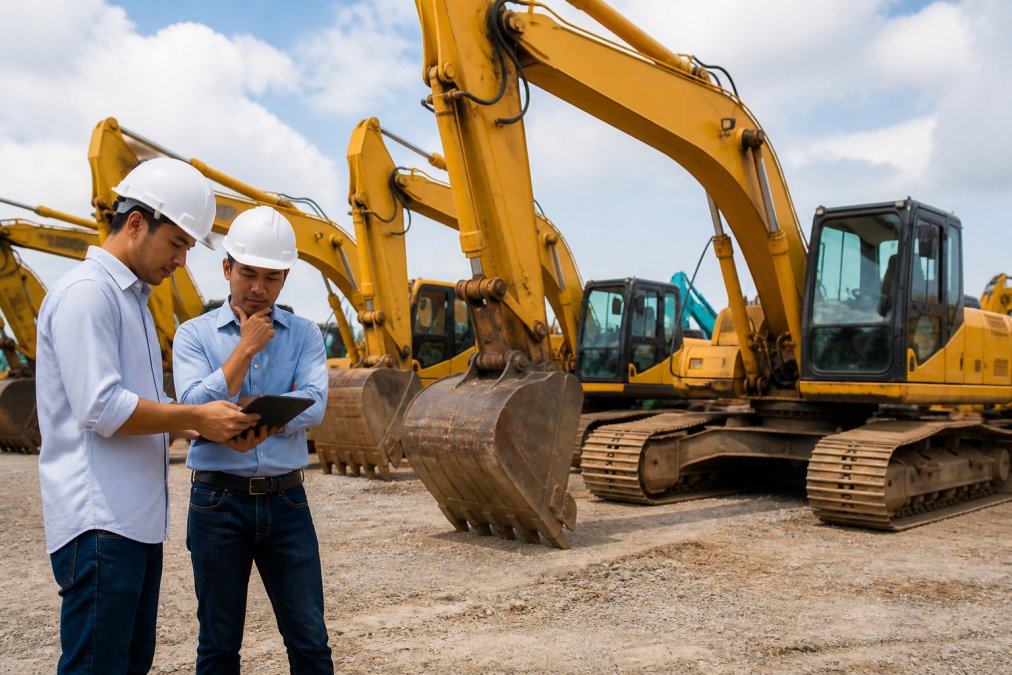
 ultimate-guide
Buy Used Excavators Online Safely: A 2026 Guide
Table of Contents
- Why Online Excavator Purchases Carry Real Risk
- Understanding Excavator Weight Classes and Operating Specifications
- Heavy Equipment Inspection Checklist Before You Commit
- How to Verify Heavy Equipment Serial Numbers and Ownership
- Checking Maintenance Records and Equipment History
- Heavy Equipment Shipping and Logistics: Getting Your Excavator Delivered Safely
- Financing, Payment Security, and Legal Documentation
- Red Flags and How to Avoid Scams When Buying Online
- Frequently Asked Questions
Last Updated: August 18, 2026
Why Online Excavator Purchases Carry Real Risk
Buying used excavators online carries genuine risks that differ sharply from purchasing from a local dealer. When you can't physically inspect equipment before committing funds, you're operating on incomplete information. Remote transactions eliminate the ability to hear an engine run, feel hydraulic pressure through the controls, or assess undercarriage wear in person. Scammers exploit this distance by posting misleading photos, overstating equipment condition, or disappearing entirely after payment.
A used excavator represents a substantial investment for most construction firms and independent contractors. Equipment that looks pristine in photos may have hidden mechanical failures, undisclosed maintenance issues, or even stolen components. Without proper verification steps, you could end up with a machine requiring tens of thousands in repairs or equipment that's been reported stolen.
This guide from EquipMarket walks you through the complete process of buying used excavators online safely. We'll cover inspection protocols that separate legitimate sellers from scammers, verification methods that confirm ownership and operating history, and documentation requirements that protect your investment.
Understanding Excavator Weight Classes and Operating Specifications
Excavators fall into distinct weight classes, each suited to different project types and site conditions. Understanding these categories helps you match equipment to your actual needs and identify whether a listing's specs align with its asking price.
Compact excavators typically weigh between 2,000 and 6,000 pounds and operate in tight spaces where larger machines won't fit. They're ideal for residential projects, utility work, and confined job sites, with bucket capacities of 0.1 to 0.3 cubic yards.
Mid-size excavators range from 6,000 to 20,000 pounds and represent the most common category for general construction work. They balance mobility with digging power, making them suitable for site prep, foundation work, and landscaping projects, with bucket capacities from 0.3 to 0.8 cubic yards.
Heavy-duty excavators exceed 20,000 pounds and are built for demanding applications: quarry work, large-scale site development, and specialized demolition. These machines have bucket capacities of 0.8 cubic yards or larger and operate under extreme hydraulic pressure.
When evaluating a listing, cross-reference the advertised operating weight against manufacturer specifications for that model year. Check the hour meter as well. A compact excavator with 8,000 hours has experienced significantly more wear than one with 2,000 hours, even if both are the same age. Operating hours are one of the most reliable indicators of remaining equipment lifespan.
Heavy Equipment Inspection Checklist Before You Commit
Visual and Structural Assessment
Before arranging shipping or finalizing payment, hire a qualified inspector in the seller's location. The cost (typically $300-$800) is far less than the risk of purchasing a damaged machine.
Start with the undercarriage and track system. Look for bent or cracked track frames, missing bolts, and excessive play in the track tension. Properly tensioned tracks should have about one inch of vertical movement at the midpoint.
Examine the swing bearing, which allows the upper structure to rotate. A worn swing bearing creates play in the rotation and indicates heavy use. Spin the turret slowly and listen for grinding sounds, which suggest internal damage.
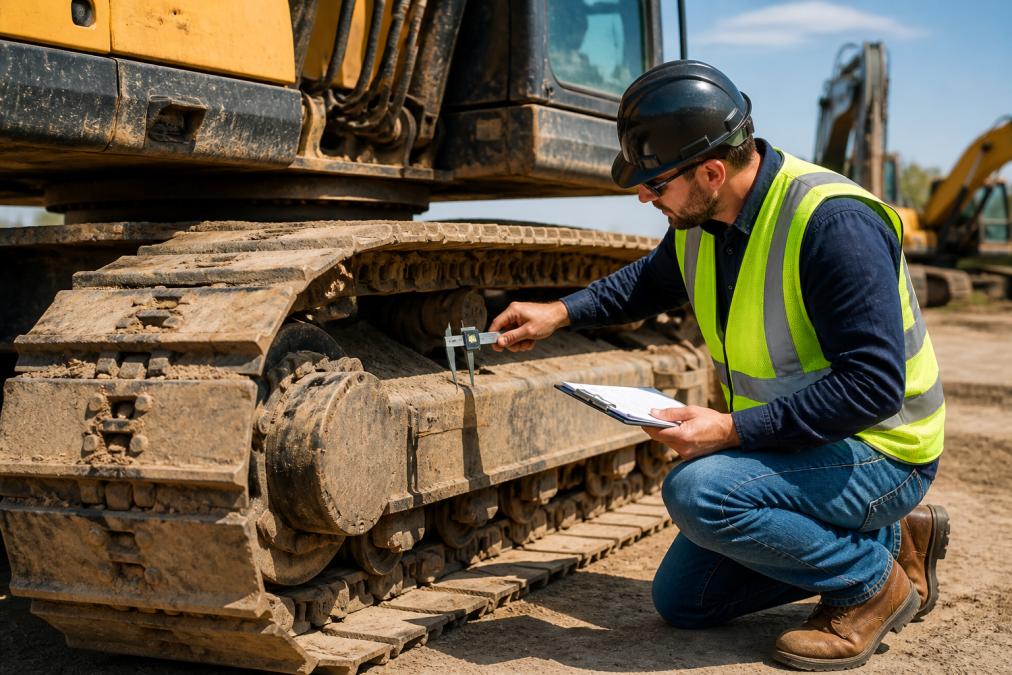
Inspect all hydraulic hoses for cracks, leaks, or abrasion damage. Hydraulic fluid stains on the ground beneath the machine suggest active leaks. Check the cab condition, as cracks, worn seats, and non-functional controls indicate neglect. A well-maintained cab usually correlates with proper maintenance of the engine and hydraulic systems.
Examine the bucket and any attachments for cracks or excessive wear. Check that the coupler system operates smoothly and locks securely.
Hydraulic System and Engine Performance Evaluation
The hydraulic system is the machine's circulatory system. Request a pressure test during your inspection. A qualified technician should measure hydraulic pressure at the pump outlet and at each major cylinder. Pressure readings below manufacturer specifications indicate internal leakage or pump wear.
Ask the seller to operate the machine under load. Watch how the boom and stick respond. Sluggish movement suggests low hydraulic pressure or a worn pump. Listen for unusual noises: high-pitched whining indicates cavitation (air in the hydraulic fluid), while grinding sounds suggest internal component damage.
Start the engine and observe the exhaust smoke color. Blue smoke indicates oil burning, suggesting worn piston rings. Black smoke points to incomplete fuel combustion, often caused by a clogged air filter. White smoke typically means coolant is entering the combustion chamber, signaling serious engine damage.
Check the coolant system. The coolant should be clean and at the proper level. Discolored coolant or oil residue suggests internal engine leaks. Oil analysis provides objective data about engine wear. Send a sample to a lab specializing in equipment analysis. High metal content suggests the engine is nearing the end of its useful life.
How to Verify Heavy Equipment Serial Numbers and Ownership
The serial number is your excavator's fingerprint. Every manufacturer assigns a unique serial number that tracks the machine throughout its life. Before sending money, verify that the serial number matches the equipment you're inspecting and that it hasn't been reported stolen.
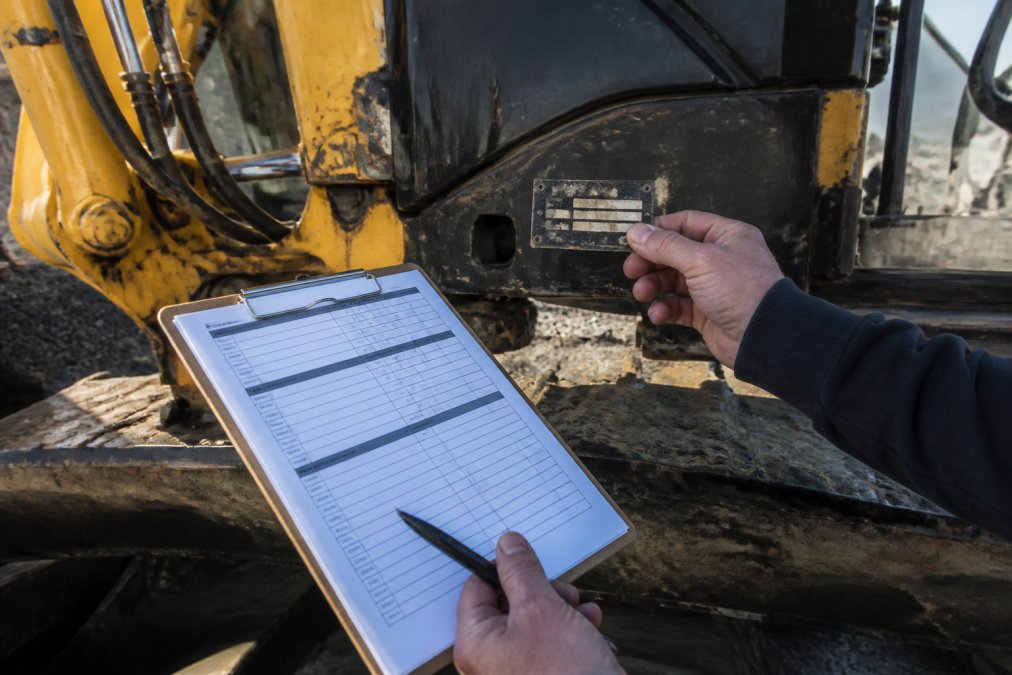
Locate the serial number on the machine's nameplate, typically found on the main frame near the engine or inside the cab. Cross-reference this number against the seller's documentation. Mismatches are an immediate red flag.
Run the serial number through the National Equipment Register (NER) database, which tracks stolen and salvage equipment across the country. A query takes minutes and costs under $20. If the machine appears as stolen or salvaged, walk away immediately.
Check with the manufacturer's records. Most major excavator manufacturers (Caterpillar, Komatsu, Hitachi, Volvo) maintain production records and can confirm the original purchase date, configuration, and service history.
Verify the seller's ownership through the bill of sale and any lien documentation. A clean title means no outstanding loans or claims against the equipment. Request a lien search through your state's UCC (Uniform Commercial Code) database. This search costs $25-$50 and confirms whether the seller has the legal right to sell the equipment.
Checking Maintenance Records and Equipment History
Maintenance records reveal how well the equipment has been cared for. A machine with complete, documented maintenance is worth significantly more than one with spotty or missing records. Request the full service history from the seller, including oil change intervals, hydraulic fluid flushes, major repairs, and preventative maintenance logs.
Well-maintained equipment typically follows the manufacturer's recommended service schedule. For most excavators, this means oil changes every 250-500 hours and hydraulic filter changes every 500-1,000 hours. If a machine has 4,000 hours but only shows three oil changes in its records, maintenance has been severely neglected.
Ask specifically about final drive and swing motor servicing. These components operate under extreme pressure and require regular maintenance. Lack of documented service suggests they may be near failure.
Check whether the seller has records of any major repairs. A new engine, transmission replacement, or hydraulic pump rebuild should be documented with invoices and warranty information.
Request the hour meter reading history. Comparing hour meter readings against service records helps verify the meter hasn't been rolled back. Contact the seller's previous equipment supplier or rental company if applicable. Rental companies maintain strict service schedules because downtime costs money.
Heavy Equipment Shipping and Logistics: Getting Your Excavator Delivered Safely
Once you've verified the equipment and arranged payment, you need to move it safely to your location. Excavators are typically shipped using flatbed trailers rated for the machine's operating weight. The transport company will need exact dimensions and weight to select the appropriate trailer.
Request that the seller provide photos documenting the equipment's condition before loading. These baseline photos protect you against claims that damage occurred during your ownership. Have the carrier also photograph the equipment as it's loaded and after it arrives.
Verify that the transport company carries liability insurance. Equipment damage during transit is surprisingly common. Confirm the coverage limits match the equipment's value.
Arrange for delivery to a location where you can immediately inspect the equipment. Never have equipment delivered directly to a job site where you won't be present. Inspect it thoroughly upon arrival, comparing its condition to the pre-transport photos.
The total shipping cost depends on distance and equipment size. Costs typically range from $2,000 to $8,000 for cross-country transport, though longer distances and oversized loads cost more.
Financing, Payment Security, and Legal Documentation
Secure payment methods protect both you and the seller. Wire transfers and cashier's checks are common for heavy equipment, but they offer limited recourse if something goes wrong. Consider using an escrow service that holds payment until both parties confirm the transaction is complete.
Before transferring funds, ensure you have all required documentation: bill of sale with serial number and purchase price, proof of seller's ownership, UCC lien search results, inspection report, maintenance records, and any remaining warranty documentation.
Have an attorney review the bill of sale before signing. Some states require specific language to transfer equipment ownership properly.
Financing options for used equipment include equipment loans from banks and specialized heavy equipment lenders. These loans typically require 20-30% down payment and are secured by the equipment itself. Compare rates from multiple lenders before committing.
Register the equipment with your state's equipment registration system if required. Proper registration protects your ownership claim and may be necessary for insurance purposes.
Red Flags and How to Avoid Scams When Buying Online
Certain warning signs indicate a seller may not be legitimate.
Pressure to decide quickly. Legitimate sellers allow time for inspection and verification. If a seller insists you commit immediately, they're likely running a scam.
Refusal to allow third-party inspection. Any seller who won't permit an independent inspector to examine the equipment is hiding something. Walk away from any listing where the seller restricts your ability to inspect.
Photos that don't match the description. Reverse-image search the listing photos using Google Images or TinEye. If the photos appear on multiple listings with different descriptions, you're looking at a scam.
Asking for payment before delivery. Legitimate transactions involve payment after the buyer has confirmed receipt and condition of the equipment.
Missing or incomplete documentation. Legitimate sellers have bills of sale, maintenance records, and ownership documentation.
Prices significantly below market value. If a listing is priced 20-30% below comparable equipment, investigate why.
Seller location inconsistencies. Be cautious if a seller claims to be in one location but the equipment is somewhere else.
EquipMarket's verified seller system reduces these risks by connecting you with equipment sellers who have been vetted and maintain active, transparent listings. The platform's direct communication tools let you ask questions and arrange inspections without intermediaries.
Frequently Asked Questions
What should I inspect before buying a used excavator online?
Before committing, inspect the undercarriage for wear, check track tension and swing bearing condition, verify hydraulic pressure readings, review the hour meter, examine the cab for damage, and test engine performance. Request an in-person or remote inspection if you cannot visit. Look for signs of hydraulic leaks, rust on the boom and stick, and verify that all attachments and the coupler system function properly. Documentation of maintenance records strengthens confidence in the equipment's condition.
How do I verify the legitimacy of a heavy equipment seller online?
Check seller ratings and verified status on the marketplace. Request references from previous buyers. Conduct a lien search through your state's Secretary of State office to ensure the equipment is not encumbered. Ask for a bill of sale and title documentation. Legitimate sellers provide transparent maintenance records, clear photos from multiple angles, and honest disclosures about equipment condition. Avoid sellers who pressure you, refuse inspections, or request unusual payment methods like wire transfers without buyer protection.
What documents do I need when buying a used excavator?
Obtain the bill of sale, equipment title or certificate of ownership, maintenance records showing preventative maintenance history, equipment appraisal documentation, serial number verification, and proof of any remaining manufacturer warranties. Request emission standards certification (Tier 4 engines if applicable) and safety certification records. For financing, have loan documents and payment terms clearly outlined. Keep all documentation for tax purposes and future resale value.
What are the biggest risks of buying used construction equipment online?
Misrepresentation of equipment condition, hidden mechanical problems discovered after purchase, title and ownership disputes, seller fraud or inability to deliver, unexpected shipping costs, and equipment that does not match listing specifications. Online transactions limit your ability to inspect before payment. Mitigate risk by using secure payment methods with buyer protection, arranging professional inspections, verifying serial numbers against theft databases, and buying from verified sellers with established track records.
How much does it cost to ship a used excavator?
Heavy equipment shipping and logistics costs depend on distance, equipment weight (operating weight varies by model), transport method (flatbed, enclosed trailer), and regional fuel surcharges. Typical long-distance transport ranges from $2,000 to $8,000 or more. Obtain multiple quotes from licensed heavy equipment carriers. Verify insurance coverage during transit and confirm delivery logistics before finalizing the purchase. Factor shipping costs into your total equipment budget.
Can I arrange a remote inspection if I cannot visit in person?
Yes. Many sellers offer video inspections via phone or video call where they can show specific components, demonstrate engine startup, check hydraulic systems, and verify serial numbers. Request detailed photos of the undercarriage, bucket capacity markings, hour meter reading, and any wear components. Remote inspections work well for initial assessment but consider hiring a local certified equipment inspector for critical purchases. This adds cost but provides professional verification before transport.
What tax implications should I consider when buying used equipment?
Used equipment purchases may qualify for depreciation deductions under Section 179 of the Internal Revenue Code, allowing you to deduct the full purchase price in the year of acquisition (subject to annual limits). Bonus depreciation may apply to newly acquired used equipment. Sales tax applies in most states unless you have a resale certificate. Consult a tax professional about your specific situation. Keep all purchase documentation for IRS compliance and audit protection.
Buying used excavators online doesn't have to be risky if you follow a systematic approach. Verify ownership through serial number searches and lien checks, arrange professional inspections, and document everything before payment. EquipMarket simplifies this process by connecting you with verified sellers who maintain complete equipment documentation and support direct negotiations. Start your search today and find the right equipment for your next project with confidence.