 blog
blog
Machineryline vs EquipmentTrader: Buyer's Guide
Table of Contents
- Why Platform Choice Matters When Buying Heavy Equipment
- Machineryline vs EquipmentTrader: Platform Overview
- Used Construction Equipment Inspection Checklist
- How to Finance Used Heavy Equipment
- Tips for Buying Heavy Equipment Online
- Buyer Protection and Transaction Security
- Which Platform Is Right for Your Procurement Strategy
- Frequently Asked Questions
Last Updated: August 31, 2026
Why Platform Choice Matters When Buying Heavy Equipment
Choosing where to buy heavy equipment shapes everything that follows: the quality of machines you find, seller reliability, procurement speed, and your bottom line. Construction firms, equipment managers, and contractors increasingly turn to dedicated online marketplaces that consolidate inventory, verify sellers, and simplify procurement. The right platform protects your investment, connects you with verified sellers, and provides tools to evaluate condition and value. This guide breaks down Machineryline and EquipmentTrader, the two most widely used platforms for buying used construction equipment online, examining how each works, what they offer, and which aligns best with your procurement strategy.
Machineryline vs EquipmentTrader: Platform Overview
Both platforms connect equipment buyers with sellers across the country but differ significantly in structure, seller verification, and transaction handling.
Machineryline Features and Buyer Experience
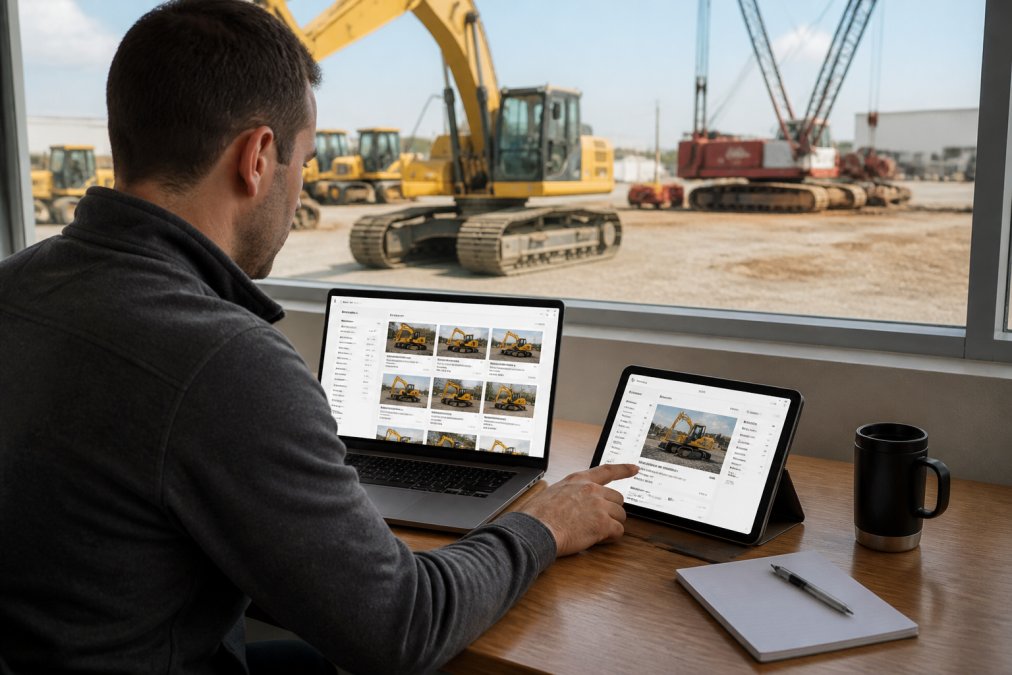
Machineryline positions itself as a straightforward listing platform with high inventory volume. The marketplace hosts thousands of equipment listings from private sellers, small dealers, and larger dealership networks (machineryline.com). Its strength lies in breadth: you can quickly identify machines matching your specifications using filters for equipment type, age, price range, location, and hours of operation.
Buyers can contact sellers through the platform's messaging system, creating a record of negotiations. However, the platform places responsibility on the buyer to verify seller legitimacy, arrange inspections, negotiate pricing, and manage payment security independently. Listings reach equipment from across the country, increasing options but requiring more logistics coordination for distant purchases. The platform doesn't mandate seller verification, so you'll encounter verified dealers, small operators, and individual sellers, requiring thorough due diligence.
EquipmentTrader Features and Buyer Experience
EquipmentTrader emphasizes quality control through structured seller verification before listings go live (equipmenttrader.com). The search functionality includes filters for equipment type, condition, location, and seller type. EquipmentTrader differentiates through its seller rating system, allowing you to see transaction history, volume, and feedback from previous buyers.
The platform integrates structured transaction tools including inspection guidance, financing options through partner lenders, and escrow arrangements for larger deals. Inventory tends toward established dealers and professional sellers rather than one-off private listings, meaning higher confidence in equipment condition and authenticity. EquipmentTrader also provides equipment condition reports and maintenance history documentation when available, reducing information gaps between buyer and seller.
Used Construction Equipment Inspection Checklist
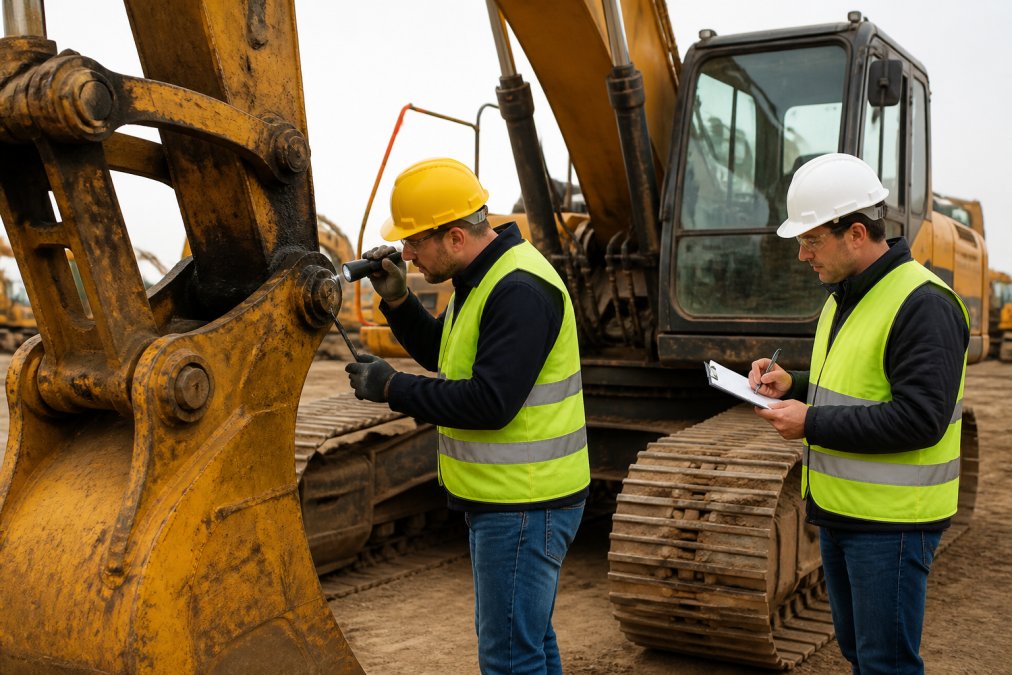
Before committing to any purchase, conduct a thorough inspection. Start by examining the frame and chassis for cracks, bends, or welding repairs indicating previous accidents. Check for rust, corrosion, or paint overspray hiding damage. Inspect hydraulic lines for leaks, kinks, or deterioration, and examine the engine compartment for oil residue, coolant leaks, or overheating signs.
Run the engine and listen for unusual noises, grinding, knocking, or rattling signals internal problems. Operate all hydraulic functions: bucket movement, arm extension, boom rotation. Smooth, responsive movement indicates well-maintained hydraulics; jerky or unresponsive movement suggests worn seals or contaminated fluid.
Document the hour meter reading and cross-reference it against maintenance records. Request service receipts, repair logs, and inspection reports. Take photos and video from multiple angles, documenting wear areas and operational performance. If unfamiliar with the equipment type, hire a third-party inspector, the cost is modest insurance against costly repairs.
How to Finance Used Heavy Equipment
Financing used equipment requires different strategies than new machinery. Lenders view used equipment as higher risk due to unpredictable resale value and uncertain remaining useful life (sba.gov).
Most buyers explore three paths: equipment-specific lenders, bank loans, and seller financing. Equipment-specific lenders understand heavy machinery and move quickly, typically requiring an inspection report, maintenance history, and business financials. Bank loans offer competitive rates for established credit but move slowly and may restrict equipment age. Seller financing is common, particularly with private sellers, speeding transactions with flexible terms but higher interest rates.
Understand total cost of ownership: purchase price, financing costs, transportation, inspection, insurance, and anticipated maintenance. Budget conservatively for repairs within the first year.
Tips for Buying Heavy Equipment Online
Start by narrowing your search to equipment genuinely meeting project requirements. Don't compromise on critical specifications just because a machine is available or priced attractively.
Use platform search filters strategically. Filter by location to understand shipping logistics and costs. Equipment local to your region reduces transportation complexity and allows in-person inspection before finalizing the deal. Contact multiple sellers offering similar equipment and ask detailed questions about condition, maintenance history, hours, and known issues. Sellers responding quickly and transparently are more trustworthy than evasive ones. Request photos from multiple angles, including close-ups of wear areas and the hour meter.
Verifying Seller Legitimacy and Reputation
On EquipmentTrader, seller ratings and transaction history are visible. Look for sellers with multiple completed transactions and positive feedback. On Machineryline, research sellers independently: search their business name online, check the Better Business Bureau, and verify their presence on other platforms. Legitimate dealers typically have a website, multiple listings, and verifiable business information.
Ask for references from previous buyers. Verify the seller's ownership through title documentation and proof of ownership. Equipment with outstanding liens creates legal complications.
Avoiding Fraud and Hidden Costs
Misrepresented condition is common. Insist on recent photos from multiple angles and request video of equipment operating. Cross-reference hour meter readings against maintenance records and apparent wear. If a 15-year-old excavator shows 3,000 hours but displays significant wear, ask the seller to explain the discrepancy.
Verify the equipment's VIN or serial number against the title. Run the serial number through equipment registries to confirm ownership history. Never send payment without verifying seller legitimacy, conducting inspection, and having title documentation. Use secure payment methods offering buyer protection, credit cards or escrow services, not wire transfers.
Buyer Protection and Transaction Security
Escrow services hold payment in a neutral account until both parties confirm transaction completion. The buyer sends payment to escrow, the seller ships equipment, and once both parties confirm completion, escrow releases payment. Some platforms integrate escrow options; others leave arrangements to buyer-seller negotiation.
Dispute resolution processes matter when problems arise. Platforms with formal dispute resolution provide more protection than those leaving disputes entirely to negotiation. Keep records of all communications: messages, emails, photos, inspection reports, and agreed terms. Arrange transport insurance covering equipment in transit, the cost is modest relative to equipment value.
Which Platform Is Right for Your Procurement Strategy
Choose Machineryline if you prioritize inventory volume and are confident evaluating equipment condition and verifying sellers independently. The broader listing reach offers more options to compare.
Choose EquipmentTrader if you prioritize buyer protection and transaction security. Seller verification, rating systems, and integrated transaction tools reduce fraud risk and simplify the buying process. This platform suits first-time heavy equipment buyers or organizations with less experience navigating online purchases.
For most construction professionals, a hybrid approach works best: use EquipmentTrader as your primary search platform to identify verified sellers, then cross-reference on Machineryline to compare pricing and identify alternatives. This balances buyer protection with inventory breadth.
Consider your timeline. If you're on a tight project schedule, EquipmentTrader's structured process may move you toward purchase faster. If you have flexibility, Machineryline's broader reach might surface better value.
At EquipMarket, we've built a marketplace combining verified sellers, advanced search filters, direct seller negotiation, and transaction tools protecting both parties. Our value estimator helps you understand fair pricing, and our seller verification filters out bad actors while preserving negotiation freedom.
Buying used heavy equipment online carries real risk, but the right platform, proper inspection discipline, and clear transaction security eliminate most of that risk. Evaluate your procurement priorities, experience level, and timeline, then choose the platform aligning with your strategy. When ready to buy, start with EquipMarket to search verified sellers, arrange inspections on your terms, and negotiate directly with equipment owners across the country.
Frequently Asked Questions
Q: Is Machineryline a legitimate site for buying heavy equipment?
A: Machineryline operates as an established online marketplace for heavy equipment, but legitimacy depends on individual sellers. Always verify seller credentials through the platform's reputation system, request maintenance history documentation, and arrange third-party inspections before committing funds. Use escrow services when available to protect your transaction. Check seller reviews and ask for equipment condition reports to confirm authenticity.
Q: How do I verify a seller on EquipmentTrader or similar platforms?
A: Look for verified seller badges, check their listing history and buyer reviews, and request references from previous equipment purchases. Ask for detailed photos from multiple angles, maintenance records, and service contract history. Many legitimate dealers provide equipment condition reports. Contact the seller directly through the platform's secure messaging to ask specific questions about the machinery's operational status and any repairs needed.
Q: What are typical hidden costs when buying heavy equipment online?
A: Beyond the equipment price, budget for shipping and logistics (pricing depends on distance and equipment size), inspection fees for third-party evaluations, financing charges if using equipment loans, and potential platform transaction fees. Some sellers charge for detailed condition reports or remote inspections. Factor in any necessary repairs discovered during inspection, parts replacement, and service contracts. Always request a complete cost breakdown before finalizing the deal.
Q: How long does it typically take to complete a purchase on these platforms?
A: The timeline varies based on your procurement strategy and negotiation pace. Initial inquiry to seller response usually takes 1-3 days. Arranging remote or in-person inspection adds 3-7 days. Financing approval (if needed) takes 2-5 business days. Shipping and logistics coordination can take 1-4 weeks depending on distance and equipment availability. Total transaction time typically ranges from 2-6 weeks, though urgent purchases can be expedited if both parties agree.