 ultimate-guide
Heavy Equipment Inspection Checklist 2026: Daily Guide
Table of Contents
- Why a 2026 Heavy Equipment Inspection Checklist Matters
- OSHA Heavy Equipment Inspection Requirements
- Heavy Equipment Daily Inspection Form Template
- Heavy Equipment Pre-Use Inspection Best Practices
- Digital Inspection Tools for Heavy Machinery
- Weather, Operator Training, and Downtime Costs
- Frequently Asked Questions
Last Updated: September 16, 2026
Why a 2026 Heavy Equipment Inspection Checklist Matters
A heavy equipment inspection checklist is a structured, repeatable record of every safety and mechanical check performed on a machine before, during, and after operation. This guide covers what regulators require, what belongs on the form, and how to run a pre-use inspection that holds up to scrutiny.
OSHA Heavy Equipment Inspection Requirements
OSHA does not publish a single universal checklist for heavy equipment. The requirements live in standards that apply to specific machine types and general employer duties, not one generic list that satisfies every regulation.
What OSHA Actually Requires
For powered industrial trucks, the standard requires examination before each shift and after any event that could affect safe operation. For cranes and derricks in construction, separate rules govern inspection frequency, documentation, and who is qualified. The common thread: the employer, not the operator alone, owns the obligation.
What that means in practice:
- Inspections must be performed by a competent person who understands the machine
- Defects affecting safety must be corrected before the equipment is used
- Records must be maintained where the standard requires written documentation
- Repairs must restore the equipment to safe operating condition
How to Build a Compliant Record
A compliant record answers four questions: who inspected the machine, when, what they found, and what was done about it. Tie each entry to a specific unit number and date; a record that says "excavator checked" without an asset ID is worthless during an audit or incident investigation.
Heavy Equipment Daily Inspection Form Template
A daily inspection form template should capture the machine's identity, the inspector, the date and time, a pass/fail result for each check, and a signature. What matters is that the form forces a real answer for every critical system.
What Belongs on the Form
A working template covers these categories:
- Fluid levels and leaks (engine oil, coolant, hydraulic fluid, fuel)
- Undercarriage and track or tire condition
- Hydraulic system: hoses, fittings, cylinders, pressure
- Electrical systems, lighting, and battery voltage
- Safety systems and emergency stop function
- Attachment and coupler security
- Structural condition: cracks, deformation, corrosion
- Cab, seat, seatbelt, and mirrors
- Fluid and air filter condition
- Lubrication points and grease fittings
| Check Category | Frequency | Who Performs It | Record Required |
|---|---|---|---|
| Fluid levels and leaks | Daily, pre-shift | Operator | Yes |
| Undercarriage and tracks | Daily, pre-shift | Operator | Yes |
| Hydraulic system | Daily plus periodic | Operator / technician | Yes |
| Safety and emergency stop | Daily, pre-shift | Operator | Yes |
| Structural and corrosion | Weekly | Competent person | Yes |
| Full functional test | Periodic | Qualified technician | Yes |
Equipment-Specific Checklist Variations
A single generic form is a starting point, not a finished tool. The checks that catch critical failures differ by machine class, and a form that ignores those differences trains operators to skim. Build a base template, then layer machine-specific line items on top.
Operator Competency Verification
A form is only as reliable as the person filling it out. Add two lines to the header: the operator's name and their competency verification date. That changes the form from a machine record into a combined machine-and-person record, which is what an auditor or incident investigator actually needs.
Paper vs. Digital Forms
Paper forms are cheap and familiar, and they fail in predictable ways: they get wet, lost, or signed without a real inspection. Digital forms timestamp every entry, attach photos of defects, and make it far harder to fake a check. For a single machine, paper is fine; for a fleet, digital is the only version that scales.
Heavy Equipment Pre-Use Inspection Best Practices
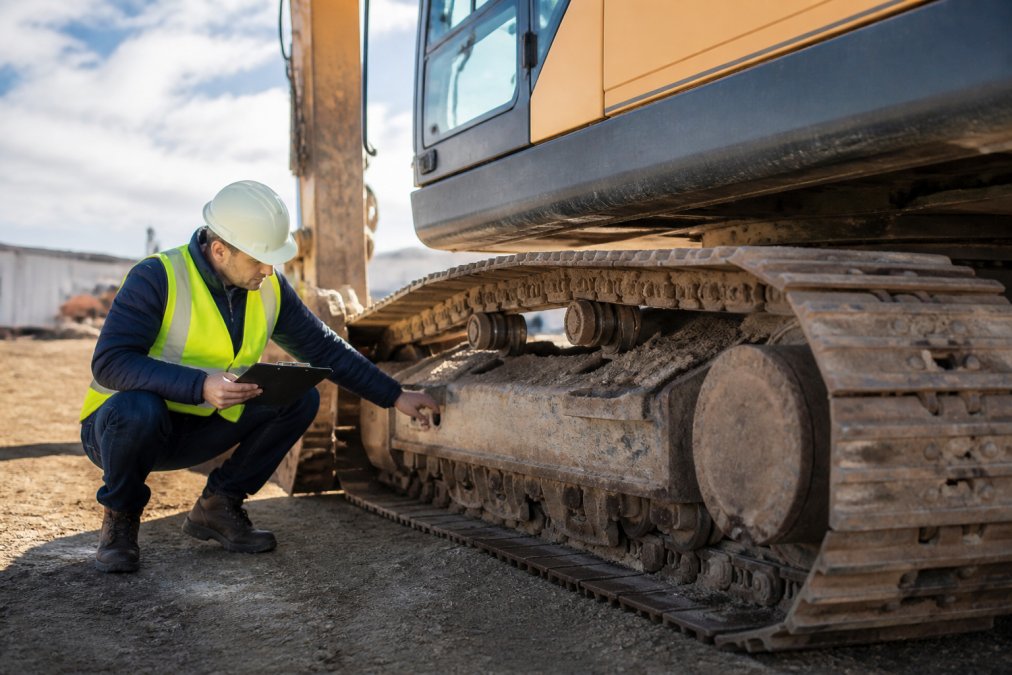
The best pre-use inspection is a fixed walk-around sequence performed the same way every time, so nothing gets skipped when a crew is rushed. Consistency, not speed, catches defects before they become failures.
Walk-Around Sequence
Start at the operator's seat and work outward in a set order: controls and gauges, fluids, undercarriage, attachments, then lights and safety systems. A common mistake is inspecting whatever looks dirty and skipping hard-to-reach systems, hydraulic pressure and structural deformation, which are exactly the ones that cause critical failures.
- Check fluid levels and look for fresh leaks under the machine
- Inspect undercarriage wear, track tension, and ground engagement tools
- Examine hydraulic hoses and fittings for cracks, chafing, or weeping
- Test emergency stop and all safety interlocks
- Verify attachment security and coupler lock engagement
- Check battery voltage, lighting, and warning alarms
- Confirm tire pressure and look for sidewall damage or uneven wear
Defect Tagging and Incident Documentation
A defect that is found but not tagged will be operated by the next person on shift. Tag any machine with a safety-affecting defect, remove the key, and log the finding with a photo and the asset ID. Incident documentation follows the same discipline: record what failed, when it was found, and what action was taken, the audit trail that protects the operator and the employer.
Digital Inspection Tools for Heavy Machinery
Digital inspection tools replace the clipboard with a tablet or phone app that guides the inspector through each check, captures photos, and stores results in a searchable database. For fleets, the bigger shift is telematics: sensors that report hydraulic pressure, engine hours, and fault codes continuously, so the daily inspection starts from real data instead of a blank form.
How Telematics and IoT Change the Inspection
A telematics gateway reads data from the engine control unit, hydraulic sensors, and GPS, then transmits it to a fleet dashboard. Instead of asking an operator to guess whether hydraulic pressure is normal, the dashboard shows the actual reading against the machine's baseline. Fault codes surface before the operator reaches the machine, so the pre-shift inspection becomes a confirmation of known conditions rather than a discovery process.
What Sensors Cannot Replace
Telematics does not eliminate the physical walk-around. Sensors cannot assess corrosion, structural cracks, attachment security, tire sidewall damage, or general machine condition the way a trained eye can. The practical model is a hybrid: telematics monitors high-value systems and flags anomalies, while a digital form handles the physical checks. Keep both records in the same system so a fleet manager sees one asset history, not two disconnected logs.
The ROI of Downtime Prevention
For fleet managers, the financial case is the deciding factor. Unplanned downtime costs far more than the repair itself: idle crew, missed deadlines, emergency parts pricing, and sometimes contractual penalties all compound on top of the repair bill. A machine inspected daily and maintained on schedule fails less often and lasts longer, lowering the total cost of ownership.
Choosing a Digital Tool
When evaluating a digital inspection platform, check four things: whether it works offline on a job site with no signal, whether it supports equipment-specific forms, whether it integrates with telematics data, and whether records are exportable in a format an auditor or insurer will accept. A tool that locks records in a proprietary format creates a new kind of filing problem.
Weather, Operator Training, and Downtime Costs
Inspection is not a fixed routine; it changes with conditions. Cold weather thickens hydraulic fluid and stresses seals. Heat accelerates wear on tracks and tires. Rain and mud hide leaks and pack undercarriages with debris that grinds bearings.
Environmental and Weather-Specific Protocols
Adjust the checklist for the environment. In freezing conditions, add checks for battery voltage, coolant strength, and hydraulic warm-up. In wet or muddy conditions, inspect undercarriage and ground engagement tools more often and clear packed debris. In dusty environments, check air filters and cooling systems daily rather than weekly.
Operator Training and Competency Verification
An inspection is only as good as the person performing it. Train operators to recognize wear indicators and know when to stop using a machine. Verify competency rather than assuming it; a new hire who has never been shown a worn hydraulic fitting will pass a machine that should be tagged.
Cost-Benefit Analysis of Downtime Prevention
The case for disciplined inspection is not abstract. Unplanned downtime costs far more than the repair itself: idle crew, missed deadlines, and emergency parts pricing all compound. A machine inspected daily and maintained on schedule fails less often and lasts longer, lowering the total cost of ownership. For operators financing equipment, that reliability directly affects the return on the asset.
Inspection is not a paperwork exercise. It is the cheapest form of downtime prevention available, and the record it produces is what protects the operator, the employer, and the machine's resale value.
Frequently Asked Questions
What are the OSHA requirements for heavy equipment inspections?
OSHA requires that heavy equipment be inspected before each shift and at additional intervals if conditions change. The specific rules appear in 29 CFR 1926 Subpart O for construction and 29 CFR 1910 Subpart O for general industry. Defects that affect safe operation must be corrected or the equipment taken out of service. Document every inspection and keep the records available for review. Check OSHA's current published standards for the exact language that applies to your equipment class.
How often should heavy equipment be inspected?
Run a pre-use inspection before every shift, no exceptions. Add a more detailed weekly or monthly inspection depending on hours logged and site conditions. Equipment working in dust, mud, or extreme temperatures needs more frequent checks. Your heavy equipment inspection checklist should state the interval for each item so operators know exactly what to do at the start of each shift.
What should be included in a daily heavy equipment inspection checklist?
A daily checklist covers fluid levels and leaks, tire pressure and wear, undercarriage condition, hydraulic hoses and fittings, electrical and lighting function, safety systems and emergency stops, attachment and coupler security, and any structural deformation or corrosion. Each item gets a pass or fail mark, plus space for notes and the operator's signature. A heavy equipment daily inspection form template keeps these items consistent from operator to operator.
Why is a pre-use inspection critical for heavy machinery financing?
Lenders and lessors look at maintenance records when they assess equipment value and risk. A documented pre-use inspection history shows the machine has been cared for, which supports stronger resale value and can improve financing terms. If you plan to lease or finance equipment, keeping a complete inspection log makes the approval process smoother and helps you avoid disputes over condition at the end of the term.
How do 2026 safety standards impact heavy equipment maintenance?
The core OSHA inspection rules have not changed, but more contractors now require digital records with timestamps and photo evidence. Telematics systems feed hours, fault codes, and fluid data into fleet management platforms, so maintenance can be scheduled by condition instead of by calendar. Operators are also expected to complete documented training and competency checks. Building these practices into your checklist now keeps you ahead of where the industry is heading.
Can I use a digital inspection tool instead of paper forms?
Yes, and many fleets have moved that way. Digital inspection tools for heavy machinery let operators complete the checklist on a phone or tablet, attach photos of defects, and upload results to a fleet management system automatically. That creates a searchable audit trail, flags repeat issues, and gives managers a real-time view of operational readiness. Paper still works, but digital tools cut the time between finding a defect and acting on it.