 how-to
How to Evaluate Heavy Equipment Engine Wear and Tear
Last Updated: November 3, 2026
Quick Summary
Evaluating engine wear starts with warning signs like dash lights, knocking, and blue exhaust smoke, then confirming internal condition with heavy equipment oil analysis. Read wear metals as a trend against a baseline, and trust the wear over the hour meter when the two disagree.
- Blue exhaust smoke usually points to worn rings or valve guides, meaning internal damage is already underway.
- Pull oil samples from a live gallery at operating temperature and record the hour meter reading.
- Viscosity is the single most important number on an oil report, so treat step changes as urgent.
- A machine that spent 40 percent of its hours idling has far more wear per recorded hour.
- Do the cold start check after the machine has sat overnight, before the engine warms up.
Table of Contents
- Step 1: Read the Warning Signs of Engine Wear and Tear
- Step 2: Run Heavy Equipment Oil Analysis and Interpret the Results
- Step 3: Compare Engine Hour Meter vs Actual Wear
- Step 4: Inspect Hydraulic Systems, Undercarriage, and Structural Integrity
- Step 5: Work Through a Used Construction Machinery Inspection Checklist
- Step 6: Use Digital Diagnostic Tools and Cold Start Checks
- Step 7: Decide Whether to Repair, Replace, or Finance
- Frequently Asked Questions
Step 1: Read the Warning Signs of Engine Wear and Tear
Evaluating heavy equipment engine wear and tear starts with listening to the machine before it fails. Most engine problems announce themselves well before a breakdown. Catching them early is the difference between a repair bill and a replacement decision.
Warning Lights, Noises, and Exhaust Smoke Color
Watch for these early signals:
- Warning lights on the dash that stay on after startup
- Unusual noises like knocking, ticking, or piston slap
- Exhaust smoke color: blue means burning oil, white means coolant, black means too much fuel
- Fluid leaks under the machine after it sits
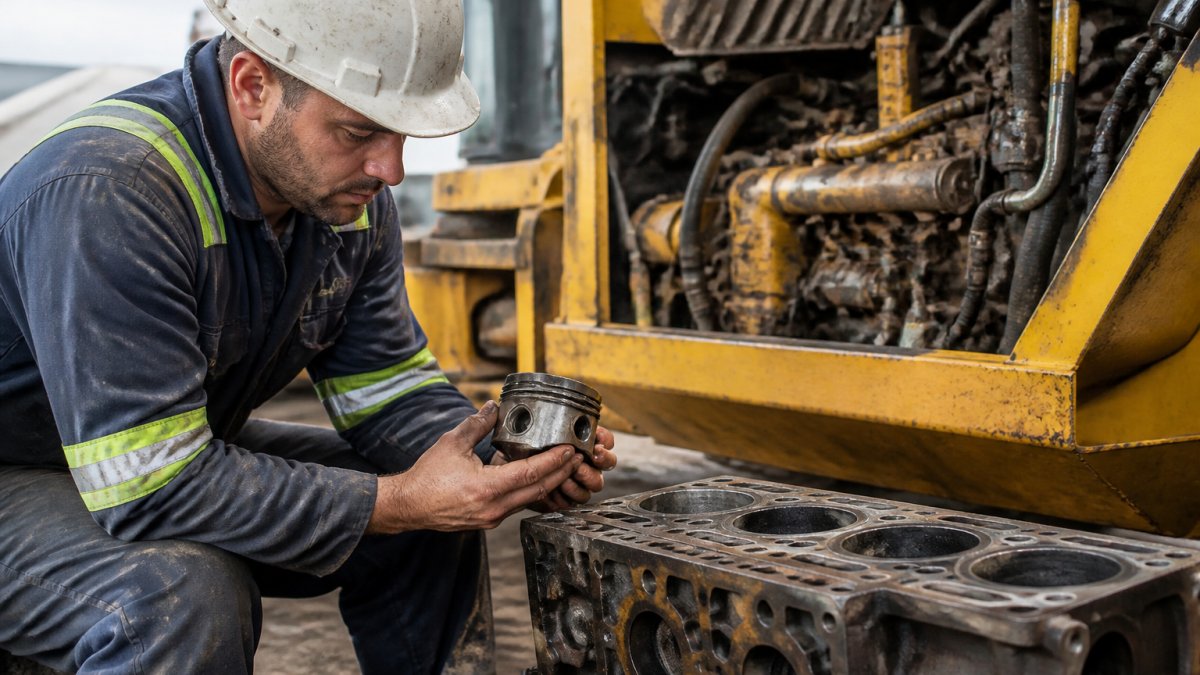
Blue smoke is the one that worries us most. It usually points to worn rings or valve guides, and that means internal damage is already underway.
Power Loss and Overheating Clues
A machine that struggles to lift or push has lost cylinder compression. Overheating often follows, and coolant contamination can turn a small issue into a cracked head. Check the temperature gauge against normal operating range. Any drift upward deserves attention that same day.
Step 2: Run Heavy Equipment Oil Analysis and Interpret the Results
Heavy equipment oil analysis is the single most reliable way to measure engine wear from the inside. A lab reads the metal and chemical content in your oil sample and tells you what's wearing out.
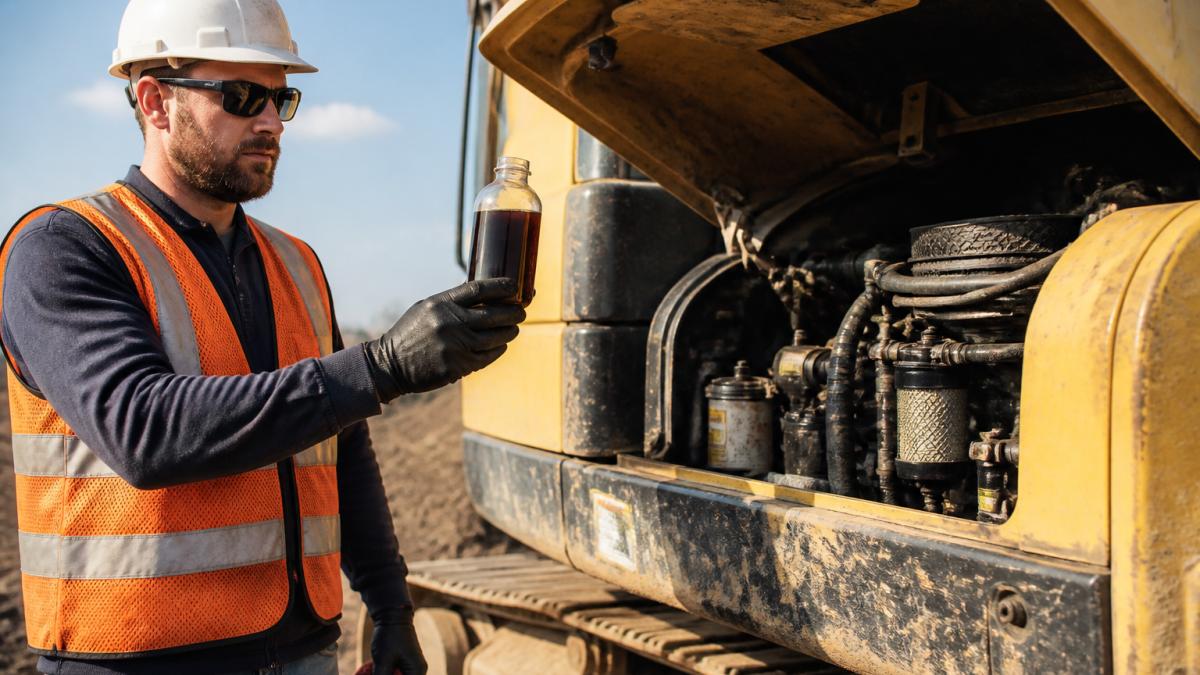
Sampling Discipline Comes First
A lab result is only as good as the sample. Pull from a live oil gallery after the engine reaches operating temperature, not from the drain plug on a cold sump. Use a clean vacuum pump and a new sample bottle, and record the hour meter reading on the submission form. Most labs report results in parts per million (ppm) for wear metals and percent for water, fuel dilution, and soot.
Reading the Wear Metals Like a Trend, Not a Snapshot
Here is what each element in a standard report points to:
- Iron (Fe), cylinder liners, rings, crankshaft, camshaft. A slow rise is normal break-in or steady wear; a step change between samples signals a new wear event.
- Copper (Cu) and lead (Pb), bearings and bushings. Lead has largely disappeared from modern engine bearings, so a lead spike on an older unit often points to a failing bearing shell.
- Chromium (Cr), piston rings and chrome-plated liners. Rising chromium alongside rising iron usually means ring and liner wear are progressing together.
- Aluminum (Al), pistons and turbocharger components. Aluminum combined with high silicon can indicate dirt ingestion scoring pistons.
How to Set Flag Thresholds
No universal ppm number applies to every engine, a 15-liter diesel and a 6-liter diesel have very different normal ranges. The practical approach is to establish a baseline from the first two or three samples on a machine, then watch the rate of change. Ask the lab for its recommended flag thresholds for your specific engine family, and treat any step change in viscosity or fuel dilution as urgent regardless of metal levels.
Cutting the Filter Open
Cut open the oil filter and check for metal shavings and filter debris. A little fine dust is normal. Chunks or flakes are not. That's component degradation you can see with your own eyes.
Watch out: a single clean oil report does not clear an engine. Wear metals can stay low while a bearing is already failing, because the lab only sees what reaches the oil.
What the Report Cannot Tell You
Oil analysis measures wear particles suspended in the oil, not clearances. It will not tell you whether a piston ring gap is still in spec or whether a bearing clearance has opened up, only a teardown or a borescope inspection answers that. Treat the report as an early-warning system that tells you where to look next, not as a verdict on its own.
Step 3: Compare Engine Hour Meter vs Actual Wear
The engine hour meter vs actual wear gap is where a lot of buyers get fooled. Hours record time, not stress.
Ask how the machine was used. Cold starts, constant idling, and dusty conditions all speed up mechanical fatigue. Compare the hour reading to oil analysis results and service records. When the hours look low but the wear looks high, trust the wear.
Step 4: Inspect Hydraulic Systems, Undercarriage, and Structural Integrity
Engine health means little if the rest of the machine is falling apart. Walk the whole unit, not just the engine bay.
- Hydraulic systems: look for fluid leaks, weeping cylinders, and slow response
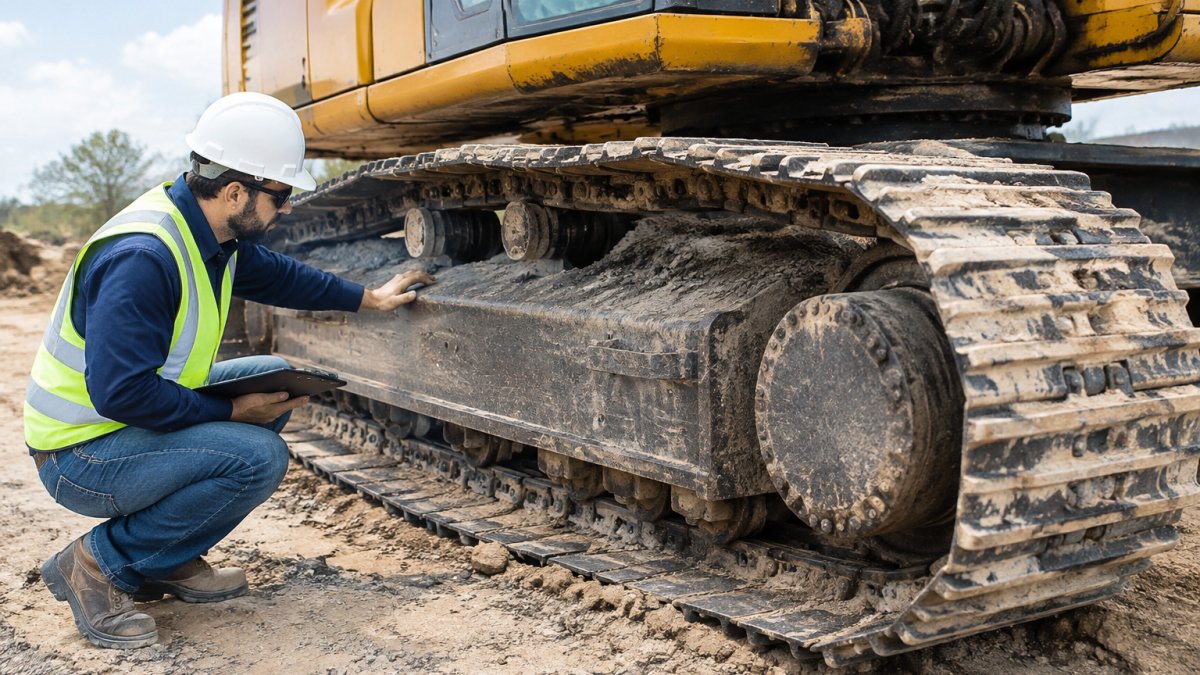
- Undercarriage wear: check track tension, bushing play, and sprocket teeth
- Structural integrity: inspect welds, boom cracks, and rust at the frame
- Lubrication points: dry or greasy fittings show poor maintenance
A machine with a strong engine and a worn undercarriage is a money pit. Budget for both when you price it.
Step 5: Work Through a Used Construction Machinery Inspection Checklist
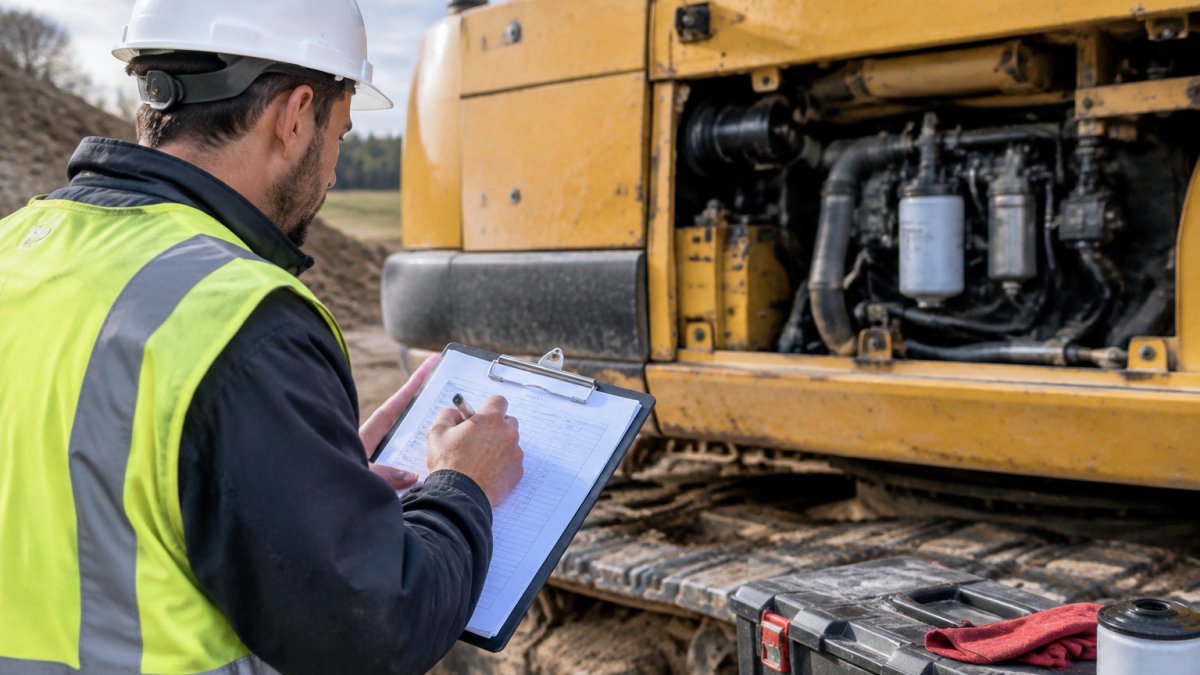
A used construction machinery inspection checklist keeps you from missing the expensive stuff. Before you finalize the deal, learn how to verify heavy equipment title authenticity. Print one and fill it in on site, machine by machine.
- Engine oil, coolant, and hydraulic fluid condition
- Warning lights and fault codes at startup
- Exhaust smoke color under load
- Oil analysis report, if available
Step 6: Use Digital Diagnostic Tools and Cold Start Checks
Digital diagnostic tools read fault codes and live data the naked eye can't. Plug a scanner into the machine's diagnostic port and pull stored codes and sensor history. Telematics data, when available, shows idle time, load cycles, and overheating events over the machine's life. The useful part is knowing which data channels actually reveal internal engine health.
What to Pull From a Diagnostic Scan
Heavy equipment does not use the OBD-II standard found on light vehicles. Most machines use a manufacturer-specific service tool or a diesel diagnostic platform that reads the SAE J1939 controller area network (CAN) bus. A capable scan tool will surface:
- Active and stored fault codes, note whether codes were cleared recently, which can mask an active problem.
- Freeze-frame data, the sensor readings captured at the moment a fault set. A high-load, high-temperature freeze frame points to a specific failure mode.
- Live data channels, watch boost pressure versus commanded boost, fuel rail pressure versus commanded pressure, injection timing, exhaust gas temperature, and coolant temperature under load. A turbo that cannot reach commanded boost, or a rail pressure that sags under load, points to wear the eye cannot see.
- Cylinder contribution or cutout tests, many platforms can disable individual cylinders and measure the change in engine speed. A weak cylinder shows up as a smaller speed drop than its neighbors.
- Diesel particulate filter (DPF) and aftertreatment data, soot load, regeneration history, and differential pressure. Frequent forced regens often trace back to injector wear or excessive oil consumption.
Reading Telematics History
If the machine has a telematics subscription, pull the historical data before you buy. The useful channels are idle time as a percentage of total engine hours, load factor, coolant temperature excursions, and fault-code history. A machine that spent 40 percent of its hours idling has far more wear per recorded hour than one that ran under steady load. Ask for the telematics export in CSV form so you can compare it against the hour meter and service records.
Why Cold Starts Accelerate Cylinder Wall Wear
A cold start is the single most damaging event in an engine's day, and the mechanism is well understood. When the engine sits, oil drains from the cylinder walls and bearing surfaces back into the sump. On startup, the oil pump needs several seconds to re-pressurize the galleries and re-coat the walls. During that window, the piston rings slide against cylinder walls that are nearly dry, and the clearances are at their loosest because the block and pistons have not yet expanded to operating temperature.
Running a Cold Start Check
Do the cold start check before the engine warms up, ideally after the machine has sat overnight. Start it cold and listen for piston slap, watch the exhaust smoke color, and note how fast oil pressure builds.
Watch out: a seller who warms the machine before you arrive is hiding the cold-start evidence. Insist on being present for the first start of the day, or arrange a return visit.
Step 7: Decide Whether to Repair, Replace, or Finance
Once you know the wear, the decision comes down to cost versus life left in the machine. For a closer look at the tradeoffs, see this renting vs buying construction equipment comparison. Consider this framework:
| Situation | Best Move | Why |
|---|---|---|
| Minor wear, strong hours left | Repair | Cheapest path to uptime |
| Major internal damage, high hours | Replace | Repair cost outruns machine value |
| Good machine, cash tied up | Finance | Keeps capital free |
| Short-term project need | Rent | No long-term commitment |
If replacement is the answer, weigh leasing as an alternative to buying before you commit capital. If you're leaning toward a used machine, financing used equipment may be worth considering. When you're ready to move, construction equipment financing can help you spread the cost of replacement equipment over time.
Frequently Asked Questions
How do you perform an oil analysis to check for engine wear?
Pull a sample after the engine reaches operating temperature, using a vacuum pump through the dipstick tube or a sample valve. Fill the lab's bottle, label it with engine hours, and ship it within 24 hours. The lab reports wear metals like iron, copper, and chromium, plus coolant contamination and fuel dilution. Compare results against the same machine's past samples rather than a generic baseline, since trends matter more than any single reading.
What is the difference between normal wear and tear and mechanical failure?
Normal wear shows gradual trends: slowly rising iron or copper, stable oil pressure, and predictable service intervals. Mechanical failure appears suddenly: a spike in metal shavings, oil pressure dropping between checks, or new knocking noises. Track engine hours and sample results together so you can see the trend line. A single bad reading after a hard season is different from three samples climbing in a row, and the second pattern usually means a component is degrading toward failure.
How does idle time affect engine lifespan compared with engine hours?
Idle time counts on the hour meter but adds little productive work while still cycling the engine through heat and lubrication stress. A machine with 6,000 hours where 2,000 were idle has less real load history than one with 4,000 working hours. Ask for telematics data or maintenance records that separate idle from working hours. High idle ratios often point to more component degradation than the meter suggests.
How can you verify the maintenance history of used heavy equipment?
Request service records tied to engine hours, oil analysis reports, and telematics exports. Cross-check the hour meter against the records: a 2019 machine with unusually low hours deserves a closer look at the meter and the wear parts. Walk the used construction machinery inspection checklist with the seller present, and photograph the hour meter, filters, and undercarriage. If records are missing, price the risk in or budget for a full fluid analysis before you commit.
The machine in front of you is either an asset or a liability, and oil analysis plus a cold start tells you which. At Equipment Finance Academy, we connect you to a trusted marketplace of verified lenders with fast approvals and same-day funding. Get started with Equipment Finance Academy and put the right machine to work without tying up your cash.