 ultimate-guide
Tips for Buying Used Cranes: A 2026 Buyer's Guide
Table of Contents
- Why Buying Used Cranes Makes Financial Sense
- Step 1: Define Your Load Capacity and Crane Type
- Step 2: Use a Crane Inspection Checklist for Structural Integrity
- Step 3: Verify Service Records and Maintenance History
- Step 4: Check Crane Certification and OSHA Compliance
- Where to Find Used Cranes: Auctions vs. Dealers
- Used Crane Financing Options and Total Cost of Ownership
- Plan Logistics, Transport, and Post-Purchase Maintenance
- Frequently Asked Questions
Last Updated: September 5, 2026
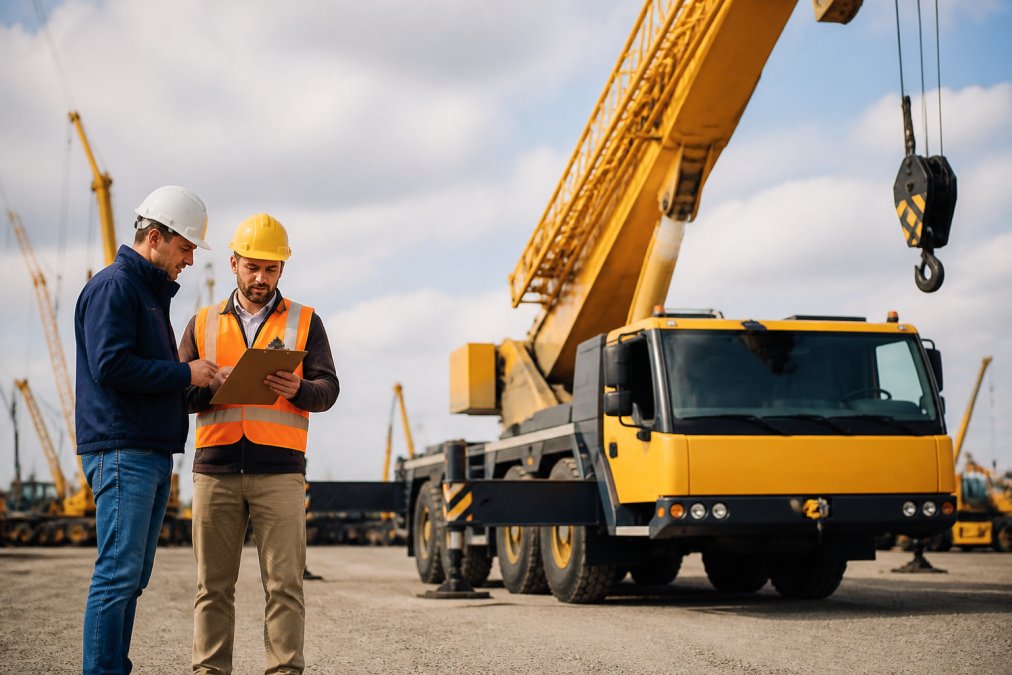
Buying used cranes can cut initial capital outlay dramatically, but the real savings vanish if you inherit mechanical fatigue or compliance problems. The process demands disciplined evaluation of structural integrity, service records, and safety compliance. In this guide from Equipment Finance Academy, we break down practical tips for buying used cranes so you can secure reliable lifting capacity without the guesswork.
A crane that fails on site creates liability, downtime, and repair bills that erase any upfront discount. Most buyers who regret their purchase skipped the technical verification steps below. We'll show you how to inspect like a professional, verify documentation, and plan for total cost of ownership.
Why Buying Used Cranes Makes Financial Sense
The primary advantage of the used market is avoiding the steepest part of the depreciation curve. A new crane loses value quickly in its first years of service, while a well-maintained used unit lets the next owner capture more of the machine's working life for less money.
Used cranes also offer faster availability. New units often carry long lead times from manufacturers, whereas the used market has inventory ready to work. This matters when you have a contract deadline and need a specific crane configuration now rather than next quarter.
Beyond the purchase price, used equipment can reduce your insurance and tax exposure since asset valuation is based on the lower acquisition cost. For smaller contractors, this opens access to larger lifting capacity than a new budget would allow.
Step 1: Define Your Load Capacity and Crane Type
Before browsing any listings, determine the maximum load you will routinely lift and the duty cycle required for your work. The crane must match your typical jobs, not your most ambitious one, because oversizing inflates purchase price, fuel use, and transport costs.
Match the crane type to your application. A rough terrain crane suits uneven job sites, while an all-terrain unit offers road mobility between locations. Tower cranes serve stationary high-rise work, and crawler cranes handle heavy lifts on soft ground. Each configuration has different maintenance demands and resale values.
Review the load charts carefully for the specific model you are considering. Load charts show lifting capacity at various radii and boom lengths, and they differ between configurations. Verify the chart matches the exact machine, including any attachments, because a mismatched chart signals potential documentation problems.
Step 2: Use a Crane Inspection Checklist for Structural Integrity
A thorough physical inspection is the most critical step. A visual walk-around is not enough; you need a systematic, component-by-component evaluation beyond what a seller's inspector might have provided. Create a crane inspection checklist covering the boom, chassis, turntable, and all load-bearing components before you negotiate price.
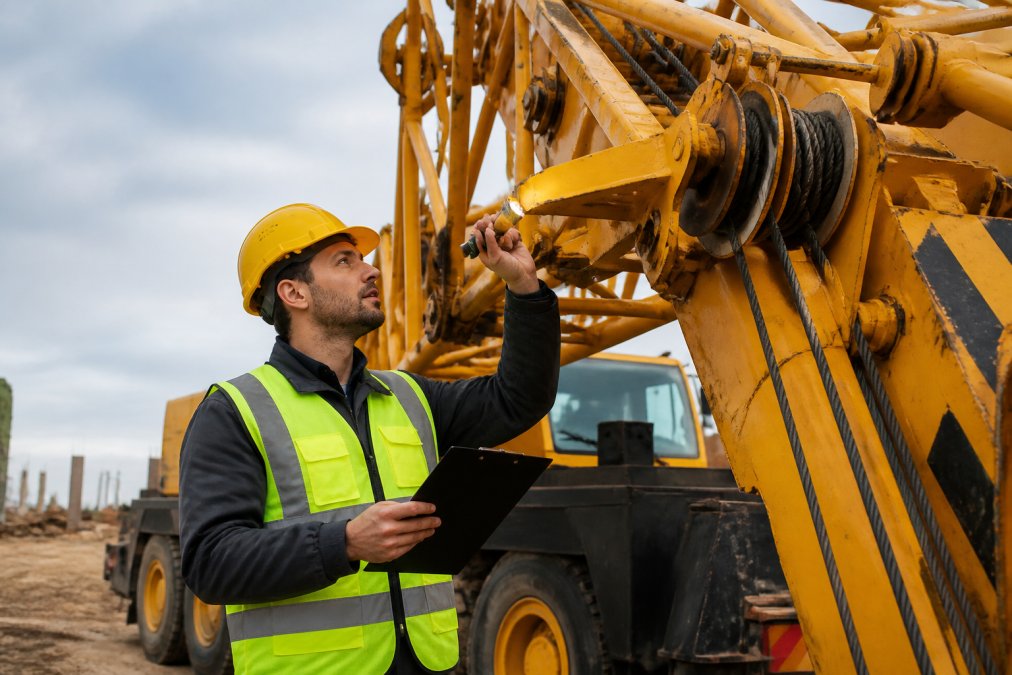
Boom and Welds: Start with the boom, looking beyond surface rust for cracks, dents, or previous repairs. Pay close attention to weld joints, especially at the base section and where the boom attaches to the turntable; cracks here are often hairline and require a flashlight to spot. Any weld differing from factory welds, bead shape, color, or porosity, requires repair documentation. A field weld on a critical load-bearing member is a major red flag unless performed by a certified welder following the manufacturer's procedure.
Wire Rope and Sheaves: Examine the wire rope for kinks, birdcaging, or broken wires. Use the manufacturer's discard criteria as your guide. For example, a common rule is to replace rope if you find more than a certain number of broken wires in one lay length, but you should verify the specific number for the rope's diameter and construction. Also, inspect the sheaves and drums for excessive wear or grooving that could damage a new rope.
Turntable Bearing and Swing System: The turntable bearing is a high-wear, high-cost item. Check for excessive axial or radial play. A simple test is to watch the bearing race while someone swings the crane slowly. Any visible movement between the bearing races is a problem. Listen for grinding or clicking noises during a swing operation. Also, check the swing gearbox for oil leaks and the condition of the swing pinion.
Undercarriage and Drivetrain: For mobile cranes, inspect the undercarriage for cracks in the frame, especially around the outrigger boxes and the carrier mounting points. Check the condition of tires or tracks. For crawler cranes, measure the track pin wear and bushing wear; these are expensive to replace. For truck-mounted cranes, inspect the carrier's suspension, brakes, and steering components.
Hydraulic System: Look for leaks at every cylinder, hose, and fitting. A small leak can indicate a failing seal; a large leak signals a more serious problem. Check the hydraulic fluid for contamination by rubbing a sample between your fingers, it should feel oily, not gritty. If in doubt, send a sample to a lab for particle count and water content analysis.
Load Test: A visual inspection is necessary but not sufficient. A load test with a known, calibrated test weight is the only way to verify the crane's load chart, load indicators, and brakes work as intended. Do not accept verbal assurance that the crane was 'tested last month'; ask to see the test certificate and, if possible, witness a test yourself. The cost of a third-party load test is a fraction of the cost of structural failure.
Use a structured checklist to document findings with photos and videos. This documentation is a powerful negotiating tool, evidence of a crack or leak can justify a lower offer or require the seller to make repairs before closing.
Step 3: Verify Service Records and Maintenance History
Documentation tells you how the crane was treated long before you met it. Request the complete maintenance history, including all preventative maintenance schedules, parts replacements, and any major refurbishment work.
Operational hours are the crane equivalent of a vehicle's odometer, but hours alone do not tell the full story. A crane with high hours that followed a strict maintenance schedule can outperform a low-hour unit that was neglected. Compare the service records against the manufacturer's recommended intervals for the specific model.
Look for gaps in the records. Missing documentation for significant periods should raise questions about what happened during that time. Ask for proof of any structural repairs, including who performed them and whether the work met manufacturer specifications.
Step 4: Check Crane Certification and OSHA Compliance
Safety compliance is non-negotiable in crane purchases. The unit must meet current OSHA standards for cranes used in construction, and you need to verify the certification paperwork is valid and transferable. This is not just about having a sticker on the cab; it is about understanding the chain of documentation that proves the crane is legally and safely operable.
OSHA's Role: OSHA does not 'certify' cranes. Instead, OSHA's Cranes and Derricks in Construction standard (29 CFR 1926 Subpart CC) requires that cranes be inspected and maintained according to the manufacturer's recommendations and the crane's specific conditions. The standard mandates that a 'competent person' perform frequent and periodic inspections. The key document you need is the annual inspection report, which must be performed by a qualified person. This report is a record of the crane's condition and must be kept on file. When you buy a used crane, you are inheriting the responsibility to maintain that compliance.
Documentation Verification: Request the following documents from the seller and verify their authenticity:
- Annual Inspection Report: This is the most critical document. It must be dated within the last 12 months and signed by a qualified inspector. Check the inspector's credentials. Is he or she a certified crane inspector through a recognized organization like the National Commission for the Certification of Crane Operators (NCCCO)? Look for a detailed report that lists findings, not just a 'pass' or 'fail' stamp.
- Load Test Certificate: This certificate proves the crane was tested to its rated capacity. It should reference the specific test weight used and the date of the test. Cross-reference this with the annual inspection report.
- Manufacturer's Load Charts: The load charts in the cab must be the correct ones for that specific crane model and configuration. A mismatched chart is a serious safety hazard and a sign of poor documentation.
- Repair and Modification Records: Any structural repair or modification must be documented and approved by the manufacturer or a qualified engineer. If the crane has been modified (e.g., a new boom section), the load charts must be updated to reflect the new configuration.
Digital Documentation Verification: Digital records are easier to falsify than paper ones. Open the PDFs and check the metadata for the file creation date and author's name; a file created the day before inspection with an author name that does not match the service company is a red flag. Cross-reference log entries with the crane's physical condition, if a log says a cylinder was replaced 200 hours ago but it shows fresh oil and recent wrenching, the record is suspect. Verify records directly with the service company.
Safety Devices: Verify that the crane has all required safety devices, including a load indicating system, limit switches, and an anti-two-block system. These are not optional extras; they are required for OSHA compliance. Test each device to ensure it functions correctly. A non-functioning load indicator is a violation and a safety hazard.
Recertification Costs: If the annual inspection is lapsed, you must pay for a new one before legal use. A crane 'priced to sell' because its certification is expired may not be a bargain once you add compliance costs.
Where to Find Used Cranes: Auctions vs. Dealers
Heavy equipment auctions and dealers offer different advantages for used crane buyers. Auctions often produce lower prices, but they require fast decisions and typically sell equipment as-is with limited inspection windows.
Dealers usually provide more thorough documentation, sometimes including recent inspection reports and service records. They also tend to stand behind their inventory with some level of guarantee, which reduces your risk. The trade-off is a higher price compared to auction results.
Private sales can offer the best price but carry the highest risk. Without a dealer's reputation or an auction house's volume, you must rely entirely on your own inspection and documentation verification. For most buyers, the dealer route balances cost and security most effectively.
Used Crane Financing Options and Total Cost of Ownership
Used crane financing options differ from new equipment loans, primarily because lenders assess the machine's remaining useful life and resale value. A well-documented crane with verifiable maintenance history is easier to finance than one with incomplete records.
Calculate the total cost of ownership before you commit. This includes the purchase price, transport to your site, any required repairs or recertification, ongoing maintenance, insurance, and operator training. A bargain purchase price loses its appeal if the crane needs extensive work immediately.
Plan Logistics, Transport, and Post-Purchase Maintenance
Getting the crane to your site requires planning many buyers overlook. Measure route clearances, check weight limits on bridges and roads, and confirm transport permits for oversized loads. A crane that cannot reach your job site is a liability, not an asset.
Crane financing through a marketplace like Equipment Finance Academy can simplify the acquisition side. Their platform connects buyers with the nation's top equipment lenders, with approvals in hours and funding available the same day. This speed matters when a good deal on a used crane requires quick action.
Establish a post-purchase maintenance schedule immediately. Follow the manufacturer's recommended intervals for lubrication, inspections, and component replacement. Consistent preventative maintenance extends the crane lifecycle, protects your investment, and maintains the machine's resale value for when you eventually upgrade.
| Buying Stage | Key Action | Common Mistake |
|---|---|---|
| Define needs | Match crane type and capacity to typical jobs | Oversizing for rare peak loads |
| Physical inspection | Use a detailed crane inspection checklist | Skipping load test |
| Documentation | Verify service records and certification | Accepting gaps in history |
| Purchase route | Compare auction risk vs. dealer security | Ignoring transport logistics |
| Financing | Calculate total cost of ownership | Focusing only on sticker price |
Buying a used crane rewards careful preparation and punishes shortcuts. Define your operational needs, inspect the machine rigorously, verify all documentation, and plan for the full cost of ownership. When you find the right unit, act quickly with financing you can trust. Get started with Equipment Finance Academy.
Frequently Asked Questions
What is the 3-3-3 rule for cranes?
The 3-3-3 rule is a simple pre-use inspection guideline for crane operators. It involves checking three key areas: 1) the load chart and operational limits, 2) the wire rope and boom for visible wear, and 3) the brakes, clutches, and controls. While this is a good daily practice for any crane, buying used equipment requires a more thorough crane inspection checklist. That process should verify structural integrity, review service records, and confirm OSHA compliance before you commit to the purchase.
Where can I find used cranes for sale?
You have two primary channels for finding used cranes: heavy equipment auctions and reputable dealers. Auctions can offer lower starting prices, but require you to do your own due diligence, as machines are typically sold as-is. Dealers often provide certified used equipment with service records and a limited warranty. Before bidding or buying, inspect the machine yourself or hire a third-party inspector to verify its condition, regardless of the source.
How can I verify the maintenance history of a used crane?
Start by asking the seller for the crane's complete service and maintenance history records. Look for a documented log of regular preventative maintenance, including hydraulic fluid changes, wire rope inspections, and load testing. Digital documentation is increasingly common, so verify the machine's hours and service intervals against its serial number. If records are missing or incomplete, treat it as a major red flag and factor the cost of a full inspection and potential repairs into your offer.
What are the main used crane financing options available?
Financing a used crane is similar to financing other heavy equipment. Your main used crane financing options include equipment loans, where you borrow a fixed amount and own the crane after the loan is paid, and equipment leasing, which offers lower monthly payments but no ownership at the end of the term. Many lenders specialize in used equipment and can offer flexible terms. Your credit profile, the age of the crane, and the loan-to-value ratio will influence the rates you qualify for.
Frequently Asked Questions
Q: What is the 3-3-3 rule for cranes?
A: The 3-3-3 rule is a simple pre-use inspection guideline for crane operators. It involves checking three key areas: 1) the load chart and operational limits, 2) the wire rope and boom for visible wear, and 3) the brakes, clutches, and controls. While this is a good daily practice for any crane, buying used equipment requires a more thorough crane inspection checklist. That process should verify structural integrity, review service records, and confirm OSHA compliance before you commit to the purchase.
Q: Where can I find used cranes for sale?
A: You have two primary channels for finding used cranes: heavy equipment auctions and reputable dealers. Auctions can offer lower starting prices, but require you to do your own due diligence, as machines are typically sold as-is. Dealers often provide certified used equipment with service records and a limited warranty. Before bidding or buying, inspect the machine yourself or hire a third-party inspector to verify its condition, regardless of the source.
Q: How can I verify the maintenance history of a used crane?
A: Start by asking the seller for the crane's complete service and maintenance history records. Look for a documented log of regular preventative maintenance, including hydraulic fluid changes, wire rope inspections, and load testing. Digital documentation is increasingly common, so verify the machine's hours and service intervals against its serial number. If records are missing or incomplete, treat it as a major red flag and factor the cost of a full inspection and potential repairs into your offer.
Q: What are the main used crane financing options available?
A: Financing a used crane is similar to financing other heavy equipment. Your main used crane financing options include equipment loans, where you borrow a fixed amount and own the crane after the loan is paid, and equipment leasing, which offers lower monthly payments but no ownership at the end of the term. Many lenders specialize in used equipment and can offer flexible terms. Your credit profile, the age of the crane, and the loan-to-value ratio will influence the rates you qualify for.