 how-to
Are There Signs of Heavy Equipment Odometer Tampering?
Last Updated: November 1, 2026
Quick Summary
Common signs of odometer tampering on heavy equipment include a sudden drop in recorded hours, a meter that looks newer than the machine, disturbed instrument-cluster components, and diagnostic scans showing stored hours that do not match the display. Telematics gaps or resets and an hours-to-distance mismatch are also serious flags.
- Cross-check the displayed hours against service records, diagnostic scans, telematics logs, and physical wear.
- A machine logging 4,200 hours in year one and 4,200 hours in year three either sat idle or the meter lied.
- A diagnostic scan of control modules can reveal stored operating hours that do not match the display.
- Undercarriage wear is one of the best hour proxies on tracked equipment because it accumulates with travel and load.
- A replaced meter is not automatically fraud; treat an undocumented replacement as a pricing issue.
Table of Contents
- Why Hour Meter Fraud Costs Buyers Real Money
- How to Verify Heavy Equipment Hours Before You Buy
- Common Signs of Hour Meter Rollback
- Match Physical Wear to the Displayed Hours
- Checking Heavy Equipment Maintenance Records
- Your Used Heavy Equipment Inspection Checklist
- Financing a Machine You Can Actually Trust
- Frequently Asked Questions
Why Hour Meter Fraud Costs Buyers Real Money
Hour meter fraud is the deliberate resetting or replacement of an hour meter to hide how much a machine has actually run. It's the heavy-equipment version of odometer tampering, and it costs buyers real money. A rolled-back meter can turn a worn machine into a "low-hours" bargain.
The stakes are simple. A rollback hides wear on the engine, hydraulics, and undercarriage. You pay a premium for hours the machine doesn't have. Then the repair bills land.
The Federal Trade Commission's guidance on deceptive practices treats this kind of misrepresentation as consumer fraud. Knowing the common signs of heavy equipment odometer tampering is your first line of defense.
How to Verify Heavy Equipment Hours Before You Buy
Verification means cross-checking the displayed hours against every record and physical clue the machine offers. No single check proves fraud. The pattern does.
Start with a simple workflow:
- Pull the machine's serial number and hour reading.
- Request service and maintenance records.
- Run a diagnostic scan on the control modules.
- Compare the numbers against physical wear.
- Get a professional inspection before money changes hands.
The sections below explain how to check each step.
Common Signs of Hour Meter Rollback
Watch for these red flags. Any one deserves a question. Two or more deserve a walk-away, or at least a much harder negotiation.
- A sudden drop in recorded hours. Service records, work orders, or a prior listing show higher hours than the meter displays now. On equipment, this is the clearest single signal because hour readings are logged at every service interval.
- A flat plateau. The meter sits at the same number across years of service records. A machine that logged 4,200 hours in year one and 4,200 hours in year three either sat idle or the meter stopped telling the truth.
- A meter that looks newer than the machine. Hour meters on heavy equipment are often separate units mounted in the dash or a side panel. A shiny replacement meter in a cab with faded controls is a mismatch worth explaining.
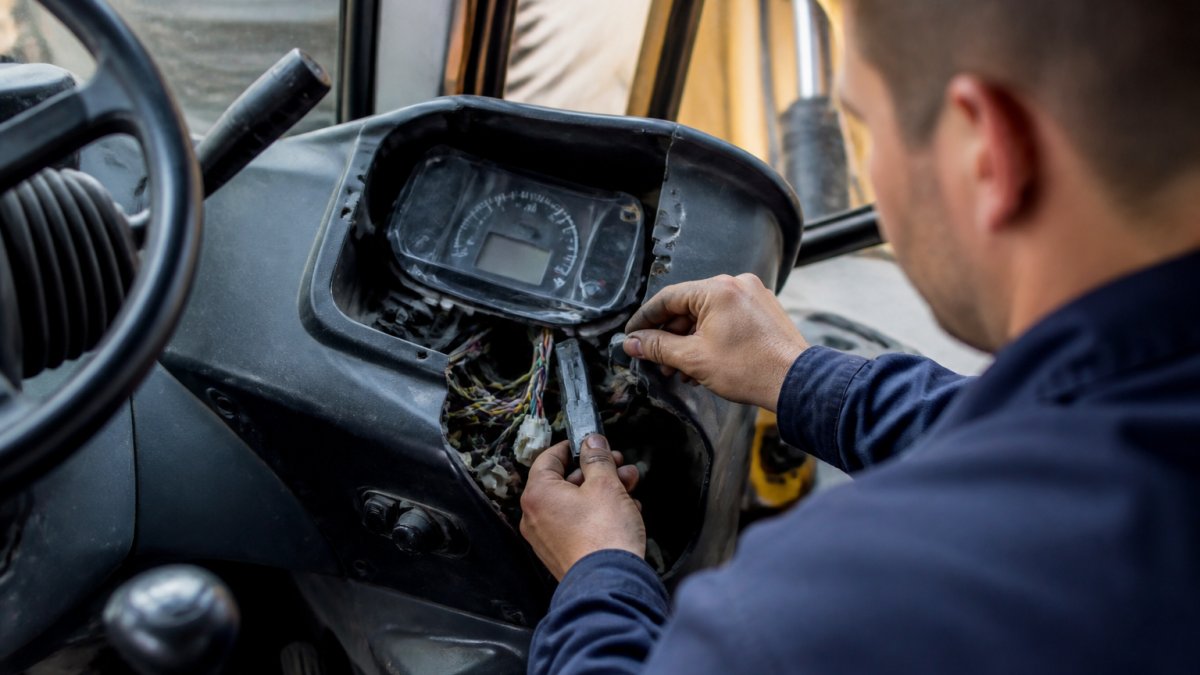
- Loose, mismatched, or disturbed instrument-cluster components. Scratches around the bezel, mismatched screws, pry marks, or a cluster that does not match the machine's age and model year.
- Gauge face and display irregularities. Smudged numbers, misaligned needles, a display that is brighter or newer than the surrounding cab, or a digital readout with a font that does not match the rest of the panel.
- Controller and diagnostic discrepancies. A diagnostic scan of the machine control modules can reveal stored operating hours that do not match the display. This is the equipment-specific check most buyers skip.
- Telematics gaps or resets. Many modern machines log hours automatically to a telematics platform. A gap in the telematics history, a reset event, or a platform record that disagrees with the dash is a serious flag.
- Hour-meter-to-odometer mismatch. Machines that track both hours and distance should show a plausible ratio. A machine with low hours but high distance (or the reverse) suggests one of the two was altered.
What most guides miss is the equipment angle. On heavy machines, the hour meter is frequently a separate, swappable unit, and the real operating history lives in the engine control module, the hydraulic controller, and the telematics platform. The controller and telematics cross-check is often the most valuable check a buyer can run.
Here are the red flags the article lists, each worth a question before you buy.
| Red flag | What to look for |
|---|---|
| Sudden drop in recorded hours | Service records or prior listing show higher hours than meter |
| Flat plateau | Meter sits at same number across years of service records |
| Meter newer than machine | Shiny replacement meter in a cab with faded controls |
| Disturbed instrument cluster | Scratches around bezel, mismatched screws, pry marks |
| Gauge face irregularities | Smudged numbers, misaligned needles, mismatched display font |
| Controller discrepancies | Diagnostic scan shows stored hours that do not match display |
| Telematics gaps or resets | Gap in telematics history or record disagreeing with dash |
| Hours-to-distance mismatch | Low hours but high distance, or the reverse |
Match Physical Wear to the Displayed Hours
Here's the part that separates real low-hour machines from dressed-up ones: the wear has to match the number, and on heavy equipment, the wear points are different from a pickup truck's.
A 500-hour excavator should not have a shiny, worn foot pedal, a polished steering wheel, or a gear knob worn smooth. For a baseline on how long heavy equipment typically lasts, see how long heavy equipment lasts. The seat should not be collapsed on one side. But the equipment-specific checks matter more, because that is where duty cycle shows up.
Check these wear points:
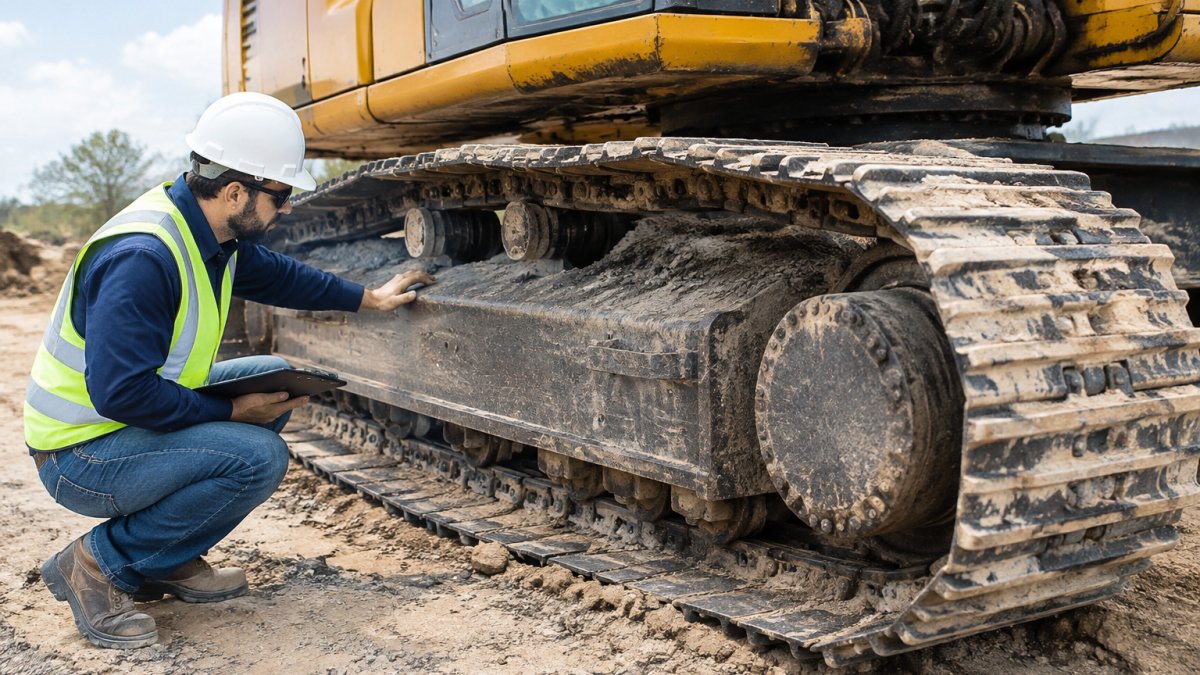
- Undercarriage and tracks. Worn pins and bushings, stretched track chains, and worn sprockets on a "low-hour" machine are a warning. Undercarriage wear is one of the best hour proxies on tracked equipment because it accumulates with travel and load, not just engine run time.
- Bucket edges and cutting edges. A rounded, heavily worn bucket edge or a cutting edge worn past its wear line does not fit a fresh meter.
- Hydraulic components. Weeping seals, worn hoses, and a hydraulic pump that whines under load point to hours the display does not show.
- Pins and bushings at the boom, stick, and bucket. Slop at the joints is a direct function of work cycles, and it is hard to fake cheaply.
- Cab controls. Pedals, floor mat, steering wheel, gear or direction lever, and armrests. Heavy scuffing and polished surfaces mean heavy use.
- Seat condition. Sagging foam and torn bolsters point to age and long shifts.
- Tires (wheeled machines). Uneven wear, mismatched brands, and replacement history that does not fit the claimed hours.
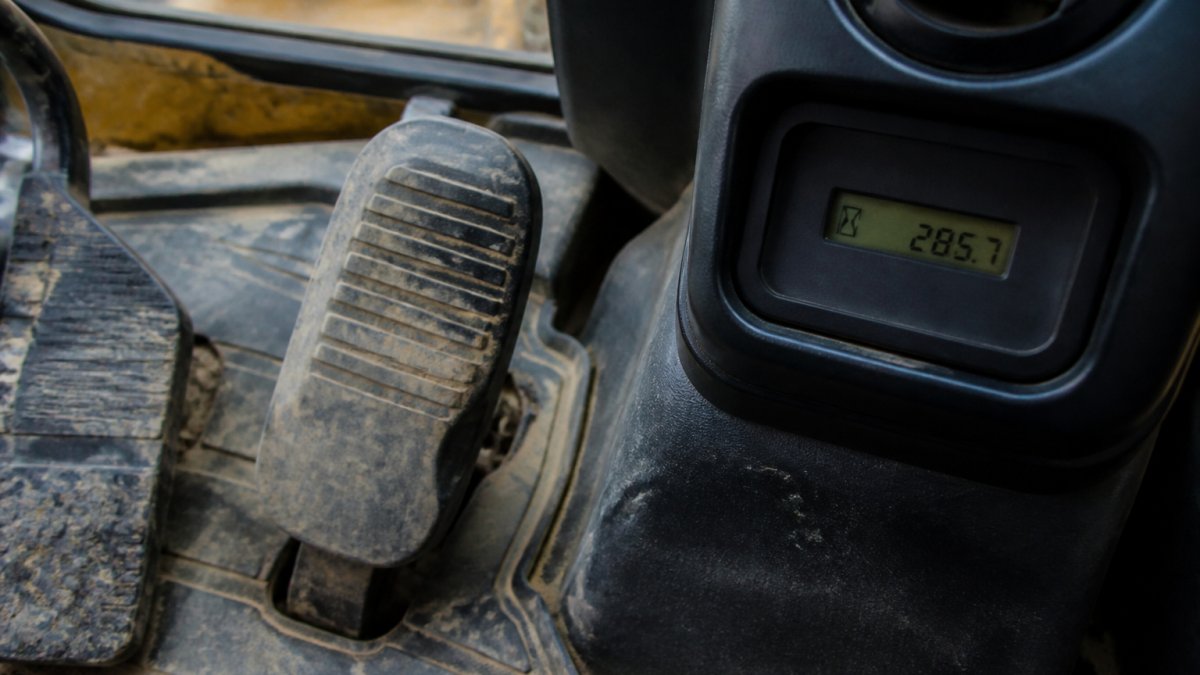
If the wear and the number disagree, trust the wear, but investigate before you walk. A single worn component can be a maintenance issue; a pattern across undercarriage, pins, hydraulics, and cab controls is a history problem.
Checking Heavy Equipment Maintenance Records
Service records are your best paper trail. Ask for them in writing, and check them against the meter.
Look for:
- Service intervals tied to hours. Oil changes and filter swaps logged at specific hour marks.
- Inconsistent readings. A record showing 6,000 hours when the meter reads 2,000 is a discrepancy worth explaining.
- Gaps in the history. Missing years can hide a rollback.
- Telematics exports. Many modern machines log operating hours automatically. Compare those logs to the display.
A common mistake is accepting a verbal "it was serviced regularly" without paperwork. Get the records. If the seller can't produce them, price the risk in or walk away.
Your Used Heavy Equipment Inspection Checklist
Use this checklist before you commit. It's the practical version of everything above. For a deeper list of common mechanical issues in used mini excavators, review that guide before your inspection.
- Record the serial number and current hour reading
- Request full service and maintenance records
- Run a diagnostic scan on the machine control module
- Compare telematics logs to the displayed hours
- Check pedals, steering wheel, gear knob, and seat for wear
- Inspect tires, tracks, and undercarriage
- Look for loose or mismatched instrument cluster parts
- Review gauge face and display for irregularities
- Check for underhood grime and underbody rust
- Book a professional inspection
Financing a Machine You Can Actually Trust
A verified machine is only half the battle. The other half is funding it without overpaying for hidden wear.
Equipment Finance Academy provides quick equipment financing through a marketplace of equipment lenders, with approvals in hours and funding same-day.
Before you sign, compare loan rates so a rollback doesn't become an expensive mistake.
Frequently Asked Questions
How can you tell if a heavy equipment hour meter has been altered?
Start with the digital display: look for a sudden drop, a flat plateau, or a meter that reads far lower than the machine's condition suggests. Then cross-check the reading against service records, telematics data, and a diagnostic scan of the machine control module. Physical clues matter too, worn pedals, a polished steering wheel, and a torn seat usually point to thousands more hours than a low meter shows. If several of these signals line up, treat the reading as unreliable and get a professional inspection before committing.
Can equipment maintenance records reveal hour-meter rollback?
Yes. Ask for the full service history, not just the last invoice, and read the hour readings on each record in date order. A machine with a documented reading of 9,000 hours in a prior year cannot legitimately show 5,200 hours today. Gaps in the records, missing intervals, or invoices that list hours out of sequence are warning signs. Dealers and fleet operators often log hours at every service, so a thin or inconsistent paper trail is itself a red flag worth investigating.
Does machine wear always match the hours shown on the meter?
Not always. Some machines work in low-hour, high-wear conditions such as demolition or quarry work, so wear can run ahead of hours. Others sit idle on a job site and accumulate hours slowly. That is why you compare several wear points together, pedals, steering wheel, seat, tires or tracks, undercarriage, and hydraulic components, rather than judging from one part. A consistent pattern of heavy wear across all of them with a low meter reading is far more suspicious than a single worn component.
What should you do if you suspect heavy equipment hour-meter tampering?
Pause the deal and request a diagnostic scan from an independent technician who can read the machine control module and any telematics history. Compare those findings with the service records and the physical inspection. If the seller cannot explain inconsistencies, walk away. When financing is involved, tell your lender before signing, because a misrepresented machine can affect the loan terms and your recourse. Document everything in writing so you have a record if you need to report odometer fraud.
Hour meter fraud is easy to miss and expensive to fix. Verify the hours, match the wear, and get the records before you buy. When you're ready to fund a machine you trust, Equipment Finance Academy gives you fast approvals, same-day funding, and access to a trusted marketplace of lenders. Get started with Equipment Finance Academy and finance your next machine with confidence.