 ultimate-guide
How Long Does Heavy Equipment Last: A 2026 Guide
Table of Contents
- How Long Does Heavy Equipment Last: Realistic Timelines by Machine Type
- Heavy Equipment Maintenance Schedule: Extending Equipment Life
- Key Factors That Affect How Long Heavy Equipment Lasts
- Construction Equipment Depreciation Rates and Resale Value
- Used Heavy Equipment Financing: Buying Older Machines
- Replace or Repair: Cost Per Operating Hour Analysis
- Frequently Asked Questions
Last Updated: October 6, 2026
How Long Does Heavy Equipment Last: Realistic Timelines by Machine Type
The lifespan of heavy equipment depends less on calendar years and more on how hard it works. A bulldozer sitting idle might last 20 years. The same machine running 2,000 hours annually in abrasive mining conditions could be economically obsolete in 5-7 years.
Most construction and mining operations measure equipment life in operating hours rather than years. A well-maintained excavator typically delivers 10,000-15,000 productive hours before major component replacement becomes necessary. A grader in road construction might push 12,000-18,000 hours.
The real cost of heavy equipment ownership emerges over time. When you're evaluating how long does heavy equipment last, you're actually asking: at what point does keeping it cost more than replacing it? That calculation shifts based on machine type, operating conditions, and your financing strategy.
Bulldozers and Dozers
Bulldozers are workhorses built to absorb punishment. A new dozer typically operates effectively for 8,000-12,000 hours before major wear on the transmission, hydraulic systems, and blade mechanisms demands attention. In favorable conditions, well-maintained equipment, moderate use, good operator technique, some dozers reach 15,000 hours or more.
The reality gets tougher in harsh environments. A dozer pushing rock in a quarry or clearing dense vegetation faces constant strain on hydraulics and the blade assembly. Operating hours compress to 6,000-9,000 before economic repair thresholds kick in. Maintenance becomes the decisive factor.
Used dozers remain popular because the basic mechanics are straightforward and parts availability is excellent. A 10-year-old dozer with 8,000 documented hours can still deliver solid performance if maintenance records are clean.
Excavators
Excavators typically deliver 10,000-15,000 operating hours of reliable service. Larger machines, 390-ton class excavators used in mining and heavy earthmoving, sometimes reach 12,000-18,000 hours before component replacement becomes economical. Smaller excavators (50-100 tons) often cluster around 8,000-12,000 hours before major work.
The hydraulic system is the critical limiting factor. Excavators are hydraulic-intensive machines, and contaminated or degraded hydraulic fluid accelerates seal and pump wear. An excavator operating in dusty conditions without proper air filtration can see hydraulic system life cut by 30-40%.
Boom and stick wear is visible and measurable. Bucket teeth and cutting edges are consumables, you replace them regularly. But the structural integrity of the boom and stick determines whether an excavator is worth repairing or should be retired.
Loaders and Graders
Wheel loaders typically operate for 8,000-12,000 hours before major transmission or engine work becomes necessary. Graders, which spend their lives in road construction and maintenance, often reach 10,000-15,000 hours because the work is less shock-intensive than loading and hauling.
Transmission failure is the common endpoint for loaders. The transmission absorbs repeated shock loads from bucket engagement and uneven terrain. A loader working in aggregate pits with constant bucket loading faces harder transmission duty than one doing general site work. Graders, by contrast, wear more gradually, blade wear is continuous but manageable, and the transmission sees steadier loads.
Tire and undercarriage wear accelerates both machines' depreciation. Loader tires in abrasive environments can be expensive consumables. Grader blade replacement is routine maintenance but adds up over time. Neither is a deal-breaker for equipment life, but both factor into the cost-per-hour calculation.
Heavy Equipment Maintenance Schedule: Extending Equipment Life
Maintenance is the single biggest lever for extending how long does heavy equipment last. The difference between a 6,000-hour retirement and a 12,000-hour one often comes down to whether operators and managers treat maintenance as optional or mandatory.
A realistic maintenance schedule has three tiers: daily checks that take minutes, seasonal services that take days, and annual overhauls that require planning and downtime. Skipping any tier costs you operating life.
Daily and Weekly Inspections
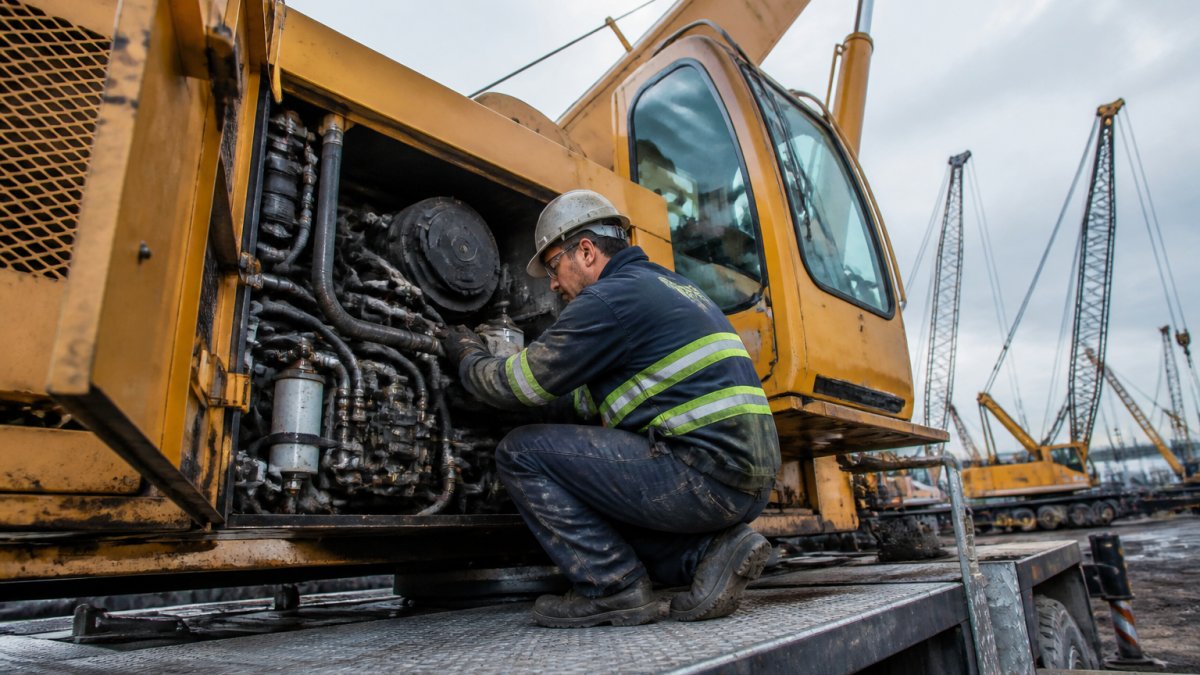
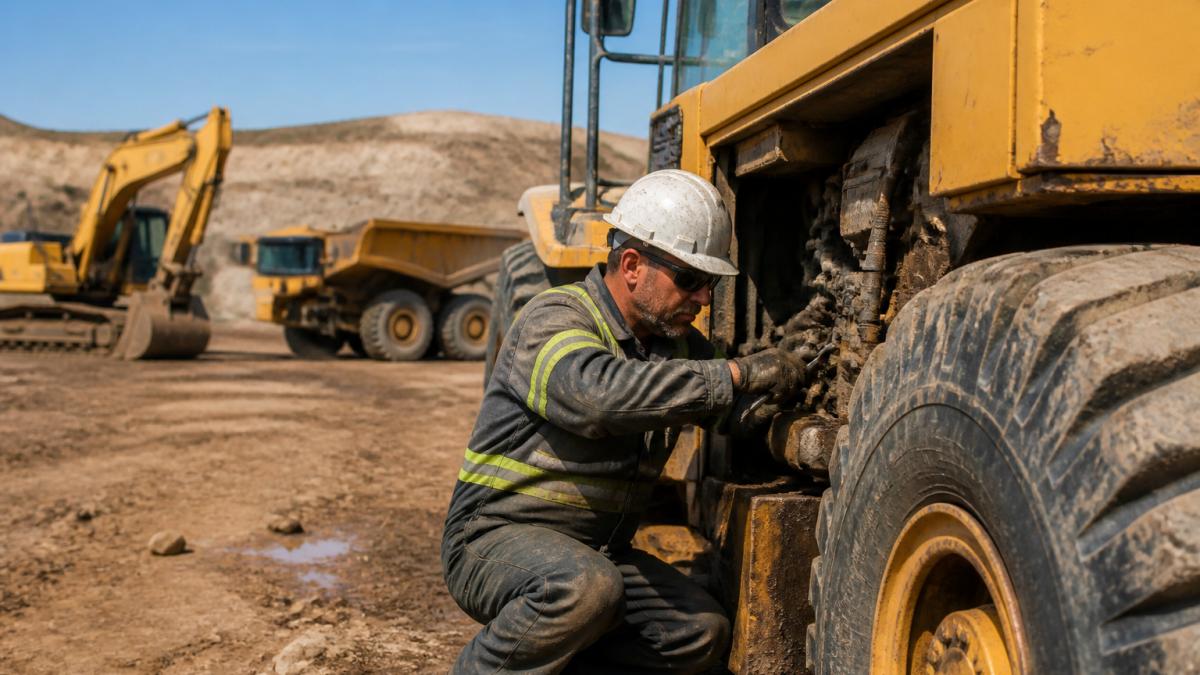
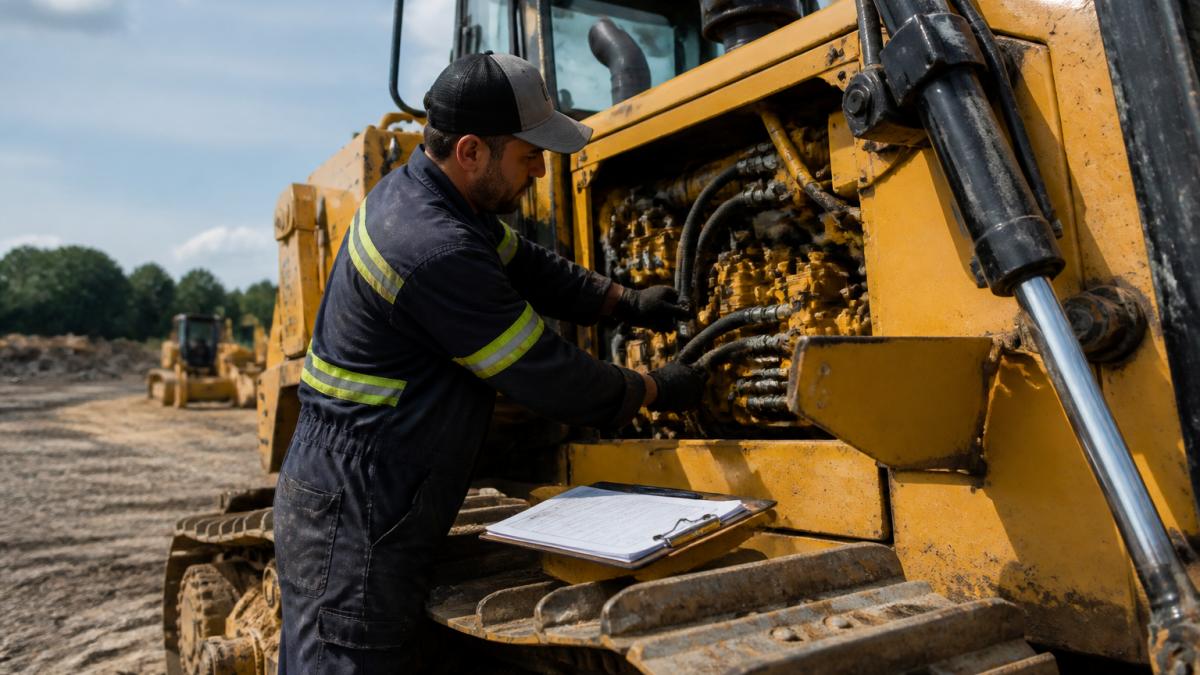
Daily walk-arounds catch problems before they become failures. Check hydraulic hose condition for leaks or swelling. Inspect undercarriage bolts for looseness. Look for fluid leaks under the machine.
Weekly inspections go deeper. Drain and inspect hydraulic fluid for water contamination or metal particles, both signs of internal wear. Check engine oil level and condition. Inspect bucket teeth, blade edges, and cutting surfaces for damage. Lubricate all grease points.
Operators should document what they find. A simple checklist, fluid levels, visible leaks, unusual sounds or vibrations, creates a maintenance record that protects resale value and guides repair decisions.
Seasonal and Annual Service
Seasonal service aligns with operating conditions. Before winter, flush and refill hydraulic fluid if you're in a cold climate, cold hydraulic fluid becomes sluggish and strains pumps. Before summer's intense heat, check cooling system efficiency and radiator cleanliness. Dust and debris clog radiators fast in dry environments.
Annual overhauls should be comprehensive. Change engine oil and filters. Inspect and replace hydraulic seals showing wear. Check transmission fluid condition. Inspect welds and structural components for cracks. Replace any hoses showing age or damage. This is the time to address deferred maintenance before it becomes a breakdown.
Budget 40-80 hours annually for major equipment maintenance. That's typically 0.5-1% of the machine's annual operating hours. It sounds like a lot until you calculate the alternative: a single major repair or premature retirement costs far more than preventive maintenance.
Key Factors That Affect How Long Heavy Equipment Lasts
Beyond maintenance, three factors reshape the lifespan equation: how intensively you use the machine, what terrain and conditions it faces, and who operates it.
Operating Hours and Use Rate
Operating hours are the true measure of equipment age. A five-year-old machine with 2,000 hours is younger than a three-year-old machine with 4,000 hours. Use rate, hours per year, matters because it affects maintenance intervals and component wear rates.
A machine running 4,000 hours annually faces tighter maintenance schedules than one running 1,000 hours yearly. Higher use means more frequent oil changes, filter replacements, and seal inspections. It also means components wear faster, so you hit major repair thresholds sooner.
The economics shift with use. A machine generating revenue 4,000 hours per year can justify higher maintenance spending because downtime is costly. A machine running 1,000 hours annually might not justify the same investment.
Operating Conditions and Terrain
Terrain is destiny for heavy equipment. A dozer working in a quarry pushing fractured rock faces constant abrasion. A dozer on a construction site moving soil and gravel faces lighter duty. The same machine in different environments has radically different service lives.
Dust and contamination accelerate wear. Equipment operating in arid, dusty regions needs more frequent air filter changes and more aggressive hydraulic fluid management. Moisture and humidity accelerate corrosion, particularly on undercarriage components. Cold climates thicken hydraulic fluid and stress engines. Tropical environments promote rust and seal degradation.
Vegetation density matters too. A machine clearing dense brush or forest faces constant strain on the blade and hydraulic system. Operator technique determines whether that work damages the machine or simply wears it.
Operator Skill and Machine Handling
An experienced operator extends equipment life by thousands of hours. Smooth control inputs reduce shock loads on transmissions and hydraulics. Proper bucket loading technique, filling the bucket in one or two passes rather than overfilling and spilling, reduces strain. Avoiding sudden direction changes and hard stops preserves undercarriage integrity.
Inexperienced operators often abuse equipment without realizing it. Riding the brakes overheats them. Rapid throttle changes shock the engine and transmission. Overloading the bucket strains hydraulic systems. These habits compress service life by 20-30%.
Training pays for itself in extended equipment life. A single training session on proper operating technique can add 1,000-2,000 hours to a machine's productive life.
Construction Equipment Depreciation Rates and Resale Value
Equipment depreciates fastest in the first 2-3 years of ownership. A new dozer loses 30-40% of its value in the first year, another 15-20% in year two, then stabilizes at a slower depreciation rate.
Used equipment with documented maintenance history holds value better. A five-year-old excavator with complete service records and 7,000 hours commands 15-20% higher resale prices than an identical machine with spotty documentation. Buyers pay for certainty.
The sweet spot for used equipment purchases is typically 4-7 years old. Machines in this range have depreciated substantially but still have 5,000-8,000 operating hours remaining before major work.
Resale value depends on machine condition, hours, maintenance history, and market demand. A well-maintained loader in a region with active construction moves quickly. The same machine in a slow market sits longer. Regional differences can shift resale value by 10-25%.
Used Heavy Equipment Financing: Buying Older Machines
Purchasing used equipment requires different financial analysis than new. Equipment Finance Academy helps construction companies and equipment dealers navigate that uncertainty with rapid financing for used equipment purchases.
When evaluating a used machine, factor in remaining productive life. A 10-year-old dozer with 9,000 documented hours might have 2,000-4,000 hours remaining before major work.
Financing used equipment typically requires inspection and documentation. Lenders want to see maintenance records, operating hour logs, and independent condition assessments. That documentation protects both the buyer and the lender by establishing the machine's true condition and remaining life.
The cost of used equipment financing depends on machine age, condition, remaining useful life, and market value. Newer used equipment (3-5 years old) typically finances at lower rates because remaining life is longer and residual value is higher.
Replace or Repair: Cost Per Operating Hour Analysis
The decision to repair or retire equipment hinges on cost per operating hour. When repair costs exceed the machine's hourly revenue generation capacity, retirement becomes economical.
Calculate it this way: estimate remaining useful life in operating hours. Divide total expected repair costs by those hours.
Example: An excavator with 11,000 hours has maybe 2,000-3,000 hours remaining. A major hydraulic system overhaul costs $8,000-12,000. That's $3-6 per operating hour in repair costs.
This calculation shifts with market conditions. In strong markets with high equipment demand, machines generate more revenue per hour, making repairs more economical. In slow markets, the same machine might not justify the repair investment.
Maintenance history shapes repair costs. A well-maintained machine approaching retirement might need $3,000-5,000 in work. A neglected machine of the same age might need $15,000-20,000.
Understanding how long does heavy equipment lasts means thinking beyond calendar years. Equipment Finance Academy helps construction companies and equipment dealers make those decisions with access to rapid financing for both new and used equipment purchases.
Frequently Asked Questions
How many operating hours can you expect from heavy equipment?
Most heavy equipment lasts 10,000 to 30,000 operating hours depending on machine type and maintenance. Bulldozers and dozers typically reach 15,000-25,000 hours; excavators 12,000-20,000 hours; loaders 10,000-18,000 hours. Equipment maintained according to manufacturer schedules reaches the upper end of these ranges. Operating hours matter more than calendar years, a machine used 500 hours per year lasts far longer than one used 2,000 hours annually, even if purchased the same year.
What factors most significantly impact the lifespan of heavy equipment?
Maintenance is the primary driver, machines serviced on schedule last 30-50% longer than those with deferred maintenance. Operating conditions rank second: equipment used in abrasive terrain (sand, gravel, rocky soil) wears faster than machines on prepared sites. Operator skill matters too; inexperienced operators cause premature wear through rough handling and incorrect technique. Utilization rate also affects lifespan: machines pushed to maximum capacity daily wear faster than those with moderate daily use. Environmental exposure (extreme heat, moisture, salt air) accelerates rust and component failure.
At what point does it become more cost-effective to replace equipment rather than repair it?
The 50% rule is a practical benchmark: if annual repair costs exceed 50% of the equipment's current market value, replacement is typically more economical. For example, if a used dozer is worth $40,000 and annual repairs exceed $20,000, purchasing replacement equipment makes sense. Calculate cost per operating hour: divide total annual ownership cost (repairs, fuel, maintenance, depreciation) by operating hours. When this figure exceeds the cost per hour of a newer machine, replacement becomes justified. Consult your accountant and equipment finance partner for a full cost-benefit analysis specific to your operation.
How does regular maintenance extend the service life of heavy equipment?
Scheduled maintenance prevents small problems from becoming catastrophic failures. Oil changes, filter replacements, and fluid top-ups reduce engine wear by 40-60%. Greasing moving parts reduces friction and heat damage. Inspecting hoses, belts, and hydraulic lines catches leaks before they cause component failure. Cleaning air filters and cooling systems prevents overheating. Equipment maintained on the manufacturer's schedule often operates 50% longer than neglected machines. Maintenance records also support resale value and financing options for used heavy equipment.